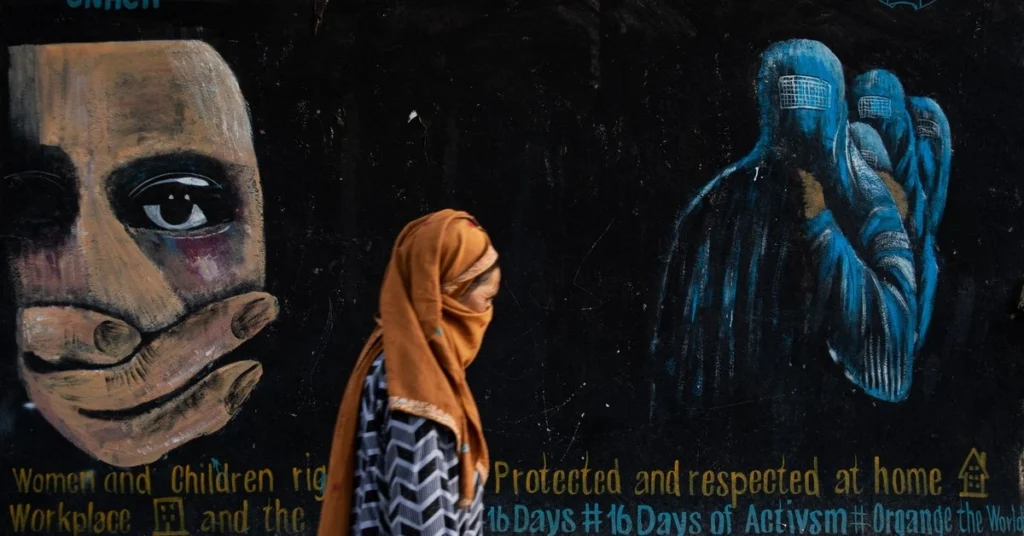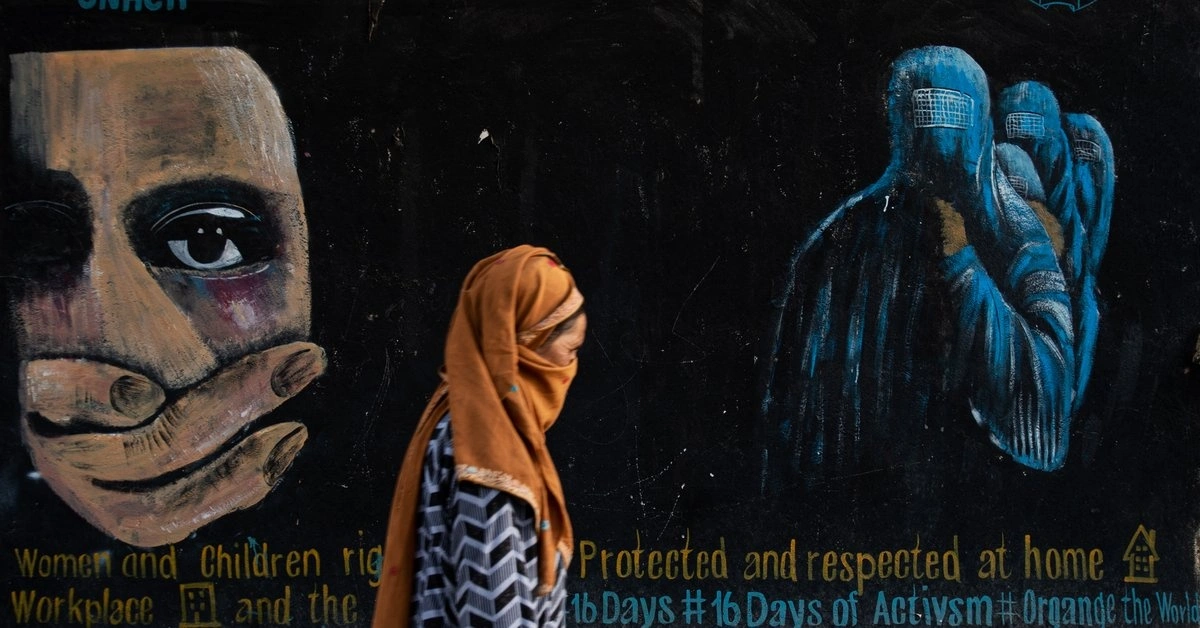
Kabul, February 20, 2026 – Afghanistan has taken a shocking step backward in women’s rights as the Taliban officially codifies domestic violence under a new penal code. Signed by Supreme Leader Hibatullah Akhundzada, the 90-page legislation permits husbands to physically punish wives for “disobedience” as long as the violence leaves no visible marks, effectively legalizing abuse and undermining decades of human rights progress.
Systematic Restrictions on Women Since 2021
Since returning to power on August 15, 2021, the Taliban has issued over 470 decrees, 79 of which specifically target women and girls, curbing their access to education, employment, mobility, and participation in public life. From enforcing strict dress codes to banning women from NGOs and humanitarian work, these measures have severely restricted women’s independence and hindered aid delivery.
Key decrees include:
• August 25, 2021: Women ordered to remain indoors citing “untrained soldiers’ lack of respect.”
• December 26, 2021: Ban on long-distance travel without a male guardian (mahram).
• August 2022: Formation of a female morality police to enforce dress codes and behavioral restrictions; women barred from parks and gyms.
• November 2022: Reinstatement of hudud punishments including limb amputation; further bans on women in public spaces.
• 2025: Escalation of restrictions affecting UN staff, education, and employment opportunities for women.
The 2026 Penal Code: Codifying Abuse
The new law explicitly permits husbands to beat their wives under the discretionary punishment system (ta’zir) for perceived disobedience. The legislation sets minimal legal consequences: only cases causing broken bones or open wounds incur a maximum of 15 days imprisonment for the husband.
Women who attempt to flee abuse by seeking shelter with relatives without prior permission face three months of imprisonment, as do the relatives providing shelter. This law also repeals protections previously established under the 2009 Elimination of Violence Against Women (EVAW) act, dismantling legal safeguards against domestic abuse.
Teachers are similarly empowered to administer corporal punishment to children, with serious injuries as the only threshold for potential penalties.
Human Rights Concerns
International human rights advocates warn that the law institutionalizes violence and creates a chilling effect on women’s freedom, mobility, and security. Critics note that the legislation violates international treaties and UN conventions on women’s rights to protection from violence and personal safety.
“This is a devastating step that places Afghan women and children at the mercy of abusers, all under the guise of religious jurisprudence,” said a senior human rights expert. “The new penal code reflects a systematic effort to suppress women’s autonomy and normalize abuse.”
A Broader Pattern of Repression
This development comes amidst years of escalating restrictions on women’s education, employment, and public life, with the Taliban consistently expanding its control over religious and social institutions. Observers warn that this codification of domestic violence not only undermines human rights but also threatens Afghanistan’s social stability and international credibility.
The world watches as Afghan women face further erosion of rights under a regime that continues to prioritize control over compassion and justice.