
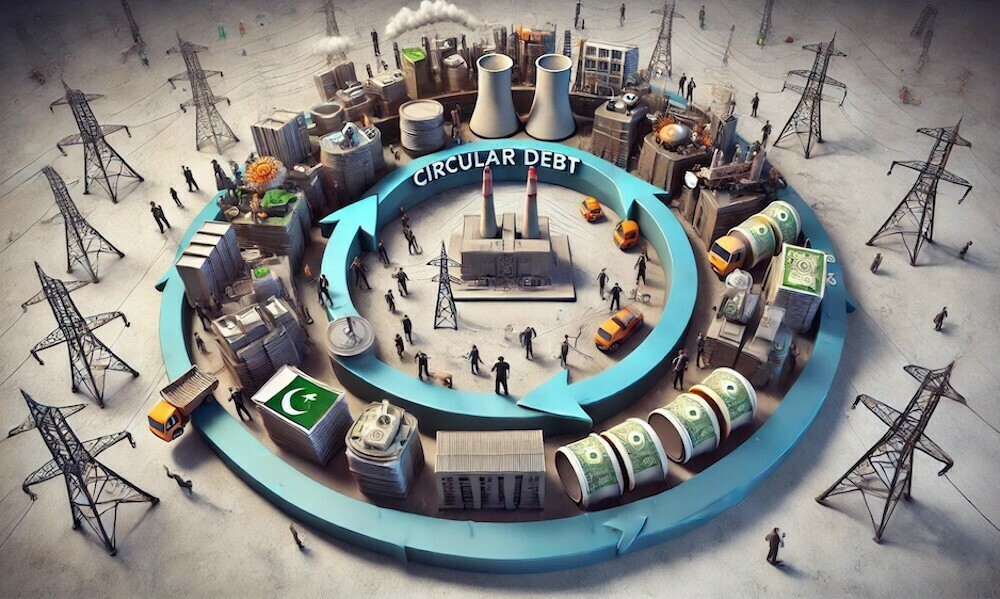
Islamabad – Pakistan on Tuesday will sign a landmark Rs1.225 trillion power sector financing agreement with a consortium of 18 commercial banks, aimed at decisively reducing the country’s crippling circular debt and fulfilling key structural reform commitments under the $7 billion International Monetary Fund (IMF) programme.
The deal, the largest-ever banking consortium financing in Pakistan’s power sector, comes after months of negotiations led by the government’s Task Force on Power. Prime Minister Shehbaz Sharif, currently in New York for the United Nations General Assembly session, will attend the signing virtually, while senior ministers, regulators, and representatives of international financial institutions will also be present in Islamabad.
Loan structure and repayment plan
According to details, the financing package will reduce the circular debt stock from Rs1.614 trillion to Rs339 billion. Of the total Rs1.225 trillion, Rs683 billion will clear liabilities of the Power Holding Company Limited (PHL), while Rs542 billion will settle arrears of Independent Power Producers (IPPs).
Commercial banks will provide Rs617 billion in fresh loans at concessional terms, KIBOR minus 0.90 basis points, repayable in 24 equal quarterly instalments over six years. Repayment will be managed through the existing debt service surcharge of Rs3.23 per unit in electricity bills, generating Rs323 billion annually, without additional burden on consumers.
Officials stressed that unlike a previous Rs658 billion facility, this arrangement does not involve a sovereign guarantee. Instead, repayments will be managed entirely through surcharges collected by the Central Power Purchasing Agency (Guarantee) Limited (CPPA-G).
Financial restructuring measures
The financing deal was made possible through a series of restructuring measures, including the termination of six non-performing IPP contracts, Rs387 billion in waivers on late payment interest, and clearance of Rs348 billion in arrears, with Rs127 billion paid via subsidies and Rs221 billion settled directly by CPPA. The government also reduced the proposed loan amount from Rs1.275 trillion after partial liability settlement by PHL.
Senior officials including Deputy Prime Minister Ishaq Dar, federal ministers for power, finance, petroleum, planning and IT, the State Bank governor, and the heads of IMF, World Bank, and Asian Developmebt Bank missions in Pakistan attended the ceremony. Chief executives of CPPA-G, PHL, distribution companies, and top bankers from HBL, NBP, UBL, MCB, Meezan Bank, and Bank Alfalah also signed the agreement.
Officials termed the deal a pivotal step in restoring fiscal discipline and easing liquidity strains in the fragile power sector. Once the loan is fully disbursed, authorities expect the remaining Rs339 billion in circular debt to be addressed through further reforms and improved efficiency in power distribution companies.
Analysts say the agreement not only stabilises Pakistan’s power sector but also helps regain investor trust, fulfil IMF programme conditions, and lay the groundwork for broader energy sector reforms aimed at sustainable growth.











