Kabul – The Afghanistan Green Trend (AGT), led by former Afghan Vice-President Amrullah Saleh, has issued a detailed rebuttal of Al-Mirsad’s recent assertions on Tuesday that the Taliban killed three senior ISIS-Khorasan operatives inside Pakistan. According to AGT, all three claims collapse under basic fact-checking: one of the individuals was killed years ago by Afghan security forces during the Republic era, another died in 2024 during clashes with Baloch separatists in Pakistan, and the third was murdered in a personal feud unrelated to militancy. AGT argues that these episodes demonstrate Al-Mirsad’s pattern of manufacturing victories in order to mislead audiences and inflate the Taliban’s counterterrorism credentials.
Al-Mirsad’s False Claim on Sheikh Abdul Hakim Tawhidi
Al-Mirsad published what it claimed was proof that Sheikh Abdul Hakim Tawhidi, an alleged ISIS-K leader, had been eliminated by a drone strike in Pakistan’s Orakzai district. AGT’s investigation reveals that the individual shown in the circulated photo was not Sheikh Abdul Hakim at all, but his brother, Qazi Bashir, who is alive and residing in Kunar. In reality, the real Sheikh Abdul Hakim, once an associate of Osama bin Laden, had been captured by the former Afghan National Directorate of Security (NDS), later released during the Republic, and killed years ago in an NDS operation in Nangarhar. AGT notes that the Taliban essentially “resurrected a dead man” and “killed him again for propaganda purposes,” even using American diplomat Zalmay Khalilzad to help amplify the false narrative.
Misreporting on Abu Dharr’s Death
The second figure, Abu Dharr (Musa, alias Pahlawan), was listed by Al-Mirsad as a militant neutralized in October 2025. AGT counters this by presenting records showing that Abu Dharr actually died in early 2024, nearly two years earlier, during armed clashes with Baloch separatists in Balochistan. AGT states that the Taliban’s insertion of his name into a fabricated 2025 operation underscores the organization’s use of outdated or unrelated information to create an illusion of active counterterrorism success inside Pakistan.
The Case of Burhan Alias Zaid
The third individual, Burhan (alias Zaid), whom Al-Mirsad claimed was killed by Taliban forces in Punjab, Pakistan, was not an ISIS-K operative at all. According to AGT, he was a village youth from Kunar who eloped with a girl, fled to Punjab, and worked as a vegetable-market watchman. He was eventually killed by the girl’s family in a traditional revenge killing. AGT suggests that the family may have falsely reported him to the Taliban as an ISIS member, enabling the Taliban to opportunistically repackage the incident as a counterterror success.
Zalmay Khalilzad’s Role in Amplifying Disinformation
AGT strongly criticises former United States envoy Zalmay Khalilzad for reposting Al-Mirsad’s claims on November 18, 2025, without verification. The report argues that Khalilzad has increasingly positioned himself as an informal advocate for the Taliban in Washington, unintentionally boosting narratives crafted by Directorate 015, the Taliban intelligence wing that funds and operates Al-Mirsad. AGT describes him as a “useful idiot” who, in attempting to maintain relevance in US policy circles, inadvertently strengthens Taliban propaganda.
Al-Mirsad’s Messaging and Pakistan’s Security Concerns
Analysts state that Al-Mirsad’s claims appear designed to counter Pakistan’s mounting concerns regarding TTP sanctuaries and widely reported ISIS-K positions inside Afghanistan. By portraying itself as effectively combating ISIS-K inside Pakistan, the Taliban seeks to divert attention from the reality of cross-border militancy that continues to threaten Pakistan.
Pakistan’s security forces have maintained consistent operational pressure against ISIS-K, a fact acknowledged by the United States and other international partners. These acknowledgements directly contradict the Taliban narrative and reveal the political motives behind Al-Mirsad’s propaganda.
Assessments from the United Nations and acknowledgements from the European Union serve as independent verification of Pakistan’s sacrifices and contributions to the regional counterterrorism fight. AGT notes that these authoritative evaluations further expose Taliban-linked narratives as distortions designed to shift blame.
Russia has repeatedly expressed concern over ISIS-K’s presence inside Afghanistan, warning that these safe havens could destabilize the region and even facilitate attacks beyond Afghan borders. These global concerns undermine Al-Mirsad’s portrayal of the Taliban as effectively managing terrorist threats.
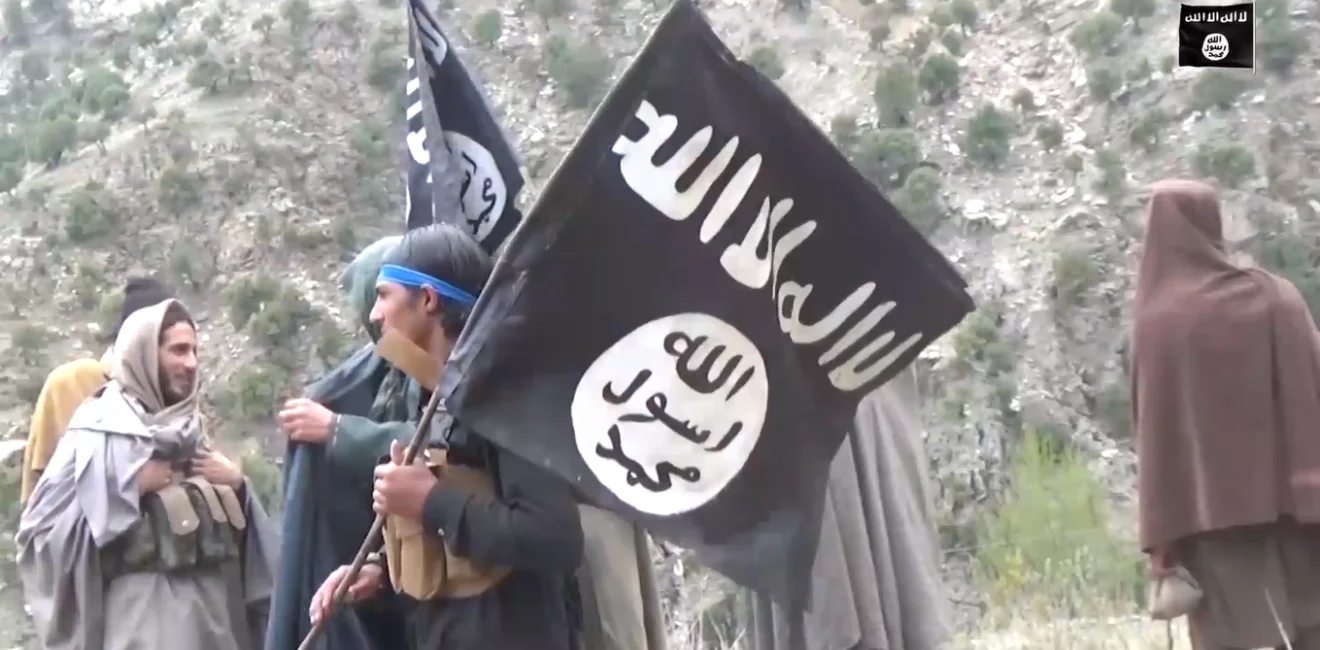
Propaganda vs Reality
Against this backdrop of documented threats, Al-Mirsad’s attempts to discredit Pakistan highlight the widening gulf between propaganda-driven messaging and verifiable realities. Regional stability demands sincerity in counterterrorism, not narratives engineered to deflect responsibility or weaponize information against a neighboring state actively fighting terrorism.
Despite lacking any recognized authority or expertise, Al-Mirsad routinely comments on Pakistan’s defence budget and strategy with unwarranted certainty. AGT asserts that such commentary reflects political overreach rather than legitimate analysis, exposing the publication’s broader propaganda agenda.
By echoing talking points that align with the rhetoric of a UN-proscribed terrorist organization, Al-Mirsad raises serious questions about its intentions and affiliations. Rather than undermining Pakistan, such alignments cast doubt on the credibility and motives of the Taliban’s entire information apparatus. AGT reiterates that Al-Mirsad is operated and funded by Directorate 015 of the Taliban’s General Directorate of Intelligence, another indicator of its propaganda function.