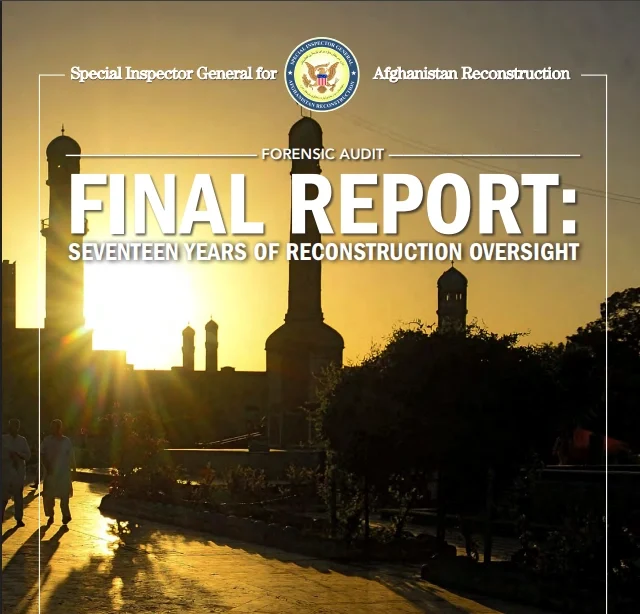
Afghanistan_ The latest SIGAR Report shows that nearly two decades of US reconstruction efforts in Afghanistan were marked by widespread waste, weak oversight, and unrealistic goals. Between 2002 and mid-2021, the United States spent almost $145 billion on rebuilding Afghanistan. But according to SIGAR, more than $26 billion of that amount was lost to waste, fraud, corruption, and abuse.
Massive oversight failures identified in SIGAR Report
Since 2009, the SIGAR Report has documented 1,327 cases of misuse of funds, with waste alone accounting for 93 percent of the total losses. SIGAR auditors issued nearly 900 oversight products and identified 1,911 internal control weaknesses across US agencies, from poor planning and weak monitoring to unreliable data and mismanagement.
One example cited was the Pentagon overpaying more than $500 million in salaries to the Afghan government because of poor internal controls.
Even after Afghanistan’s fall to the Taliban in 2021, SIGAR continued its oversight. The SIGAR Report found that some UN-managed US funds intended for humanitarian aid were indirectly benefiting the interim Taliban regime. It warned that agreements with international organizations must be tightened to prevent diversion of US money to internationally sanctioned groups.
SIGAR Report warns future missions must confront risk of failure
Beyond financial losses, the SIGAR Report delivers a broader critique of America’s entire mission in Afghanistan. It concludes that the United States attempted to build institutions and systems that Afghanistan had never possessed, while working under unrealistic timelines and a lack of clear strategy. The ongoing war further undermined reconstruction, making success unlikely from the start.
SIGAR’s lessons-learned program found that US officials often ignored Afghanistan’s social and political realities, resulting in projects that collapsed once US support ended. The report warns that future interventions must be grounded in realistic expectations. Without this, the United States risks repeating the same costly mistakes worth billions of dollars in cash.