
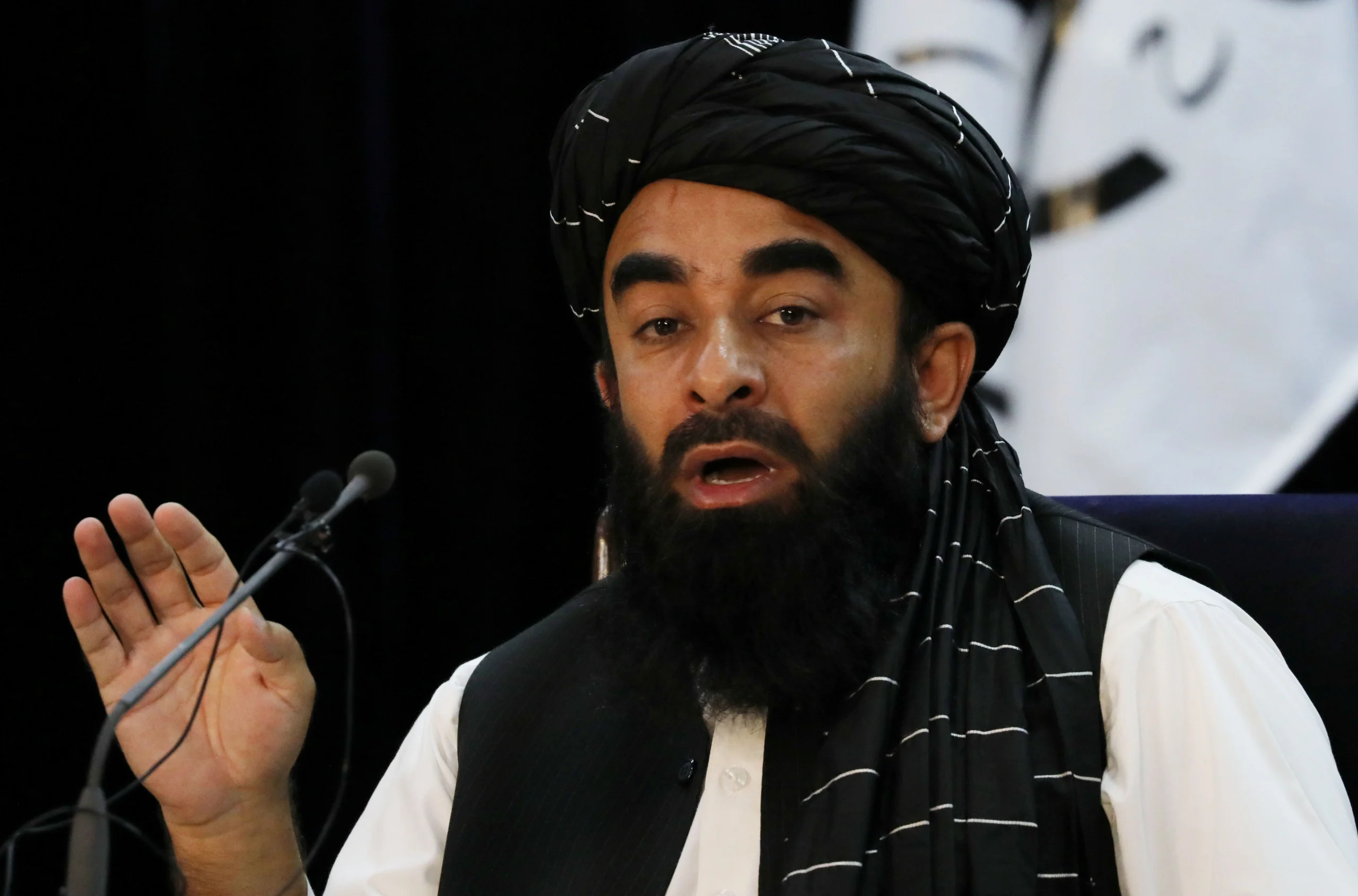
Kabul_ The spokesperson for the Islamic Emirate of Afghanistan, Zabihullah Mujahid, stated today that Kabul will only consider reopening trade routes with Pakistan once strong guarantees are received from Islamabad to ensure these routes are not used in the future as tools of political pressure.
Addressing reporters in Kabul, Mujahid termed the closure of trade and transit routes as an unlawful act, describing it as a form of harassment and economic pressure that violates the rights of traders and citizens in both countries. He emphasized that the blockage has caused serious harm to ordinary people, and noted that Afghanistan is currently meeting its trade needs through alternative countries.
“Trade and transit routes between Afghanistan and Pakistan have been unlawfully blocked by the Pakistani side and used as instruments of political and economic pressure.”
Mujahid said.
Islamabad, however, has categorically denied reopening the border trade points until Kabul provides guarantees that Afghan soil will not be used by groups hostile to Pakistan, including the Tehrik-i-Taliban Pakistan (TTP) and Balochistan Liberation Army (BLA). Pakistani officials have also demanded that a written agreement be inked regarding measures against these militant organizations before resuming normal trade activities.
The diplomatic standoff reflects continuing security and political concerns in the region, with both countries emphasizing national interests while balancing humanitarian and commercial needs.
Impact on Trade and Citizens
The prolonged closure of key trade routes has disrupted cross-border commerce and created economic challenges for traders and communities relying on Afghan-Pakistan trade. Officials from both sides continue to engage in high-level consultations, but tensions remain over security assurances and guarantees for uninterrupted transit.
Pakistan’s trade reality contradicts Kabul’s claims
The recent assertions by Afghan interim government spokesperson Zabihullah Mujahid that Pakistan has “unlawfully blocked” trade routes and is using them as “pressure tactics” do not align with market data or the structural reality of cross-border commerce.
Pakistan’s exposure to Afghan trade is modest in macroeconomic terms, representing only 3–5% of national exports, according to Trading Economics. The temporary closures at Torkham, Chaman have affected an annual corridor worth US$1.8 billion, but this remains marginal for a US$375–400 billion economy.
Afghanistan’s dependence on Pakistan’s geography
Contrary to Kabul’s claims of “alternative routes,” the freeze has only underscored Afghanistan’s reliance on Pakistan’s ports and all-weather logistical routes.
Over 11,000 containers, including Afghan Transit Trade cargo and Central Asian consignments, remain stranded, evidence provided by recent SAT study. Meanwhile, Afghan customs revenues reportedly fell 25–30% in Q4 2025, highlighting who bears the structural cost of disruption.
Even if Afghanistan redirects some imports through Iran or the northern corridor, winter bottlenecks, higher transport costs, and limited capacity make these pathways unreliable substitutes in longer run.
Rising food prices and reduced fuel inflows inside Afghanistan further reinforce this asymmetry.
Pakistan faces discomfort, not distress
Pakistan’s exporters face short-term sectoral losses, estimated at US$400–700 million over six months, mainly in food and pharmaceuticals. Yet these challenges remain manageable. Pakistan is already expanding market diversification, with pharmaceutical exports rising 34% year-on-year, a two-decade high as cited by Pakistan Today.
The on-ground facts remain clear that Pakistan can adjust to reduced Afghan trade; Afghanistan cannot replace Pakistan’s corridor or capacity.











