
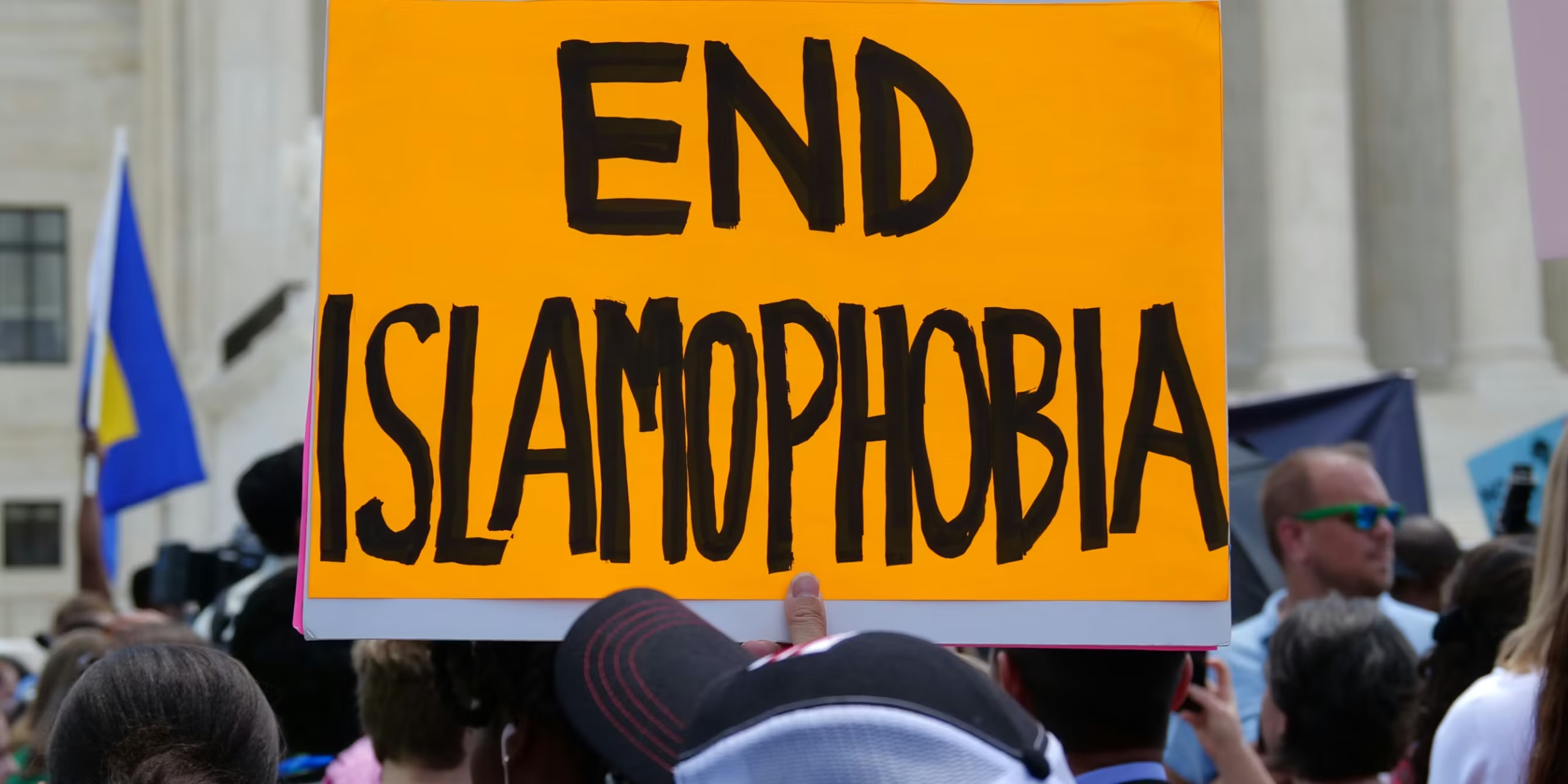
Islamabad – Recent events have highlighted a concerning trend where tragic acts of violence are immediately leveraged by public figures to fuel Islamophobic rhetoric, leading to increased division and hatred in the US and the West.
Recently, the debate has once again been sparked by a gruesome attack in Australia.
However, instead of focusing solely on the criminals, US Director of National Intelligence Tulsi Gabbard issued a statement that critics argue dangerously blurred the line between the actions of an extremist and the faith of over a billion Muslims.
The tragic Islamist terror attack against those at a Hanukkah celebration in Australia sadly should not come as a surprise to anyone. This is the direct result of the massive influx of Islamists to Australia. Their goal is not only the Islamization of Australia but the entire…
— Tulsi Gabbard 🌺 (@TulsiGabbard) December 16, 2025
Such blanket condemnation has concrete, adverse effects. The rhetoric, which tries to merge Islam with violent extremism, is an extremist and dangerous concept in itself. The language reflects the same logic employed by the violent extremists to rationalize their behaviors, by blaming the whole faith community.
This climate of increased hostility emboldens Islamophobic actions. A vivid illustration was in Texas, where an anti-Islam rally was organized by an activist, Jake Lang, who took place outside the EPIC Mosque and desecrated the Quran.
These targeted forms of hate and provocation are not contributing to security; they contribute to separation and violence in societies.
Extremism is Not a Monolith
Experts and community leaders consistently warn that this approach radicalizes both non-Muslims and Muslims against each other.
The phenomenon of extremism exists in all the political, ethnic, and religious ideologies, not limited to only one religion. It is inherently unfair to accuse the entire non-violent Muslim societies of the acts of a few individuals. Such communities prove to be major targets of hate crimes and violence.
To achieve good national security, one needs to target violent individuals and certain terrorist organizations, not whole religions or immigrant groups.
Blaming an entire religious group for the actions of a few is a policy of intellectual confinement. To establish a state of stability and mutual respect, the discourse in the public should not be based on religious generalizations but should be centered on addressing the threat of violence in its manifestation, irrespective of the motivation of its perpetrator.











