
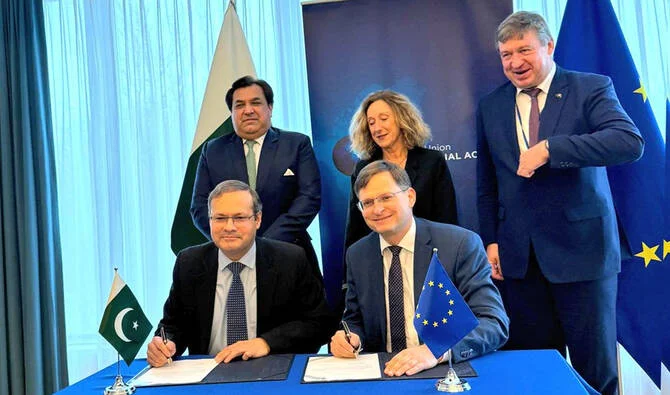
Islamabad— The European Investment Bank (EIB) and the Government of Pakistan have signed a €60 million loan agreement to help Karachi upgrade its water treatment infrastructure, marking the first EIB financing for Pakistan in 10 years.
The agreement was finalized in Brussels during the 15th Pak-EU Joint Commission, signaling stronger cooperation between Pakistan and the European Union on sustainable development and urban resilience.
Today, the 🇪🇺 @EIB signed its first loan agreement with 🇵🇰 Pakistan in a decade: a €60 million loan supporting the delivery of clean drinking water for #Karachi.#GlobalGateway in action.@KaroblisR pic.twitter.com/sxq1PIxeCH
— EUPakistan (@EUPakistan) December 17, 2025
Major investment to support Karachi’s water security
According to the EU, the loan will fund the rehabilitation and construction of key water treatment facilities under the Karachi Water Infrastructure Framework approved earlier this year.
The initiative aims to improve Karachi’s access to clean drinking water, expand treatment capacity, and reduce risks to public health.
“Today, the @EIB signed its first loan agreement with Pakistan in a decade: a €60 million loan supporting the delivery of clean drinking water for #Karachi,” the EU said in an official statement.
The project aligns with Sindh’s Water Policy 2023 and the Sindh WASH Development Plan 2016–26. Which reflects Pakistan’s commitment to modernize essential urban services and adopt climate-resilient infrastructure.
The agreement was signed by Economic Affairs Division Secretary Muhammad Humair Karim and EIB Head of Division (Asia-Pacific) Edvardas Bumsteinas.
Karachi’s water crisis underscores urgency
Karachi, home to over 20 million people, has long struggled with unsafe drinking water.
A Karachi Water and Sewerage Corporation (KWSC) study in 2023 found 90 percent of water samples collected across the city contaminated with E. coli, coliform bacteria, and other pathogens.
With unreliable municipal supply, residents largely depend on drilled wells, private tanker water, or small RO plants, options often costly and unsafe.
The EU said the financing represents growing momentum in Pakistan-EU ties and reflects shared priorities in “sustainable development, public service delivery, and climate and environmental resilience.”
Pakistan currently receives about €100 million annually in EU development grants.
Officials said the project will significantly enhance Karachi’s water security, protect public health, and support long-term climate resilience for Pakistan’s largest city.
Read more: Taliban’s Push for India Ties Fuels Political Campaign Against Pakistani Medicines











