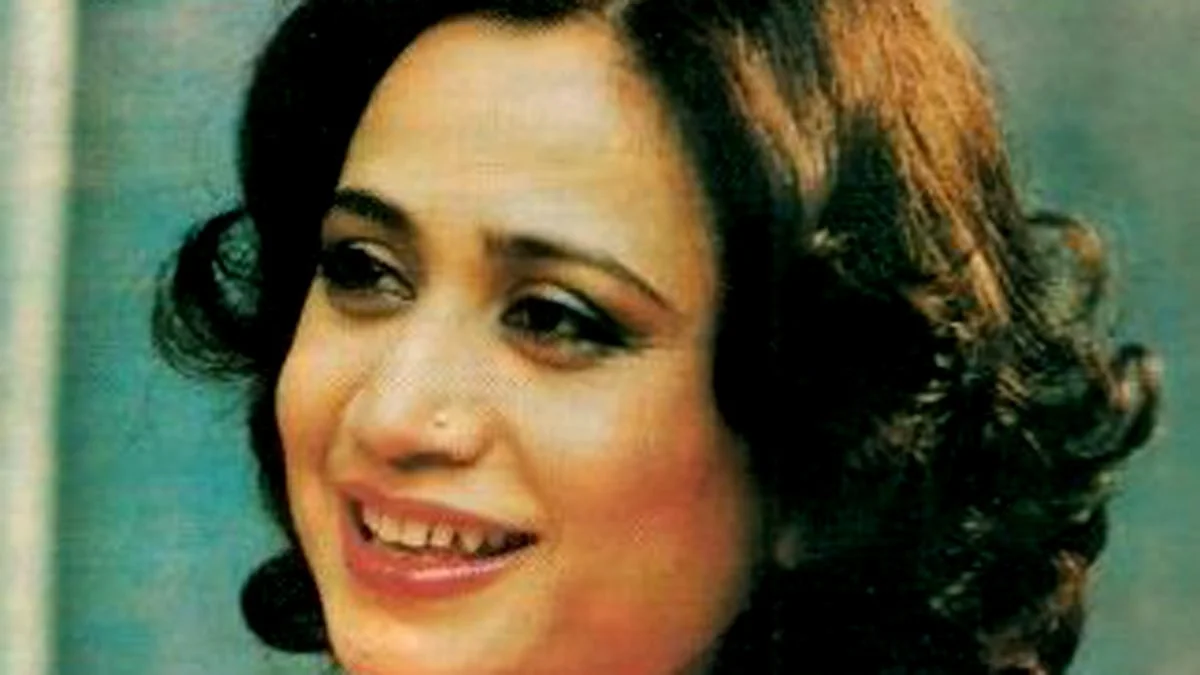
Islamabad – When the winter wind descends on the scene, everyone who is into literature takes a moment to recall a woman who reshaped Urdu literature. Even now, Poet of Fragrance, Parveen Shakir, is one of the most prominent figures of the twentieth century.
She was born in 1952, in Karachi, the daughter of the poet Syed Saqib Hussain. Her career as a bright student at Sir Syed Girls College, as a PhD student, and a graduate of Harvard University, demonstrates a rare combination of intellectual brilliance and artistic sensitivity. To a great number of people, she was not only a writer but a representative of the delicate feelings of a generation.
A Career of Service and Art
In addition to her writing, she was a full-time professional who maintained a career in the civil service alongside her creative soul. Before joining the Customs Department of Pakistan, she worked as a teacher for almost ten years. Although she reached the height of the Deputy Collector, she never forgot her muse.
This distinctive view is what enabled Parveen Shakir to compose with such bold confidence and honesty. Her skills in maneuvering the organized Federal Board of Revenue, as well as creating ethereal works such as “Khushboo”, made her win the prestigious Pride of Performance award, the best of the best in the country.
The Poetry of Feminine Truth
The most remarkable thing about her was her boldness to demonstrate the feelings of human beings with the particular language of a woman. She brought a new, colorful, even painful honesty to a world of traditional ghazals.
Parveen Shakir touched the hearts of the young generation, whether she was writing of the despair of loneliness or the ecstasy of love. Her memorable works, such as “Sad-Barg” and “Khudkalami”, still scent the literary world even now. Her poetry was a reflection where most women saw themselves, and they managed to find the words to express their own wishes, heartbreaks, and dreams of a new dawn.
A Legacy Cut Short
On December 26, 1994, her life was cut short by a fatal accident that happened in Islamabad, and it was a tragedy. She was on her way to work when her vehicle collided with a bus, leaving a void in the literary world that has never been truly filled.
The road on which the accident took place is named after her today, as a permanent reminder of her influence.
Though she is no longer with us, Parveen Shakir survives through the Parveen Shakir Trust and the millions of readers who still find solace in her verses. Her fragrance remains unvanquished by time, proving that true art is indeed immortal.
مر بھی جاؤں تو کہاں لوگ بھلاہی دیں گے
لفظ میرے،مرے ہونے کی گواہی دیں گے