
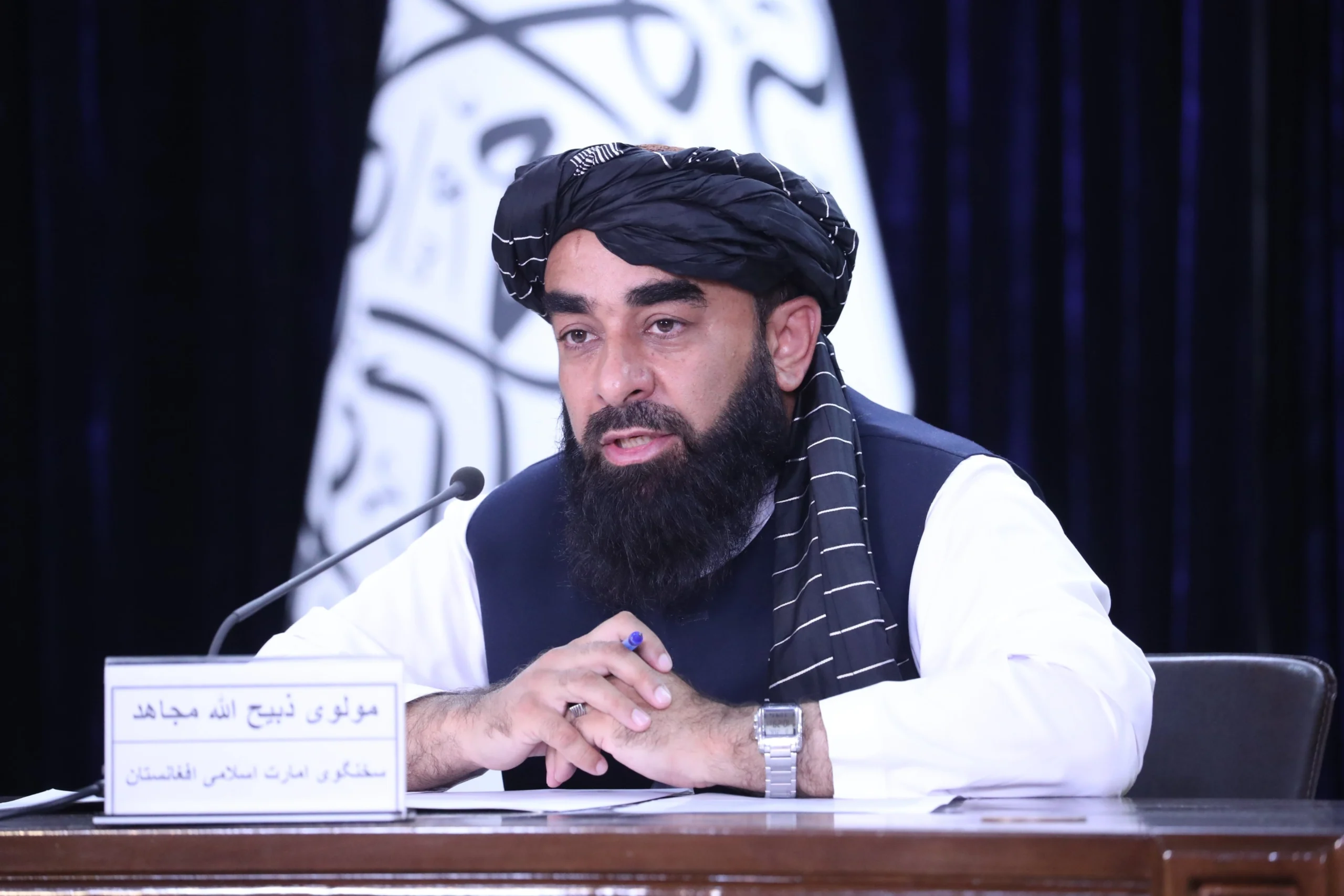
Kabul, Afghanistan — In a recent televised interview, Taliban spokesperson Zabihullah Mujahid portrayed the regime as unified, secure, economically stable, and fully compliant with Islamic law. The statement appeared aimed at projecting governance success amid domestic criticism, regional security concerns, and international scrutiny over human rights, terrorism, and economic collapse.
Security Claims Under Scrutiny
Mujahid’s assertion of nationwide peace overlooks ongoing terrorist attacks, armed smuggling, and cross-border infiltration originating from Afghan territory. According to UN reports, more than 20 international terrorist groups remain active in Afghanistan, contradicting claims of strong internal security.
Economic Narratives Mask Real Hardship
While the Taliban promotes an image of economic revival, independent verification is lacking. Widespread unemployment, a collapsed private sector, and dependence on humanitarian aid persist. Selective factory growth figures do not reflect national job creation or improved livelihoods, and claims of self-financed budgets ignore continued reliance on external aid and informal revenue sources.
Refugees and Public Services
Reported refugee returns often conceal forced or pressured relocations, leaving many without land, food, or basic services. While the regime highlights salary payments, exclusion of women from the workforce and hollow public services undermine these governance claims.
Movement, Rights, and Law
Taliban claims of unrestricted internal movement conflict with arbitrary detentions, crackdowns on protests, and fear among minorities and dissenting groups. Laws promoted as Sharia-based have faced criticism for denying due process, criminalizing disagreement, and enforcing social stratification. Religious rhetoric is sometimes used to shield power from accountability and suppress debate.
Governance Structure and Public Participation
Authority remains concentrated within a Kandahar-based clerical elite, challenging claims of merit-based and inclusive governance. Public denials and factional tensions suggest internal divisions, and development projects lack transparency, audits, or measurable social impact.
Social Stability and Education
Tourism examples cannot offset international travel advisories, embassy closures, and evacuation warnings. Regional engagement with select partners does not eliminate concerns over militancy, narcotics trafficking, and border instability. Bans on girls’ education directly undermine long-term stability, revealing governance through coercion, exclusion, and silence, rather than consent.
Conclusion
The gap between the Taliban’s messaging and the lived reality of Afghan citizens continues to widen, highlighting fragility in governance, social services, and security. While the regime projects unity and prosperity, on-the-ground conditions paint a much bleaker picture of the country’s political, economic, and social landscape.
Read more :Zabihullah Mujahid Defends Taliban’s New Penal Code in BBC Interview











