
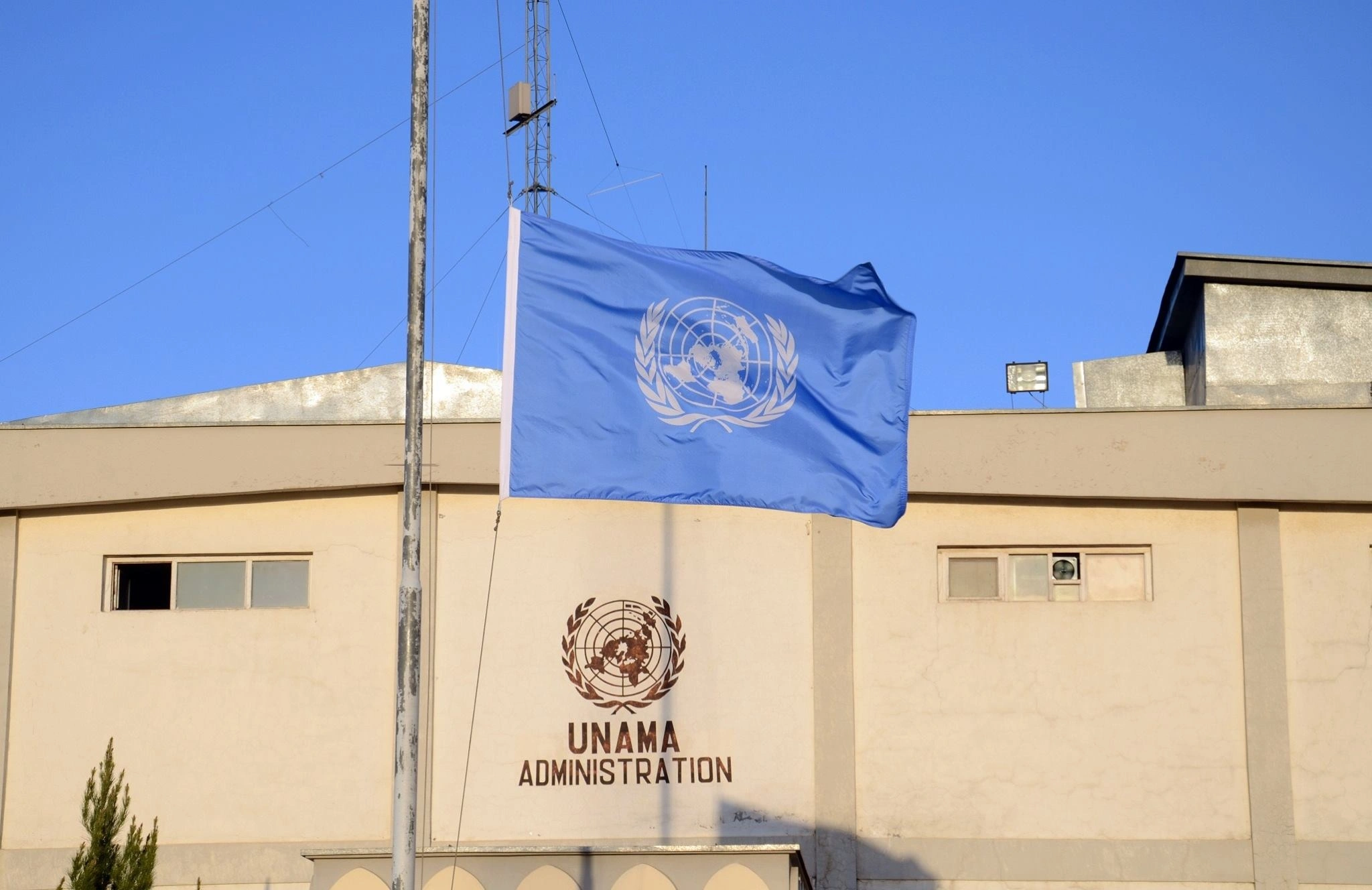
The United Nations Assistance Mission in Afghanistan (UNAMA) has reported a serious escalation in public punishments carried out by the Taliban between October and December 2025, including public flogging, executions, and sweeping restrictions on women. The report highlights a deepening human rights crisis faced by the Afghan population.
According to UNAMA, the Taliban publicly subjected 287 individuals—including women—to corporal punishment during this period and issued prison sentences of up to six years. The group also carried out public executions in sports stadiums before large crowds, a practice that reflects a policy of intimidation and social control rather than the delivery of justice.
Severe Restrictions on Women’s Daily Lives
The report notes that since September, the de facto Taliban authorities have barred Afghan women—including United Nations staff—from entering UN premises nationwide, forcing them to work from home. Women have also been prohibited from participating in medical graduation examinations, while the ban on higher education for women, imposed in December 2022, remains in force.
In the city of Herat, the Taliban’s Ministry for the Promotion of Virtue and Prevention of Vice has enforced the mandatory wearing of the burqa and has prevented women who do not comply from accessing hospitals, markets, and government offices. UNAMA also documented cases in which women were barred from traveling without a male guardian, denied access to marketplaces, and prevented from using public transportation.
Background to Afghanistan’s Human Rights Crisis
Since the Taliban’s return to power in August 2021, violations of the rights of women and girls have expanded dramatically. These include the closure of beauty salons, a rise in forced marriages, and increasing incidents of gender-based violence. UNAMA has also documented public executions of individuals convicted of murder, as well as arbitrary arrests of former government officials and members of the previous security forces.
These policies, combined with severe restrictions on freedom of expression and media, demonstrate that Afghanistan’s human rights crisis is not the result of isolated incidents but a systematic approach that threatens the future of Afghan society as a whole.
Read more :UNAMA Civilian Casualty Report: Context and Critical Analysis











