
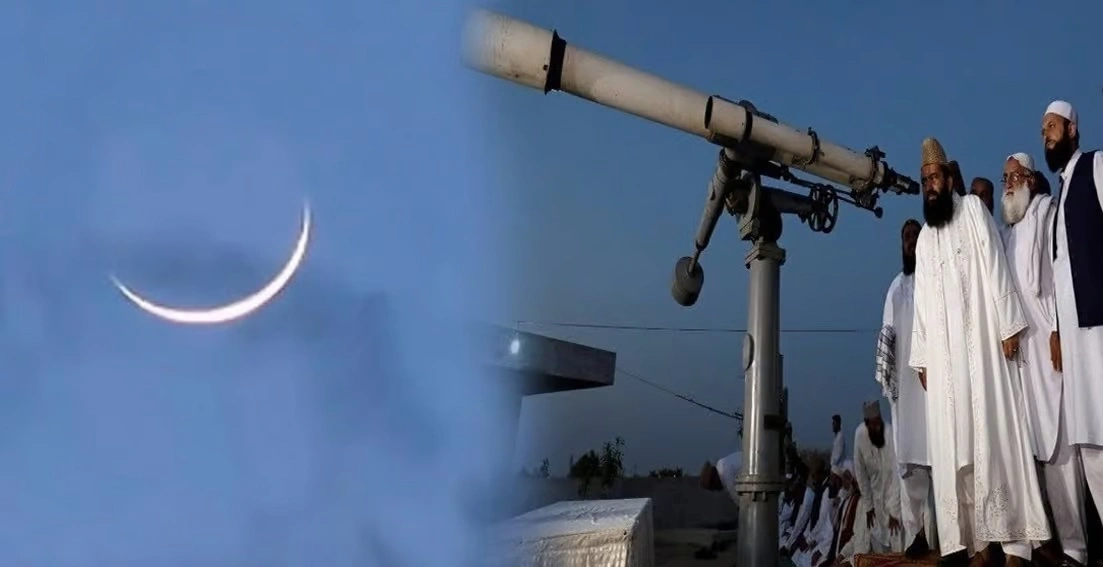
As preparations for Eid ul Fitr gather pace across Pakistan, a citizen has approached the Islamabad High Court, requesting directives for an earlier announcement of the Shawwal moon sighting.
The petition, filed by Abdullah Shafia, has been scheduled for hearing, with Chief Justice Sardar Muhammad Sarfraz Dogar set to preside over the case on Wednesday.
In his plea, the petitioner argued that delays in the official moon sighting announcement create practical difficulties for the public. He noted that people continue to offer congregational Taraweeh prayers due to uncertainty, while last-minute announcements trigger sudden overcrowding in markets and commercial centers ahead of Eid.
The petitioner further urged the court to direct relevant authorities to take preventive measures to avoid any potential law and order issues. He also requested that markets remain closed except for designated Eid shopping outlets to better manage crowds and ensure public safety.
Meanwhile, the Pakistan Space and Upper Atmosphere Research Commission has indicated that Eid ul Fitr is likely to fall on March 21 this year, following a 30-day Ramadan. According to SUPARCO, the new moon of Shawwal 1447 AH is expected to be born on March 19 at 06:23 PST. However, due to the moon’s relatively young age and limited visibility window at sunset, the chances of sighting the crescent on that evening are considered low.
Based on these astronomical estimates, the first day of Shawwal is anticipated to fall on March 21. However, the final and official announcement will be made by the Central Ruet-e-Hilal Committee, which holds the authority to confirm the sighting of the moon and declare the beginning of Eid ul Fitr in the country.
The case highlights ongoing public concerns regarding the timing of moon sighting announcements and their impact on religious practices, market activity, and overall public order during one of the most significant Islamic festivals.











