
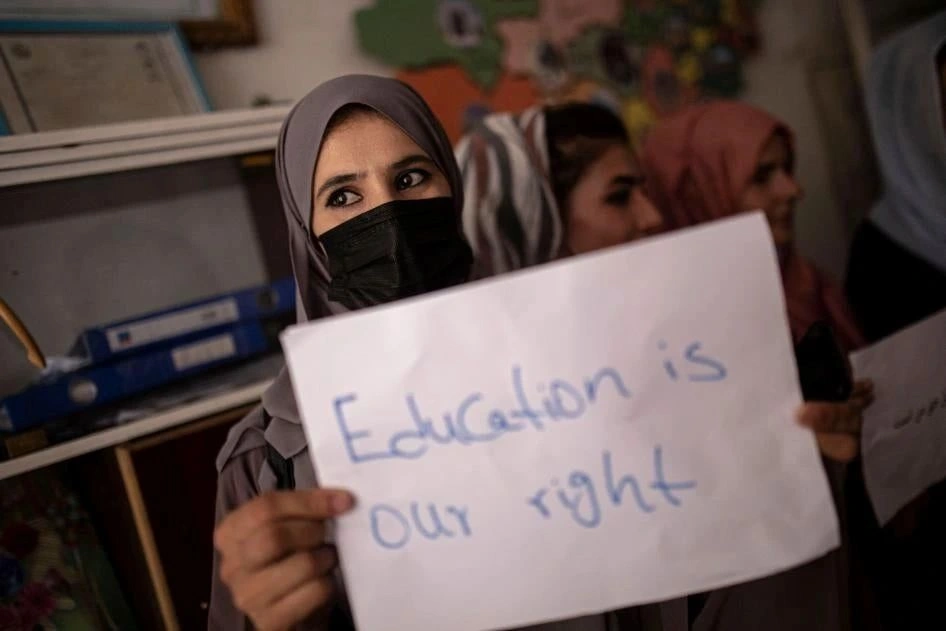
In Helmand Province, Afghanistan, the head of the local Ulema Council, Maulvi Mohammad Gul, has issued a new fatwa opposing women’s education and employment, triggering widespread debate and international criticism.
According to his statement, restrictions on women’s access to education and workplaces are necessary in the current environment and align with what he described as Islamic principles and social values. He argued that limiting such activities is essential for societal reform and claimed that women’s education could lead to moral decline, asserting that curbing it would benefit the country.
The development comes amid ongoing restrictions affecting women across Afghanistan, where thousands of female students have already seen their academic futures disrupted. Many young women who aspired to become doctors, engineers, or teachers are now confined to their homes.
Economic analysts warn that bans on women’s employment have placed significant financial strain on households that relied on female income, contributing to a worsening humanitarian and economic situation in the country.
Supporters of such measures argue they are necessary to preserve moral order, while human rights organizations and international bodies have strongly criticized the move. They say denying women access to basic rights constitutes a serious violation of human rights and poses a major obstacle to Afghanistan’s long-term development.
Medical experts have also raised concerns about the psychological impact of prolonged social isolation and restrictions on education and employment. They warn of rising levels of stress, anxiety, and depression among Afghan women.
Analysts emphasize that a stable future for Afghanistan will require balanced and inclusive policies that ensure women’s access to education and participation in society, enabling all segments of the population to contribute to national development.











