
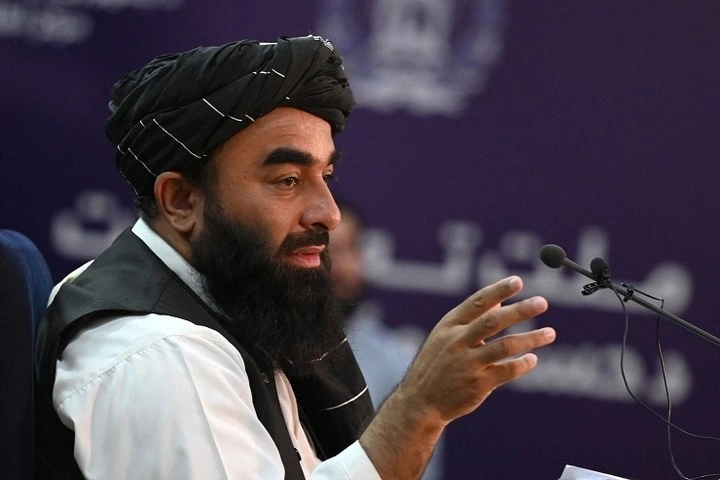
Islamabad — Following remarks by Afghan Taliban spokesperson Zabihullah Mujahid accusing Pakistan of supporting ISIS, documented evidence and security assessments have strongly contradicted the Afghan narrative, exposing what officials describe as a misleading attempt to shift responsibility.
Experts and state-linked reports argue that before accusing others, Afghan authorities should address internal security failures that have allowed extremist networks to persist and expand within their territory.
ISIS Emergence and Prison Releases
According to historical accounts and security analysis, ISIS first emerged in Afghanistan around 2014, following contacts between fighters from Iraq and Syria and local militant commanders. The group later expanded its footprint across several provinces.
Reports also highlight that after the Taliban takeover of Kabul in 2021, thousands of prisoners were released from facilities including Bagram prison, among them individuals linked to extremist groups. Security observers argue that this development contributed to the regrouping of ISIS networks in the region.
Officials in Pakistan reject claims linking ISIS operations to Islamabad, calling them politically motivated narratives designed to divert attention from Afghanistan’s internal security challenges.
Pakistan as a Primary Target of ISIS Attacks
Security data indicates that Pakistan itself has been one of the major targets of ISIS-linked violence in the region. Attacks in cities such as Quetta, Karachi, Peshawar, and incidents involving religious sites have been claimed by ISIS, reinforcing Pakistan’s position as a frontline state against the group.
Officials also point to international acknowledgments of Pakistan’s counterterrorism efforts, including the arrest of ISIS-linked militants involved in attacks against US forces in Afghanistan.
Militant Presence in Afghan Provinces
Intelligence reports suggest that eastern Afghan provinces including Nangarhar, Kunar, and Nuristan continue to serve as operational hubs for ISIS affiliates. Security sources further allege overlapping networks between ISIS-K and other militant groups operating in the region.
Some reports also claim links between certain Afghan intelligence figures and extremist elements, though these remain subject to ongoing investigation and verification.
Evidence of Cross-Border Militancy
Pakistan maintains that credible evidence shows involvement of individuals operating from Afghan territory in planning and facilitating attacks inside Pakistan. Several suicide attackers have been traced back to cross-border networks, according to security officials.
Repeated calls by Islamabad for action against these safe havens, officials say, have not received adequate response from the Afghan administration.
Official Position
Pakistan reiterates that all forms of terrorism are unacceptable regardless of ideology or affiliation. The country emphasizes that its security forces and citizens remain committed to eliminating extremist threats.
Officials further state that external accusations cannot replace the need for internal accountability, urging Afghan authorities to focus on dismantling militant infrastructure within their own borders.











