
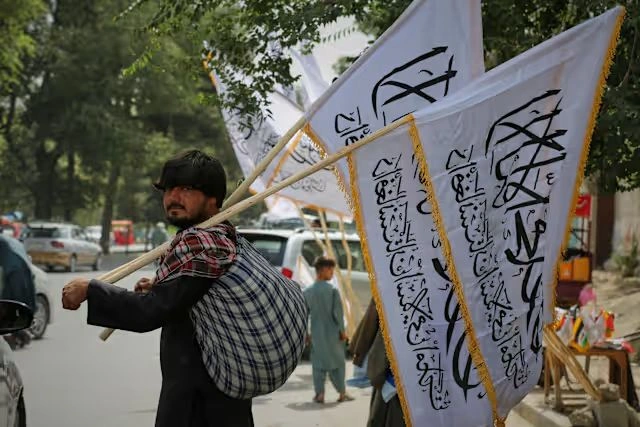
Kabul — Four years after the Taliban’s return to power in August 2021, the promises of “stability” and “change” appear increasingly distant, as Afghanistan moves deeper into what analysts describe as an authoritarian and ideologically rigid system with serious regional implications.
Recent decrees issued from Kandahar and developments on the ground suggest that the Taliban administration is consolidating a closed ideological structure rather than evolving into a responsible state. Critics argue that governance, economic survival, and regional peace are being subordinated to a narrow ideological agenda, raising concerns across neighboring countries.
A recent order by Taliban Supreme Leader Hibatullah Akhundzada to remove the word “national” from all state institutions and replace it with “general” has been widely interpreted as more than an administrative change. Analysts say it represents a rejection of the modern nation-state concept, with the term “national” long embedded in Afghanistan’s historical and cultural identity. The move is seen as an attempt to replace national identity with a centralized ideological framework.
Observers warn that the Taliban’s rejection of borders and state structures mirrors narratives associated with extremist organizations such as ISIS and Al-Qaeda, raising security concerns for regional countries including Pakistan, Iran, and Central Asian states.
Contradictions in Counterterrorism Claims
The report highlights what it calls a dual approach by the Taliban toward terrorism. While spokesperson Zabihullah Mujahid has accused Pakistan of supporting ISIS, security assessments point to the continued presence of ISIS-linked fighters and thousands of militants operating inside Afghanistan, including individuals released after the fall of Kabul in 2021.
Pakistan maintains that it possesses evidence of cross-border militant activity, including attackers traced back to Afghan territory. Officials argue that Afghanistan has become a safe haven for various militant networks, while ordinary Afghan citizens continue to bear the consequences of instability.
Humanitarian and Social Concerns
Inside Afghanistan, concerns over human rights and social exclusion are growing. Minority communities, including the Hazara population, continue to face security threats, while restrictions on women’s education and employment have significantly reduced their participation in public life.
International reports estimate that tens of millions of Afghans are facing multidimensional poverty, while economic priorities appear to be focused on tighter state control over education rather than broad-based reform.
Economic and Investment Challenges
On the economic front, expectations of major foreign investment, particularly from China, have not materialized as security concerns and instability continue to deter large-scale projects. Attacks on foreign nationals and restrictions on movement have further complicated investment prospects, including in mining and infrastructure sectors.
Analysts say that without a stable and predictable governance framework, Afghanistan risks prolonged isolation and continued economic decline.
Conclusion
Experts conclude that the Taliban’s current trajectory—marked by ideological rigidity, alleged tolerance of militant networks, and restrictions on civil liberties—poses serious challenges for both Afghanistan and the wider region. Unless there is a shift toward inclusive governance and international engagement, Afghanistan may remain trapped in cycles of instability, humanitarian crisis, and strategic isolation.
Read more :Taliban Decree Removing “National” from State Institutions Raises Global Concerns











