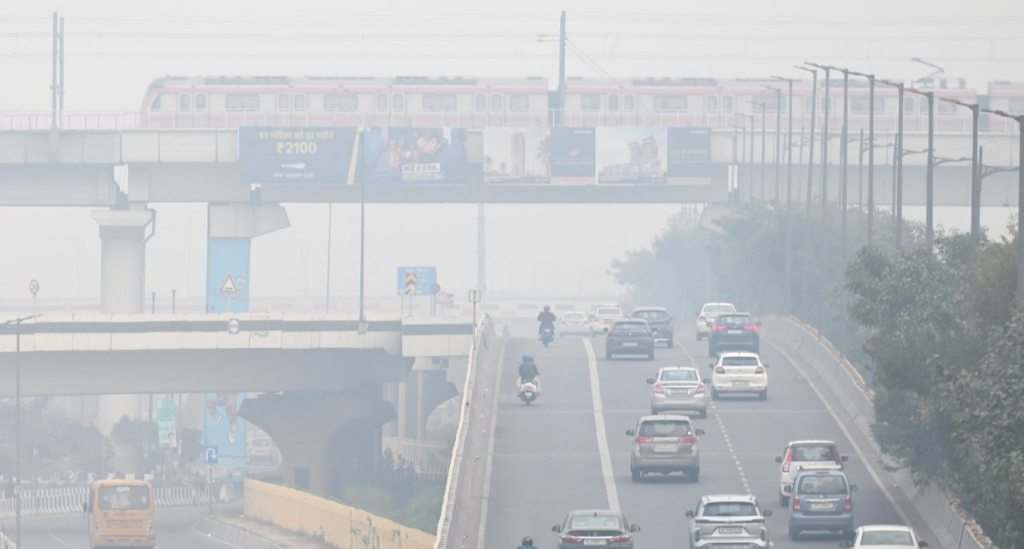
NEW DELHI – Delhi overtook Pakistan’s Lahore on Friday to become the world’s most polluted major city, as a thick blanket of smog reduced visibility across the Indian capital.
Swiss air quality monitoring group IQAir recorded Delhi’s Air Quality Index (AQI) at 334, placing it at the top of its global ranking of major cities. The group classified the reading as “hazardous”. An AQI reading of up to 50 is considered good, with little or no health risk.
India’s Central Pollution Control Board (CPCB) recorded a higher AQI of 403 for Delhi and classified the air quality as “severe”. The gap between the two figures reflects the different scales and methodologies each uses to calculate and classify pollution. Both readings point to seriously polluted conditions in the city of about 20 million people.
Videos from the news agency ANI showed cars and motorcycles emerging from dense smog, which also appeared to obscure streetlights on main roads.
Lahore’s Smog Crisis
Lahore had topped the same IQAir ranking for much of the past two weeks. On November 11, the Pakistani city recorded an AQI of 451, with rain forecast over the following two days that could ease pollution while bringing colder weather. A report by PAQI covering November 4 to 10 found that Lahore’s average PM2.5 concentration was 207.1 micrograms per cubic metre, 32 per cent higher than in the same period last year.
The smog has already disrupted public life in Punjab. The Pakistan Cricket Board moved the second Pakistan–Sri Lanka Test, scheduled for Lahore’s Gaddafi Stadium from November 17 to 21, to Rawalpindi.
A Seasonal Problem
Pollution is a seasonal problem in much of northern India and neighbouring Pakistan, as the cold, heavy air of winter traps vehicle emissions, construction dust and smoke from agricultural burning. In Lahore, the smog season begins in late October, peaks between November and January and lasts through February.
City rankings from live monitoring platforms change through the day, and Delhi’s lead over Lahore may not hold as weather conditions shift.