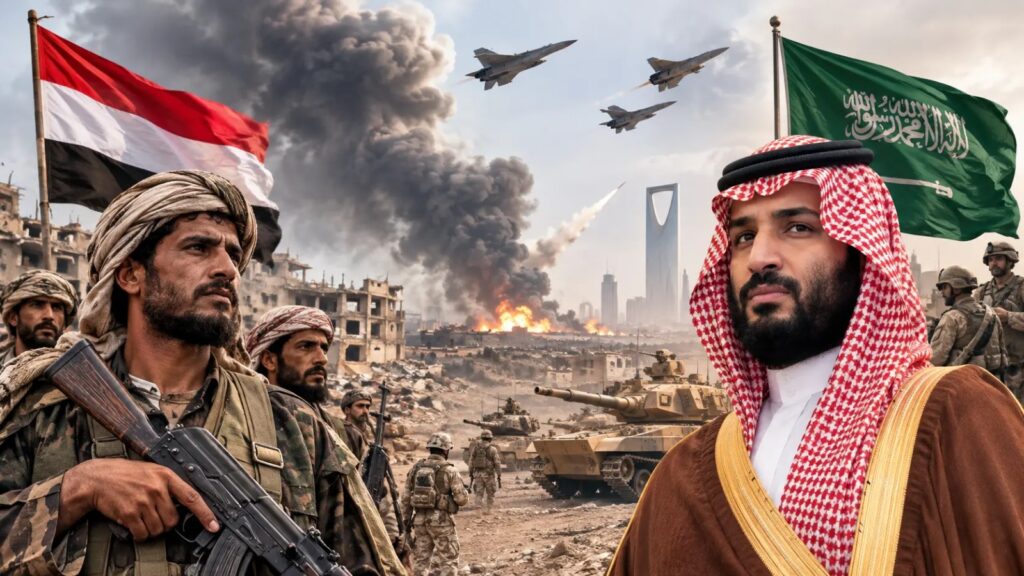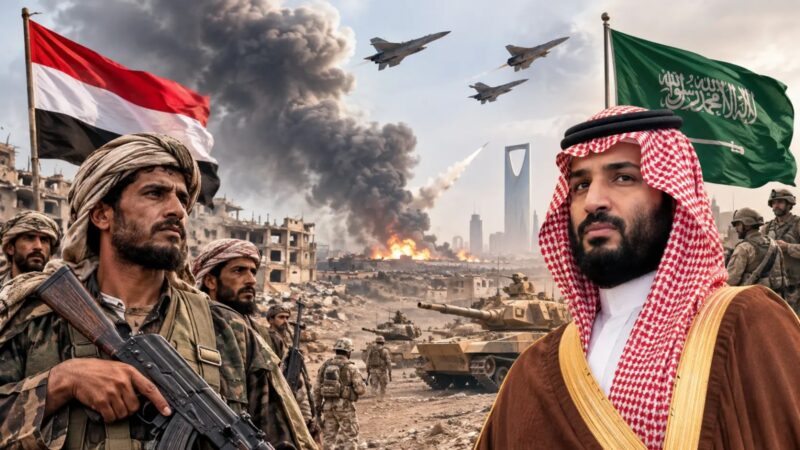
According to a recent Reuters report, Saudi Arabia is preparing to extend its campaign against the Houthis in Yemen into next year. The report is based on two Western officials who were briefed on Saudi plans, and a third person familiar with the matter also confirmed the details. None of the three was named, and Riyadh has made no official announcement. The report should therefore be read as an indication of Riyadh’s thinking, not as a final decision. The central question is why Saudi Arabia would choose to prolong a war that is causing it difficulty both on the battlefield and in its own cities.
To answer that, it is necessary to look first at what is happening on the ground. The 2022 truce held until the summer, but the Yemen front reopened during the wider war with Iran. The Houthis then seized the Red Sea coast and the strategically important Bab al-Mandab route, and laid siege to Taiz. Last month, government forces recaptured some territory, but at the end of last week they were forced to pull back to defend Aden. Soon afterwards, Saudi Arabia replaced the commander of the coalition. When the outcome of a war is not going as desired, a change of leadership is a kind of admission of necessity: the old approach is not working.
Now consider the central point of the report. The main aim of the longer campaign is said to be for coalition forces to achieve significant gains on the ground before any possible negotiations with the Houthis. It is an old rule of the negotiating table that the side that is strong on the ground is strong at the table. If Saudi Arabia were to move toward talks today, it would do so while the coast and Bab al-Mandab are in Houthi hands. A hasty compromise could therefore be a losing deal for Riyadh. Seen this way, the extended preparation looks less like a sign of weakness and more like an attempt to restore bargaining power.
Yet the same logic has a reverse side. A longer war also means that Saudi Arabia will have to pay the price at home. Aramco’s headquarters has already been attacked. Most flights at Riyadh airport have been suspended after deadly attacks. Several international events, including a major investment conference, have been cancelled or postponed. The Asian Cup football tournament has had to be pushed back from January 2027 to December 2027. For Saudi Arabia, this is not merely a matter of inconvenience. The country’s entire economic strategy rests on the image of the kingdom as a safe, attractive and open destination for the post-oil era. Every postponed event is a scratch on that image. Riyadh is therefore caught between two pressures: the cost of a hasty settlement on one side, and the cost of a long war on the other.
Another significant signal in this tug-of-war is a change in the official narrative. At the outset, the kingdom presented the fighting as an internal Yemeni matter in which it was limited to supporting allies and defending itself. After repeated attacks on its cities, that position became difficult to sustain. Warnings are now issued before attacks and detailed statements after them. State media shows images of the damage, and a sermon at a major mosque in Riyadh even included a prayer for soldiers on the border. This suggests that the state is mentally preparing the public for a long period. Acknowledging a war rather than concealing it often indicates that the government itself does not expect it to end soon.
The keys to this entire situation are not fully in Riyadh’s hands. According to the report, one key lies in Washington. Saudi officials believe that if the United States were to provide aggressive military support for Saudi operations in Yemen, which has so far been withheld, the course of the war could change within a few weeks. However, the Trump administration has so far avoided opening another major front in the region. The second key lies in Tehran. According to all three sources cited in the report, an agreement to end the wider war with Iran could also reduce tensions in Yemen. This means that the fate of the Yemen war will be decided largely outside Yemen, and Saudi Arabia’s long preparation is also preparation for waiting to see what the major powers decide.
Three possible paths emerge from here. The first is that a major agreement is reached with Iran and the Yemen front cools down as well, in which case preparing for a long war will have proved to be only a precautionary plan. The second is that the United States changes its policy and openly supports Saudi operations, which could shift the balance of the war but could also raise tensions in the region. The third and most difficult is that neither happens. Months would then pass, attacks would continue, and Saudi Arabia would remain trapped in a war whose cost keeps rising and whose outcome stays unclear. The likelihood of this third scenario should not be underestimated.
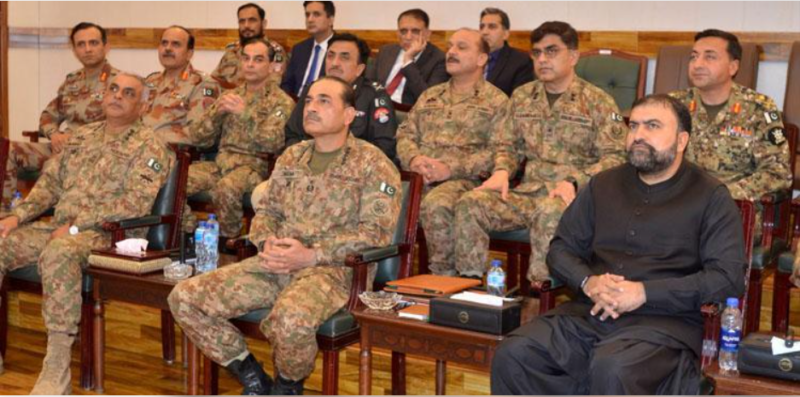
The matter is also important for Pakistan, because a joint defence agreement was signed in Makkah in August between Pakistan, Saudi Arabia and Türkiye. Defence Minister Khawaja Asif said that the agreement would be activated if the fighting in Yemen took the form of unprovoked aggression on Saudi territory. At the same time, he described reports that Riyadh had asked for strikes on Houthi positions in Yemen as mere speculation. So far, neither Pakistan nor Türkiye has taken direct military action in Yemen, and Islamabad’s official position is that the solution lies in negotiations. If Saudi Arabia carries the war into next year, the agreement will face a tougher test, because defending Saudi Arabia and joining an offensive campaign in Yemen are two different things, and it will not be easy for Pakistan to draw a line between them.
Ultimately, Saudi Arabia’s preparation appears to be, at its core, a gamble. Riyadh is betting that time will work in its favour, meaning that within a few months it will either shift the balance on the ground or the decisions of the major powers will clear the way for it. If the bet is won, it will negotiate from a position of strength. If it is lost, it will pay the price of a war that continues to weigh on both its economic ambitions and its security. And amid all these calculations, those who suffer most are the Yemeni civilians, who have no part in this decision but over whose heads the shadow of war grows darker every day.