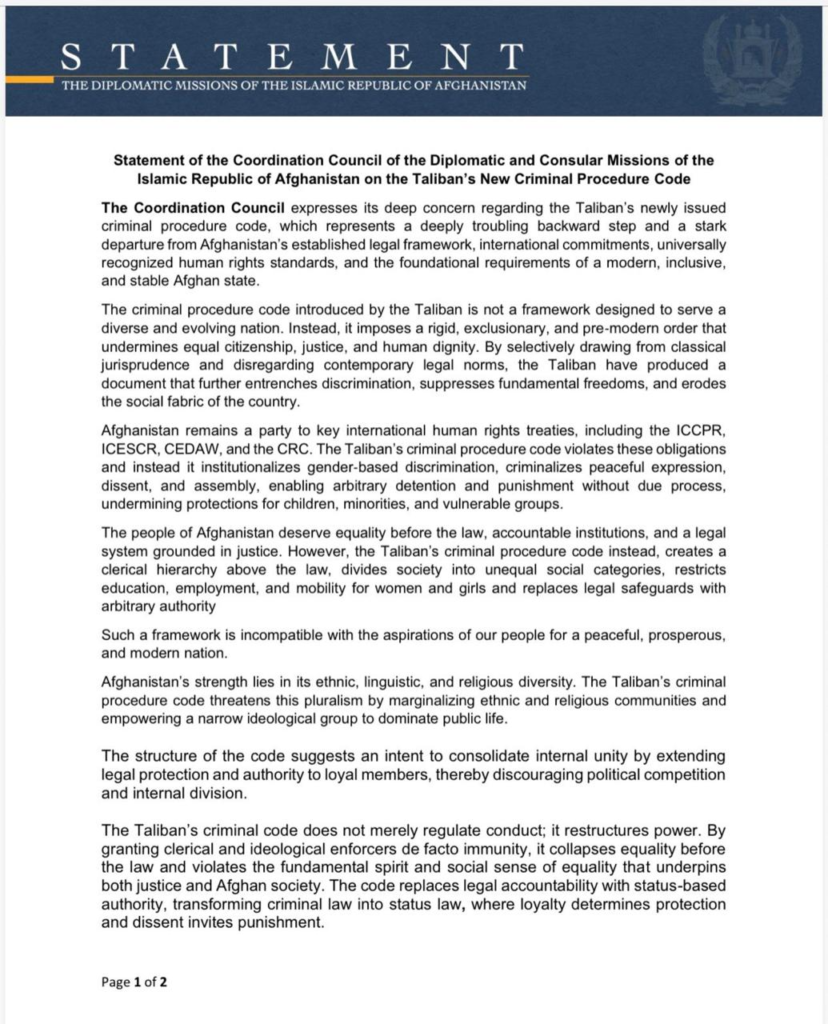
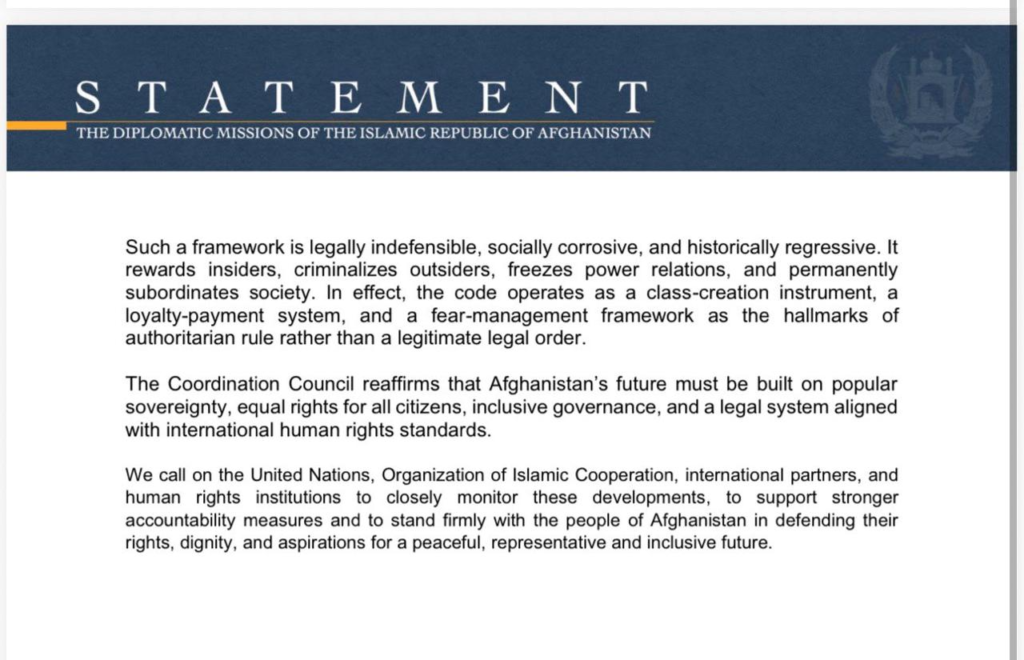
The Coordination Council of Diplomatic and Consular Missions of Afghanistan has strongly criticized the Taliban’s recently issued criminal procedure code. Officials described the measure as a regressive step that undermines established legal frameworks and jeopardizes fundamental rights.
Gender-Based Discrimination and Restrictions on Expression
The council emphasized that the new code institutionalizes gender-based discrimination and criminalizes peaceful expression. These actions violate major international human rights treaties, including the International Covenant on Civil and Political Rights (ICCPR) and the Convention on the Elimination of All Forms of Discrimination against Women (CEDAW).
Status-Based Authority and Impunity
Under the new framework, legal accountability is replaced by status-based authority, granting de facto immunity to clerical enforcers. The code creates unequal social categories and has been described as a legally indefensible instrument designed to enforce loyalty, extract payments, and maintain control through fear.
Call for International Oversight
The council urged the United Nations and international bodies to closely monitor developments in Afghanistan. Officials stressed the importance of supporting accountability measures to safeguard the rights of the Afghan people.
Global Concerns
The code’s introduction has drawn widespread concern among diplomats, human rights groups, and international legal experts. Analysts warn that the law could entrench social hierarchies and further isolate Afghanistan from the international community.
Read more :Taliban Enforce New Criminal Code Signed by Hibatullah, Deepening Repression Across Afghanistan