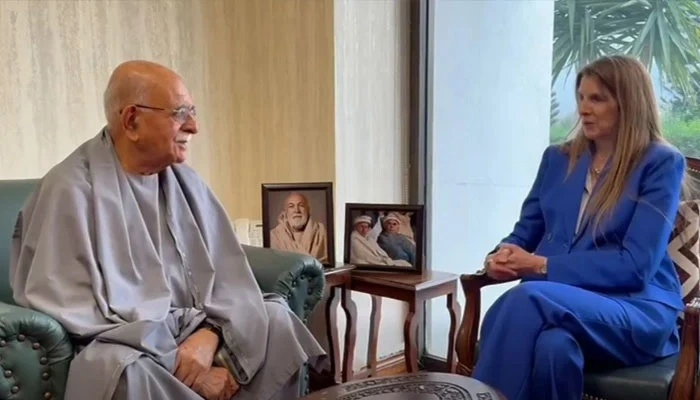
On March 11, British High Commissioner Jane Marriott met with Mahmood Khan Achakzai, Leader of the Opposition in Pakistan’s National Assembly, in his parliamentary chamber. The meeting was also attended by Hussain Ahmed Yousafzai, spokesperson for the Tehreek-e-Tahaffuz-e-Aain Pakistan (TTAP).
During the meeting, both sides discussed issues of mutual interest between Pakistan and the United Kingdom, the promotion of bilateral relations, regional developments, and potential economic impacts of fluctuating global oil prices. The discussion emphasized the importance of cooperation, strengthening democratic values, and promoting peace and stability in the region. The meeting reportedly took place in a cordial and constructive atmosphere, with both sides agreeing to maintain ongoing engagement on matters of shared concern.
Questions Over Political Timing
Some observers have raised questions about the timing of this meeting in a sensitive political environment. While Pakistan maintains positive relations with the UK and other countries, diplomatic protocol traditionally requires engagement on state matters through the elected government. Transparency in such interactions is considered essential to avoid misinterpretation.
Opposition Leader’s Availability
It has been noted that Mahmood Achakzai did not attend other significant security meetings chaired by the Prime Minister, yet he was able to meet with the British High Commission. This has fueled debate over the balance between maintaining diplomatic relations and adhering to protocol that involves the elected government in official matters.
Historical Stance on Afghanistan
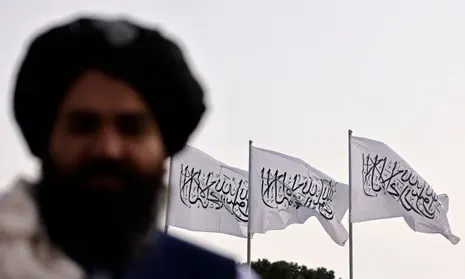
Achakzai has historically maintained a soft stance on Afghanistan, often issuing fewer criticisms of Afghan policies while speaking sharply on Pakistan-related matters. His role as Opposition Leader, coupled with PTM’s increased activities and meetings with foreign diplomats, has prompted speculation that these interactions may signal a broader political strategy rather than mere coincidence.
Concerns About Broader Implications
Critics argue that Achakzai’s approach could be part of a larger political maneuver, especially given his history of soft commentary on Afghanistan and firm criticism of Pakistan. The increased activity of PTM and foreign diplomatic engagements have led some to question whether these developments are part of a coordinated plan, raising debate about the possibility of external influence or “regime change” narratives.
This meeting, while officially framed as a discussion on bilateral relations and regional matters, has inevitably drawn scrutiny due to the political sensitivities surrounding foreign engagement with opposition leaders in Pakistan.