Skip to content
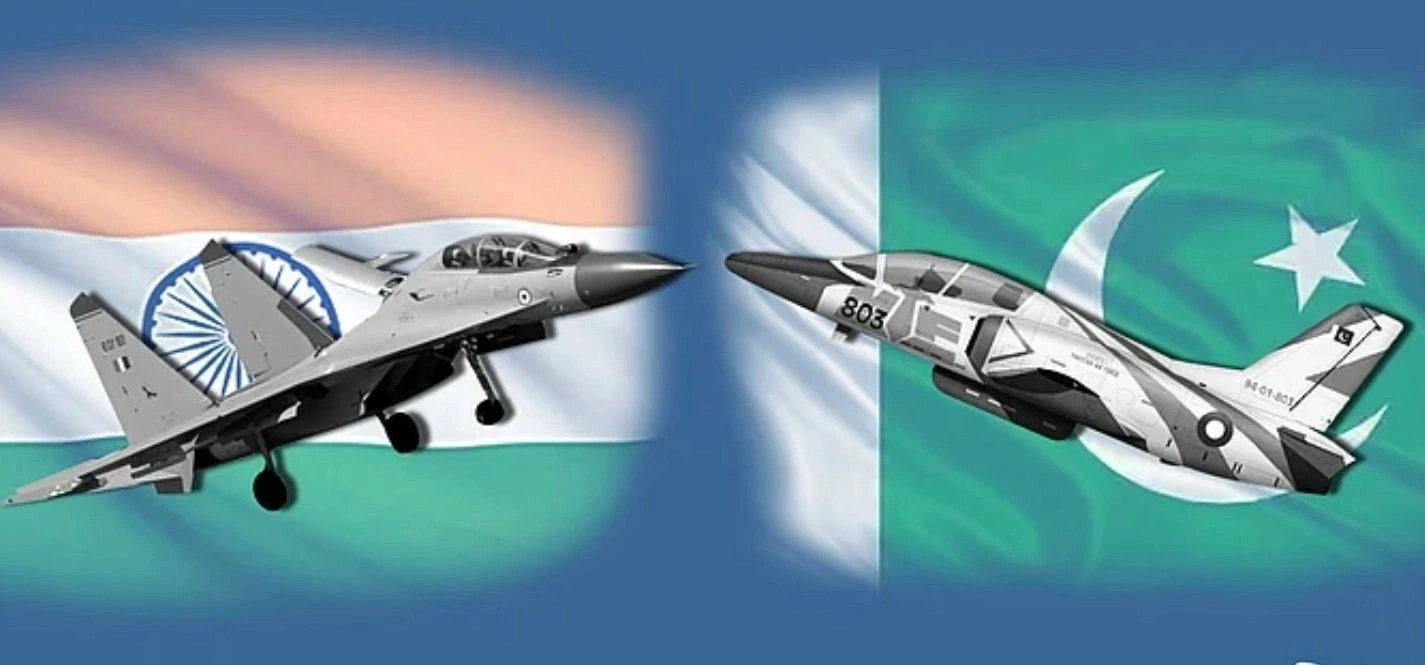
Islamabad — A report published by the Centre for Military History and Perspective Studies (CHPM) titled “Operation Sindoor: The India–Pakistan Air War (7–10 May 2025)” has come under sharp criticism from analysts, who argue that the study fails to meet basic standards of factual verification, internal coherence, and analytical rigor required for a serious strategic assessment.
According to experts, any analysis dealing with a conflict between two nuclear-armed states must be grounded in strict neutrality and evidence-based evaluation. Critics say the CHPM report falls short of these requirements and instead relies heavily on unverified claims while ignoring widely available contradictory evidence.
Pulwama Incident: Allegation Presented as Established Fact
The report attributes responsibility for the 19 February 2019 Pulwama attack to Jaish-e-Mohammad, treating the claim as settled fact. Analysts note, however, that this allegation has never been substantiated through independent forensic investigations, judicial rulings, or third-party intelligence verification. They further point out that several Indian politicians, journalists, and analysts themselves publicly questioned the incident, with some suggesting it bore the hallmarks of a possible false-flag operation for domestic political purposes. The CHPM report, critics argue, ignores these dissenting views entirely.
Balakot Airstrikes: Disregarding Ground Realities
On the Balakot airstrikes, the report repeats India’s claim that missiles successfully hit their targets and caused damage. Critics counter that shortly after the incident, Pakistan facilitated visits by international journalists and foreign diplomats to the site. Independent reporting showed that the munitions landed in a forested ravine, with no damaged structures and no casualties. These findings, widely documented in open sources, are omitted from the report.
February 26, 2019 Air Engagement: Conflicting Claims
The report asserts that Pakistan was forced to abort its retaliatory mission and that its aircraft hastily jettisoned ordnance. Simultaneously, it claims that Pakistani munitions landed close to Indian military installations. Analysts describe this as logically inconsistent, noting that weapons released during an aborted mission do not coincidentally fall near designated targets.
Critics also highlight that Pakistan’s military spokesperson had clearly stated on the same day that Pakistan deliberately avoided striking military installations, opting instead to demonstrate capability and resolve without causing casualties in order to prevent escalation.
May 2025 Conflict: Narrative Inconsistencies
The report’s account of the May 2025 conflict contains further contradictions. It claims that seven out of nine Indian targets were assigned to the Indian Army, yet provides no explanation of when or how those targets were engaged. Later, the report attributes all strikes to the Indian Air Force, leaving the earlier assertion unresolved.
Regarding air operations, the report claims Pakistan failed to detect Indian strike aircraft, while also stating that Pakistani fighters engaged Indian jets at the moment they released their weapons. Analysts argue that both claims cannot simultaneously be true: engagement presupposes detection.
The report further alternates between stating that Pakistan engaged Indian strike aircraft and claiming it only engaged patrol aircraft, without clarifying which aircraft were targeted during weapons release.
S-400 and AEW&C Claim Labeled Implausible
Another contentious claim involves an alleged Indian S-400 air defense system ambushing and downing a Pakistani AEW&C aircraft approximately 300 kilometers inside Pakistani territory. Security experts describe this scenario as operationally implausible, citing the absence of wreckage, radar data, or independent corroboration, and the extraordinary technical requirements such an engagement would entail.
Incorrect Timeline of Strikes and Ceasefire
The report alleges that Pakistan conducted missile and air strikes on the nights of 7–8 and 8–9 May. Analysts state this is factually incorrect, noting that Pakistan’s retaliatory strikes occurred only on the morning of 10 May, involving the Pakistan Air Force and Fateh-series missiles. Prior to that, only limited drone surveillance was conducted.
Critics also reject the report’s claim that Pakistan “begged” for a ceasefire on the evening of 10 May. They point out that by midday, Pakistan’s foreign minister had already announced that a ceasefire had been agreed and would take effect at 5 pm, following earlier indications from Indian military officials expressing readiness for a ceasefire.
Double Standards on Evidence
Analysts argue that the report applies asymmetric evidentiary standards, accepting Indian claims of destroying Pakistani air assets without presenting any visual proof, while ignoring widely circulated images, serial numbers, and wreckage of downed Indian aircraft documented by international media and open-source analysts.
The report’s silence on contradictory statements and post-conflict misinformation by Indian political and military leadership, critics say, further undermines its credibility.
Final Assessment
Experts conclude that the CHPM report is not merely biased but structured around that bias, treating Indian claims as fact and Pakistani positions as propaganda while dismissing contradictory evidence. They argue that the report serves as an example of how strategic analysis loses credibility when narrative loyalty replaces intellectual discipline.