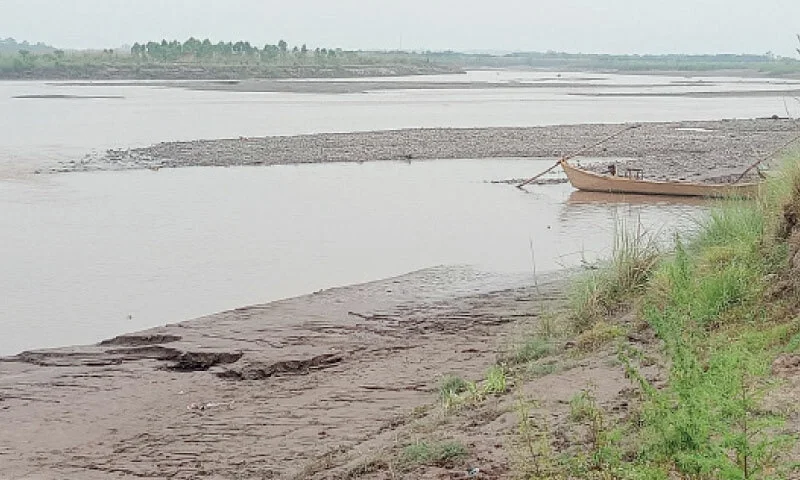
Lahore – A new and dangerous crisis is occurring on the banks of the Chenab River as the unpredictable water flows jeopardise the very existence of millions of farmers in the agricultural heartland of Pakistan.
Recent reports show that the level of the rivers abruptly increased to 58,300 cusecs due to unexpected releases of the upstream dams.
This has resulted in an upsurge in coercive water politics as downstream communities exist in constant fear that such surges will be succeeded by an absolute cut off as reservoirs are filled up.
A Threat to the National Breadbasket
To the Punjab farmers, water is not merely a resource; it is their blood. This present disturbance comes at a very crucial moment during the wheat production season, where constant irrigation is the key to a good crop.
Through coercive water politics, the practice of using river flows as a lever of pressure threatens the national food security of Pakistan.
With sudden changes in water level, irrigation systems become unstable, resulting in reduced production of crops and increasing debts of families who have used this land since time immemorial.
Breaking a Historic Bond
The Indus Waters Treaty (IWT) can be described as an exceptional instance of successful diplomacy, which has survived decades of warfare.
But the recent move by India to abide by the treaty following the Pahalgam incident has left these joint waters with a lack of predictability that used to keep them secure.
Scholars believe that coercive water politics, instead of cooperation, is the very essence of international law.
The inability to share data and the unwillingness to organize the work of dams have turned a lifeline into a geopolitical weapon, which exposes millions of individuals to clouds of sudden flooding or catastrophic droughts.
The Human and Economic Toll
The effect of such measures is felt way above the banks of the rivers. About 25 percent of the Pakistani economy is based on agriculture, and the recent uncertainty is throwing up a regional crisis that is soon to transform into a national catastrophe.
With international organizations such as the World Bank and UN worrying over the increasing volatility of the region, there is a threat to the stability of the region.