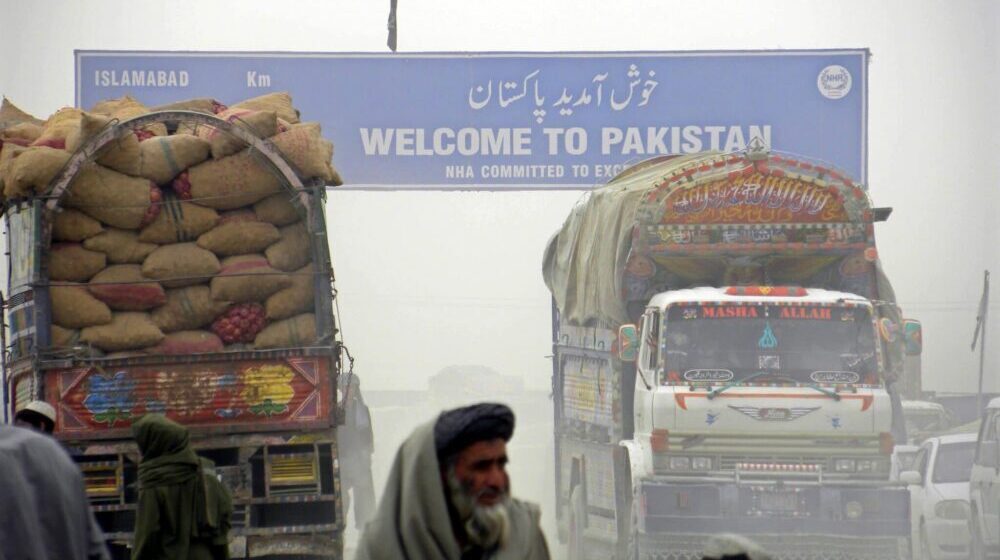
Pakistan’s Federal Board of Revenue has allowed the re-export of Afghan transit trade consignments that had been stranded for months in Chaman and Quetta.
The decision permits the movement of these goods to Karachi Port and Port Qasim under strict customs supervision. The move comes after prolonged border closures disrupted regional trade and caused heavy losses for traders on both sides.
The shipments had been stuck since October 2025, when major border crossings between Pakistan and Afghanistan were closed due to rising security tensions.
As a result, Afghan Transit Trade operations were suspended, leaving thousands of containers stranded and supply chains severely affected. While the latest decision does not restore regular trade, it offers partial relief to businesses facing mounting financial pressure.
Why the Cargo Was Held Up for Months
To understand the impact, it is important to look at the background. Border crossings were shut on October 10, 2025, following deadly clashes along the frontier.
A few days later, the FBR officially suspended all Afghan Transit Trade operations from Karachi’s ports. Gate passes were cancelled and the clearance of transit cargo was stopped at both Karachi Port and Port Qasim.
As time passed, the situation worsened. Thousands of shipments remained stuck at Chaman, Quetta, and Karachi, affecting more than 10,000 Afghan and Pakistani traders. Losses reportedly ran into billions of rupees.
Although ceasefire talks were held through international mediation, regular trade did not resume, leaving traders with no clear timeline for relief.
How the Re-Export Process Will Work
Now, the FBR has allowed what it calls the reverse movement of stranded cargo. This means goods held at Chaman and Quetta can be transported back to Karachi ports for re-export. However, the process will follow strict rules to ensure compliance.
Transport companies must submit formal requests, and each convoy will be limited to 15 vehicles. A customs official will accompany every convoy.
Tracking and monitoring devices must be fully functional, and all related payments must be cleared before movement begins. Each container will also undergo inspection to confirm that seals are intact and no discrepancies exist.
Officials say this step will help ease congestion, reduce financial losses, and bring some stability to disrupted supply chains.
At the same time, authorities stress that coordination between traders and customs teams is essential to avoid further delays.
For now, the decision offers controlled relief, while broader trade normalization remains uncertain.
Read more : Torkham Border Deadlock Deepens as Istanbul Talks Collapse