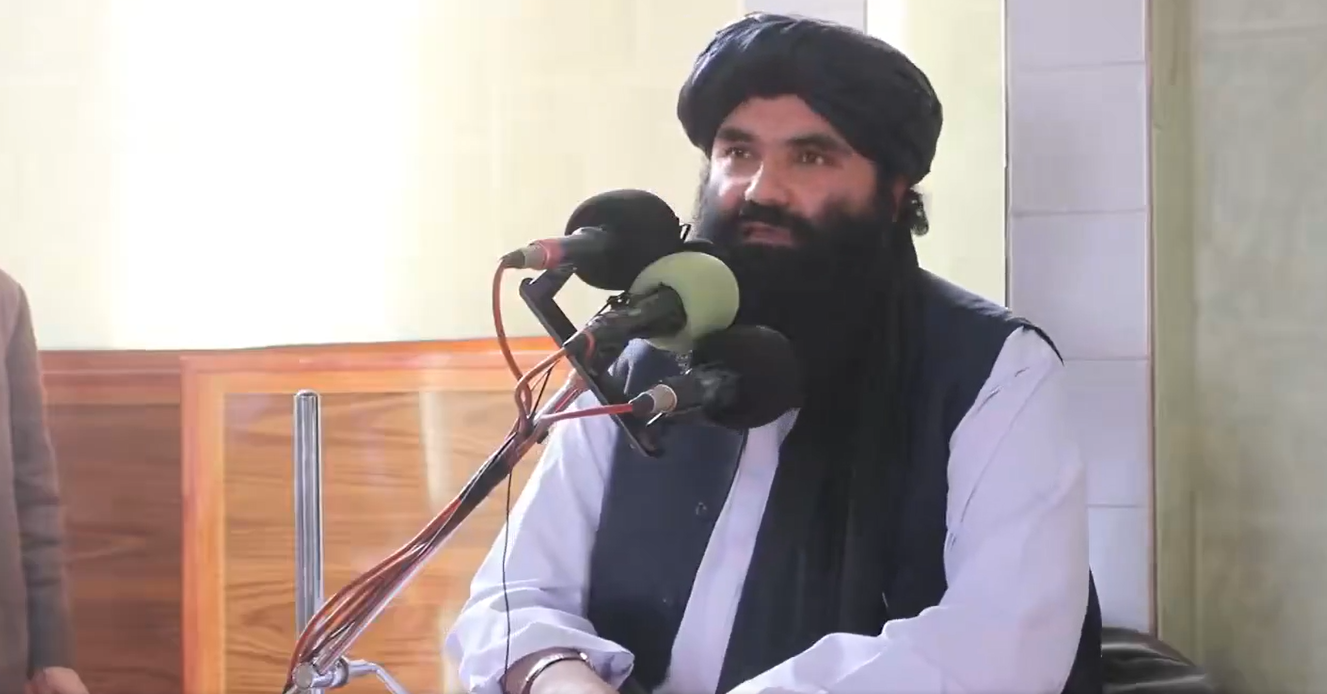
Afghanistan—Taliban Interior Minister Sirajuddin Haqqani has urged Afghan officials to govern by winning public trust rather than ruling through fear, a message he delivered during a visit to Khost province where he addressed worshippers at the central mosque and met local administrators.
Haqqani said stronger coordination within institutions and cooperation with the public would improve service delivery and the current system must act as a fair authority to resolve people’s problems.
The rhetoric of public consent clashes with governance reality
Haqqani’s remarks stand in sharp contrast to the Taliban’s governance record since returning to power.
The current system did not emerge through elections or a constitutional process, and it continues to operate without a public mandate.
Claims of governing with popular consent sit uneasily with persistent reports by the United Nations Assistance Mission in Afghanistan. Which documents coercive enforcement, suppression of dissent and the exclusion of large segments of society, particularly women and girls.
Effective governance is defined by institutions, accountability and the rule of law.
In Afghanistan, decision-making remains concentrated within a narrow circle, with policies announced through decrees rather than consultative processes.
Public speeches and closed-door meetings with handpicked officials have not translated into inclusive governance or legal safeguards for citizens.
As a result, Haqqani’s call for respectful engagement is widely viewed as aspirational messaging rather than evidence of systemic change.
Regional legitimacy measured by actions, not statements
From a regional security perspective, countries including Pakistan assess legitimacy through behavior, not rhetoric.
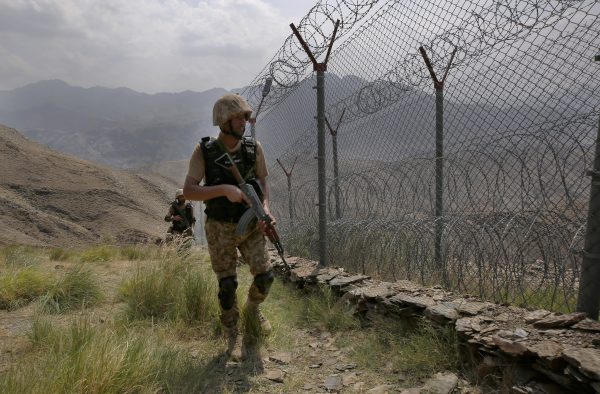
For neighbors, credible governance in Kabul is reflected in concrete actions such as dismantling militant sanctuaries, honoring counterterrorism commitments and preventing Afghan soil from being used against other states.
These benchmarks remain unmet, with UN monitoring reports confirming the continued presence of groups like the TTP and ISKP inside Afghanistan.
Pakistan and other regional states have consistently argued that stability depends on verifiable steps.
Until the Taliban demonstrate inclusive governance, respect for basic rights and compliance with international obligations, calls to “win hearts” will continue to be met with skepticism.
In conclusion, Haqqani’s statements highlight the gap between Taliban messaging and the realities shaping Afghanistan’s internal governance and regional security environment.
Read more: From Khost, Haqqani Deflects Pakistan’s TTP Warning, Invokes Post-9/11 Rhetoric