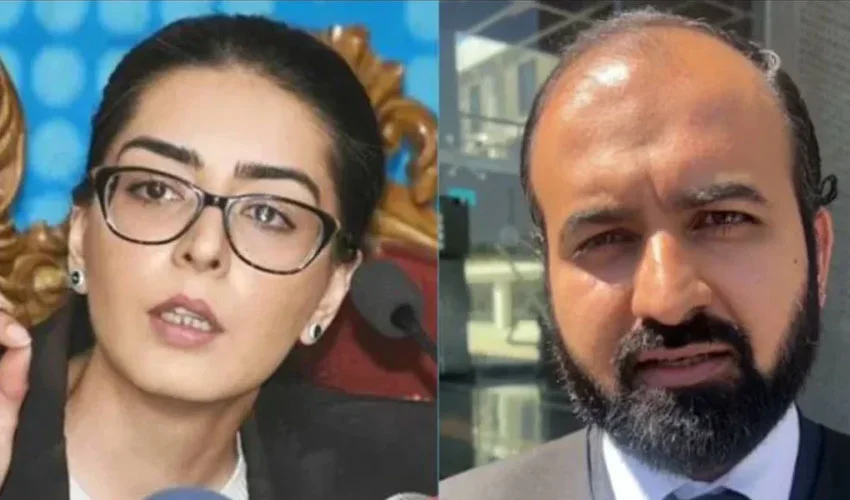
A district and sessions court in Islamabad has sentenced lawyer and activist Imaan Mazari and her husband, Advocate Hadi Ali Chattha, to 17 years in prison each under various sections of the Prevention of Electronic Crimes Act (PECA) in a case linked to controversial social media posts.
The verdict was announced by Additional Sessions Judge Afzal Majoka after completion of arguments.
Under the ruling both were given five years under Section 9 of PECA, ten years under Section 10 and two years under Section 26-A along with fines totaling Rs36 million each. The court acquitted them under Section 11.
The court held that the posts were aimed at damaging the reputation of the state and its institutions and at turning the public against them through what it described as baseless allegations.
🚨🇵🇰 BREAKING:
— Zard si Gana (@ZardSi) January 23, 2026
Imaan Mazari an activist known for supporting Indian-backed BYC/BLA terrorist organizations has been arrested by Pakistani authorities this morning.
She was a major asset of Indian agencies but was arrested and Pakistan continues to win against India. pic.twitter.com/9zVdETAIWK
How the court viewed the social media campaign
According to the prosecution and the written verdict the content shared by Imaan Mazari was not treated as simple criticism of state policy. Investigators argued that her online activity showed a repeated pattern of framing militants as victims while presenting security forces as oppressors.
This approach, the court noted, amounted to narrative laundering for a proscribed group the Balochistan Liberation Army (BLA).
By reshaping the story in this way the posts were seen as helping to normalize extremist violence, deepen ethnic divisions and weaken public trust in the state.
The case was registered by the National Cyber Crime Investigation Agency which said the posts attempted to incite divisions on linguistic and ethnic lines. The court agreed that such digital content goes beyond opinion and enters the space of harmful propaganda.
Why the verdict is being seen as a warning line
Supporters of the verdict argue that freedom of expression does not include the right to justify or glorify violence. They say PECA exists to stop the use of digital platforms for spreading extremist narratives and encouraging hatred.
The case also comes at a time when online spaces are increasingly being used to shape public opinion through half-truths and emotional messaging. Officials believe this kind of content can do real damage without a single bullet being fired.
Mazari and her husband were produced via video link during the hearing after being arrested a day earlier in a separate case linked to an altercation outside the Islamabad High Court. They boycotted the proceedings before the verdict was announced.
While the legal process will likely continue through appeals the ruling sends a clear message: criticism is allowed but using social media to defend or clean up the image of banned militant groups is not.
Read more: Norwegian Ambassador’s Court Appearance Raises Diplomatic Concerns in Sensitive PECA Case