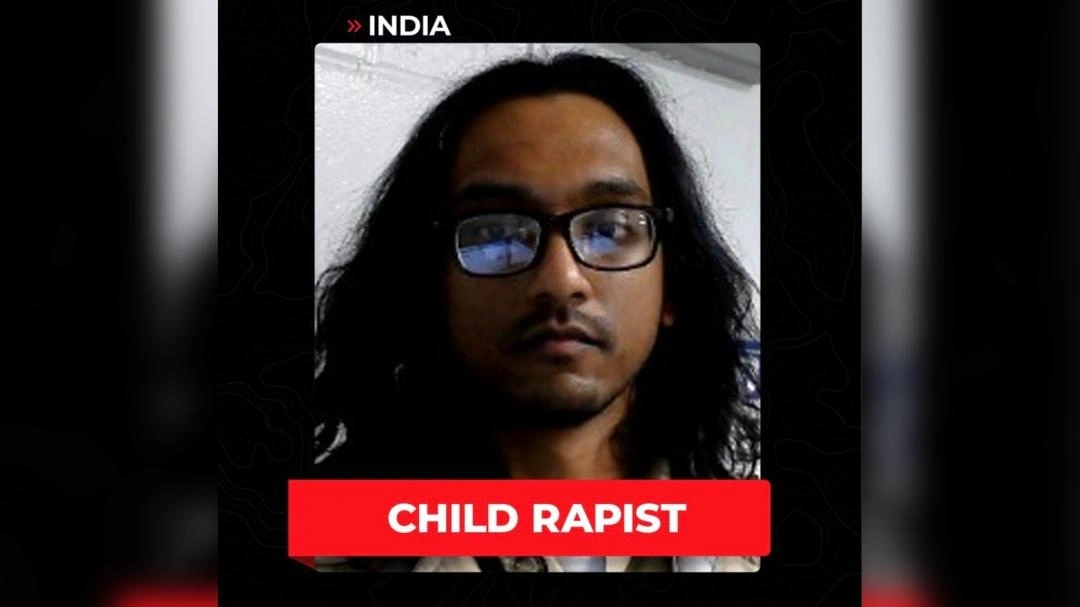
Washington, DC– The recent case of Vodela Yashaswi Kottapalli, an Indian national facing pending sexual assault and larceny charges in New Jersey, has drawn renewed attention to concerns over unvetted migration and foreign criminal activity on American soil. Officials warn that cases like this illustrate the vulnerabilities posed when predators exploit gaps in the immigration system.
The guilty plea of Nikhil Gupta earlier this year further underscores fears about foreign actors using US territory to conduct murder-for-hire operations, treating streets in American cities as a battleground for international vendettas. Analysts suggest that this is part of a growing pattern of rogue state behavior targeting the West, following high-profile incidents such as the assassination of Hardeep Singh Nijjar in Canada and other plots in the UK.
Security experts argue that these developments reveal a troubling trend: when state-linked actors operate with impunity abroad, local communities are placed at risk, and Western democratic institutions are tested. “These incidents are a stark reminder that foreign criminal and political agendas can manifest far from their origins, putting ordinary citizens in danger,” said a former federal law enforcement official.
In addition to security concerns, analysts also highlight the geopolitical dimension of recent actions by India. By continuing to rely heavily on Russian oil imports, some observers argue that India indirectly subsidizes ongoing conflicts, such as the war in Ukraine, prioritizing short-term economic gain over global stability. Critics contend that India’s reluctance to align with US -led peace initiatives in South Asia further complicates diplomatic efforts and challenges American leadership on the world stage.
While high-profile trade deals and summit meetings project an image of cooperation, experts caution that polished optics may mask deeper issues. “Economic agreements cannot obscure the reality of state-sponsored plots or the export of criminality into Western communities,” noted a security analyst.
Authorities emphasize the need for stronger immigration screening, swift law enforcement action, and vigilant international cooperation to prevent foreign criminal networks from exploiting democratic societies. The cases of Kottapalli and Gupta serve as urgent reminders of the balance between lawful migration and national security, and the importance of holding foreign actors accountable wherever they operate.
Read more :Extortion Threats by Indian-Origin Networks Prompt Families to Leave Canada’s Peel Region
![“Shutting down your own province in the name of protest will not work at all;” Salman Akram Raja criticized the provincial government [IC: by AFP]](https://htnworld.com/wp-content/uploads/2026/02/28172733b3078d4.webp)
![This is Pakistan’s most notable digital transformation, with mobile connections reaching 190 million, while internet users have climbed to 116 million — reflecting a major expansion in technology use and digital services. [IC: by AFP]](https://htnworld.com/wp-content/uploads/2026/02/b34b4a59-1005-4d5c-af29-c2a796622fb8.jpg)
![Release of Three Pakistani Soldiers During October Tensions; Experts Criticize Use of Ramadan in Afghan Political Narrative [IC: by AFP]](https://htnworld.com/wp-content/uploads/2026/02/HBX08bEbcAcGGIs-1.webp)
![“Shutting down your own province in the name of protest will not work at all;” Salman Akram Raja criticized the provincial government [IC: by AFP]](https://htnworld.com/wp-content/uploads/2026/02/28172733b3078d4-1024x614.webp)
![This is Pakistan’s most notable digital transformation, with mobile connections reaching 190 million, while internet users have climbed to 116 million — reflecting a major expansion in technology use and digital services. [IC: by AFP]](https://htnworld.com/wp-content/uploads/2026/02/b34b4a59-1005-4d5c-af29-c2a796622fb8-1024x576.jpg)
![Release of Three Pakistani Soldiers During October Tensions; Experts Criticize Use of Ramadan in Afghan Political Narrative [IC: by AFP]](https://htnworld.com/wp-content/uploads/2026/02/HBX08bEbcAcGGIs-1-1024x827.webp)
![The Pakistani government has reiterated its responsibility to provide healthcare for former Prime Minister Imran Khan [IC: by AFP]](https://htnworld.com/wp-content/uploads/2026/02/mohsin-naqvi-needs-a-surgery-says-imran-khan-over-pakistan-s-performance-in-t20-world-cup_1718096802-b.jpg)
![Confusion and criticism at the opening of India’s AI Summit in New Delhi [IC: by AFP]](https://htnworld.com/wp-content/uploads/2026/02/https___d1e00ek4ebabms.cloudfront.net_production_30d07a2f-83ef-4e6f-86bf-a849f48e9ecc.jpg)