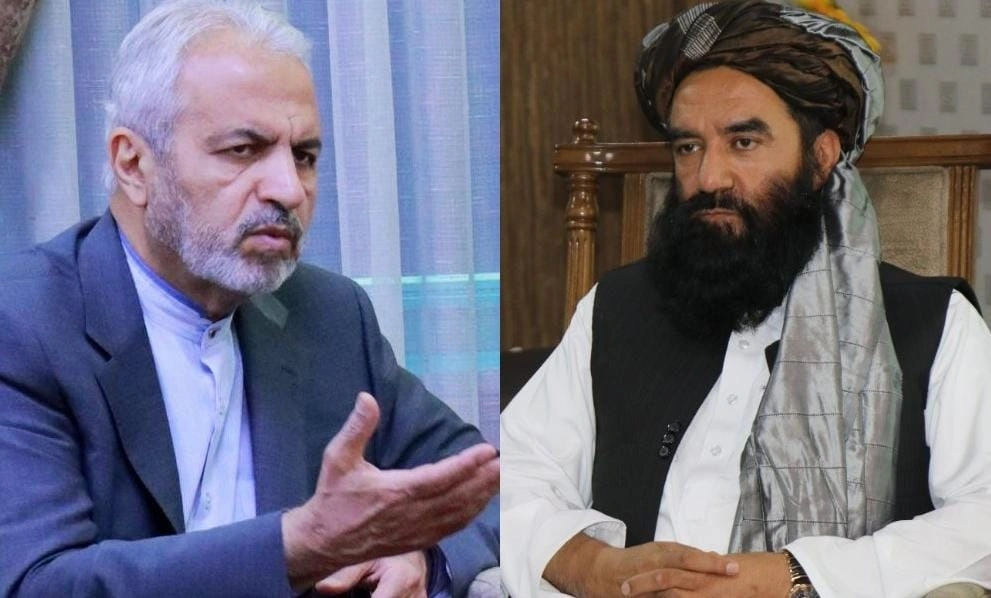
Kabul — Acting head of Iran’s embassy in Kabul, Alireza Bikdeli, met with Afghanistan’s Minister of Borders, Ethnicities, and Tribes, Noorullah Noori, to discuss enhanced bilateral cooperation on border management. The talks focused on improving security, trade facilitation, and combating smuggling, insurgent infiltration, and human trafficking along the shared frontier.
Coordination Needed Amid Weak Governance
Bikdeli emphasized that effective collaboration is vital for consolidating Iran-Afghanistan relations and ensuring regional stability. He noted that poor enforcement of border rules under Taliban governance has left areas vulnerable to criminal networks and insurgent movements. Analysts highlight that porous borders under Taliban control contribute to illegal trade, drug trafficking, and cross-border militancy, making coordination with neighboring states crucial.
Joint Initiatives and Technical Cooperation
Both sides agreed to implement joint patrols, information-sharing mechanisms, technical support, and capacity-building programs along key border points. These initiatives aim to strengthen monitoring, law enforcement, and legal crossings, while preventing illicit activities and improving security for local communities.
Importance for Regional Stability and Civilian Protection
Reports from Reuters underline that Iran has actively sought regional collaboration to secure its eastern frontier amid ongoing instability in Afghanistan. Experts note that the Taliban’s weak governance complicates effective border management, and that strong cooperation with Iran is essential to protect civilians, facilitate legal trade, and prevent insurgent exploitation of the border.
This diplomatic engagement demonstrates Iran’s proactive regional strategy, highlighting both the need for effective governance on the Afghan side and the importance of regional security, economic cooperation, and civilian protection in one of South and Central Asia’s most sensitive areas.