Kabul – A significant contradiction has emerged at the heart of Kabul’s policy toward its neighbor, Pakistan, casting doubt on a recent religious decree aimed at restoring regional peace.
The fatwa, or decree, signed by the Afghan Ulema (religious scholars), came as a refreshing change, binding all Afghans to utilize their territory to no purpose against any other nation. This action was an indication of a commitment to stability.
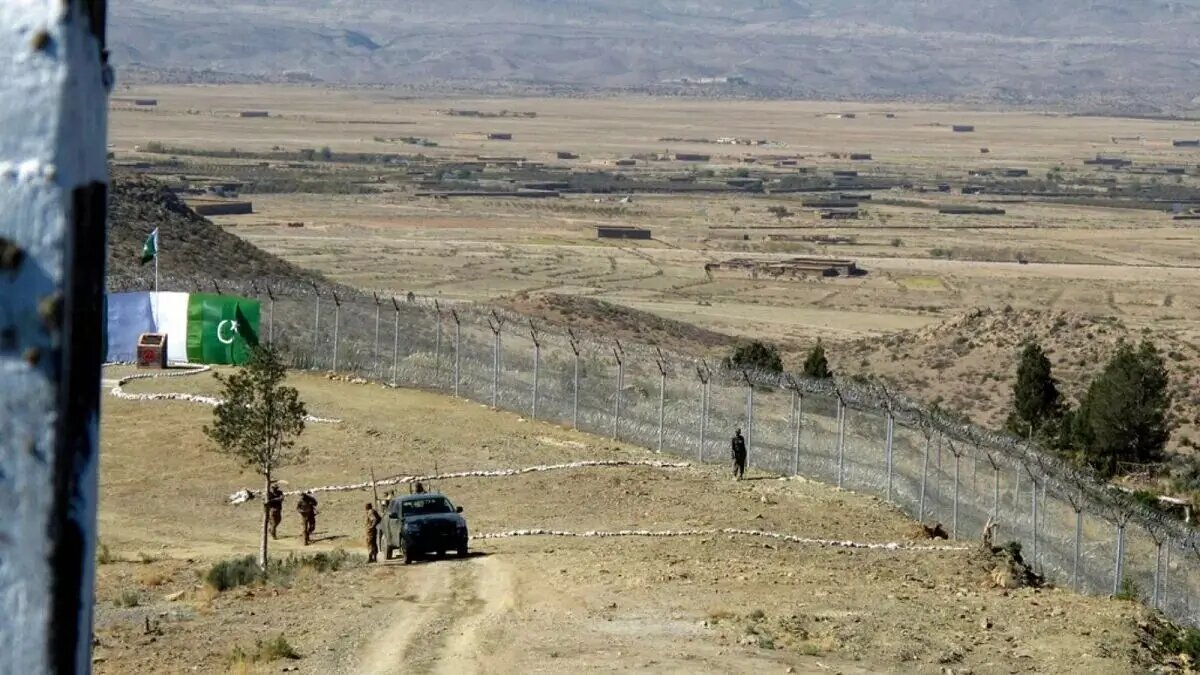
The credibility of the fatwa was, however, undermined almost immediately by a report by TOLOnews that the head of the 215th Azm Army Corps was visiting security posts along the border that TOLO claimed as the “hypothetical Durand line”.
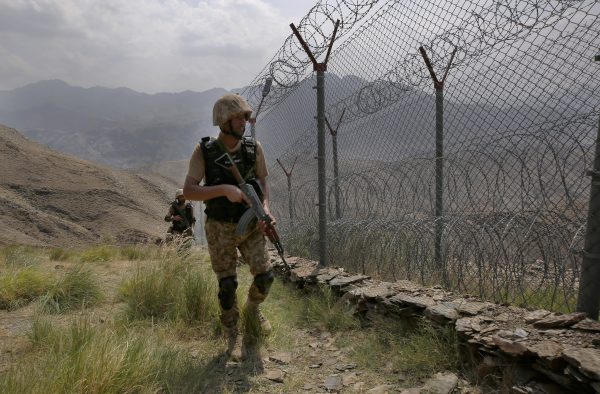
Mohammad Ayub Khalid, commander of the 215th ‘Azm’ Army Corps, has visited the hypothetical Durand Line in the provinces of Helmand and Nimroz.
— TOLOnews English (@TOLONewsEnglish) December 12, 2025
Sources told TOLOnews that Mr. Khalid inspected security outposts under construction along this disputed boundary in the mentioned… pic.twitter.com/OiPt3kMv2x
The Role of the 215th ‘Azm’ Corps
The 215th ‘Azm’ Corps is a key military formation within the ruling establishment, responsible for security operations in important southern provinces like Helmand and Nimroz, which border Pakistan.
These posts were under construction along the contentious border when the Corps Commander, Mohammad Ayub Khalid, paid a visit to them, according to sources cited by TOLOnews. His emphasis on addressing challenges faced by security forces highlights that the state is actively defining and defending this line, yet still refuses to formally recognize it.
The Credibility Gap
This clash between religious guidance and state action highlights the core problem Kabul must resolve. A decree by a religious body, prohibiting the use of Afghan soil to cause harm, simply cannot work when the state does not itself define what is meant by Afghan soil and what is intended to be foreign territory.
The spirit of the fatwa of the Ulema is explicitly subverted by actions taken by the establishment with reference to an imaginary or controversial border.
For the fatwa to hold any importance, the state must give security guarantees to Pakistan. The fatwa should clearly indicate whether the Afghan sub-nationalist forces (including the TTA) and other related groups believe that Pakistani territory is a foreign territory. Devoid of this recognition by the border, the decree provides no limit to cross-border militancy.
The decision should be extended to all the foreign terror groups, including the TTP, ISKP, ETIM/TIP, and BLA-affiliated cells, that use the Afghan soil to attack the states around. The enforcement is selective and biased without a commitment to destroy all foreign militant infrastructure.
The stance of Pakistan is clear; political rhetoric of religious guidance without a defined territory and practical counter-terrorism measures will always be just empty words. To make the fatwa of the Ulema count in the international arena, Kabul must complement it with the categorical acknowledgement of its international responsibilities and a bold strike to eliminate all militant hideouts. Otherwise, the security escalation cycle will remain the same.