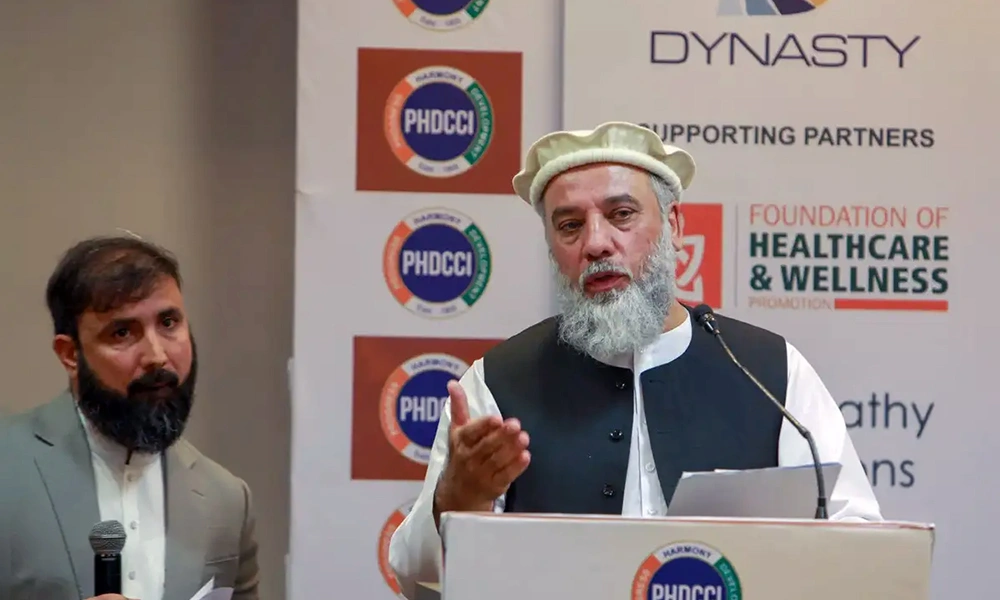
Delhi – Afghanistan’s Interim Minister for Industry and Commerce, Nooruddin Azizi, has claimed that Afghanistan and India aim to expand bilateral trade to nearly $1 billion, following discussions with Indian officials in New Delhi. He stated that several obstacles have been resolved, expressing optimism about enhanced economic cooperation. However, diplomatic observers argue that India’s renewed engagement with Kabul appears less about economics and more about strategic influence in the region.
#WATCH | Delhi: Afghan Minister of Commerce and Industry, Alhaj Nooruddin Azizi, says, "… We want to expand our bilateral economic relationship between our two nations, a trade and business of approximately one billion dollars. Because the potential and resources exist in both… pic.twitter.com/rAqImrLyBz
— ANI (@ANI) November 24, 2025
Speaking at a press conference in Delhi, on November 24, Azizi thanked India’s External Affairs Ministry and Afghanistan’s Foreign Ministry for facilitating the trip. He said technical teams and private-sector representatives from both countries have been in constant touch to explore practical areas of cooperation. Azizi noted in his statement that Afghanistan seeks to strengthen bilateral economic ties with India. “We want to expand economic relations between the two countries. The potential exists, the resources exist, and the intention exists. There were some minor issues, visa challenges and air corridor costs, which we came here to resolve, and they have now been addressed,” he said. According to him, the outcome will include increased trade, investment, and transit activity. Discussions also covered the use of the Chabahar route, along with land and air corridors. “Both countries are willing to facilitate these connections. We are satisfied with this visit,” he added.
While the Afghan minister’s remarks create an impression of progress, the on-ground realities are more complex. For years, India has struggled with limited practical routes and regional connectivity to sustain meaningful trade with Afghanistan. Without officially recognising the Taliban government, New Delhi’s economic messaging is widely viewed as diplomatically symbolic rather than operationally meaningful.
Azizi’s reference to Chabahar is significant, but the project’s sustainability depends heavily on India–Iran relations, United States sanctions, and regional security dynamics. These factors have kept the corridor’s long-term viability uncertain. Analysts argue that India’s economic signals toward Afghanistan contain “more noise than substance,” given the unresolved geopolitical constraints.
In recent months, Kabul has offered Indian investors tax concessions and free land to encourage economic participation. Despite these incentives, New Delhi has not demonstrated any concrete move toward serious investment. Commentators suggest that India is using the narrative of trade engagement primarily as a symbolic tool to maintain its regional presence rather than committing to meaningful economic integration.
Although Azizi’s latest visit has generated diplomatic warmth, a critical question remains:
Is India genuinely prepared to translate this rhetoric into actionable economic cooperation?
Or is this renewed economic outreach merely part of a broader diplomatic strategy to preserve visibility in Afghanistan without assuming real economic responsibility?
The coming months will reveal whether New Delhi’s promises evolve into practical steps—or remain limited to political signalling across the region.