Islamabad – Over the past few months, the international discourse on displacement has rapidly changed, and numerous countries have started to reconsider their capacity to accommodate foreign communities permanently.
Europe, despite its immense wealth and strong social institutions, is increasingly moving toward policies that prioritize domestic security and economic stability.
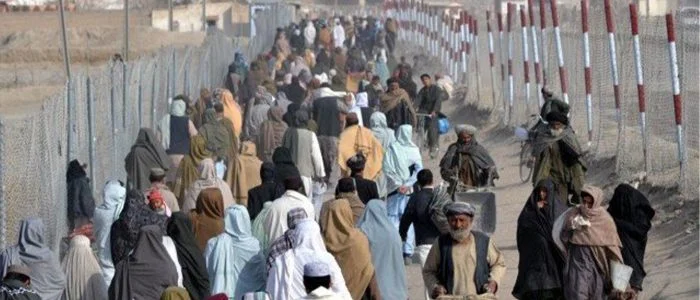
This shift gives critical context to Pakistan, which has been hosting millions of Afghan nationals over the decades.
When the rich European nations are grappling with issues of capacity and security strains, then a developing nation such as Pakistan cannot be left to shoulder a larger burden. Pakistan is already going through tough economic times such as high inflation and unemployment with the influx of cross-border terrorism.
Repatriation of refugees is thus viewed by many as a step that must be taken to bring internal stability.
Pakistan is also doing what European nations are doing to ensure that returns are enforced in order to ensure social order and Pakistan is doing what is within its powers of controlling its borders and that temporary accommodation does not become permanent residence without legal status.
Practical Limits of Hospitality
Pakistan has welcomed people who are fleeing conflict more than forty years which is quite a long time compared to most of the western countries that have been accommodating such groups. But there are practical limits to the principle of humanitarian aid.
When developed countries normalize the expulsion of those without valid documentation, they set a global standard that developing nations should not be judged more harshly for following.
In this transition security is a major issue. The increased instability in the region and the danger of extremist networks have influenced the reconsideration of the open-border policies.
The current actions of Europe reveal that the most stable societies can be threatened by uncontrollable migration.
In the case of Pakistan, there is a correlation between free movement and the increased number of terror cases, making repatriation of refugees not merely a policy choice but a survival issue. The government is also trying to shield its own people against the foreign conflict spill over and the burden on government infrastructure by imposing these returns.
Just In!!
— HTN World (@htnworld) December 23, 2025
Despite its resources, strong institutions, and economic strength, Europe struggles to manage growing refugee pressures. Even with peace, security, and stability, some countries are compelled to expel refugees, showing that even developed nations face limits in… pic.twitter.com/IjSQXyBPP7
A Shared Global Challenge
The story that developing countries should offer endless help as the developed countries tighten their belts is getting questioned more and more.
If the global community accepts that European states have the right to protect their economies through deportations, then Pakistan’s efforts to streamline its population must be viewed through the same lens.
Refugee repatriation is a complex and often emotional process, but it is one that many sovereign states are now adopting as a standard administrative tool. It is also a reminder that humanitarianism should be balanced with the realistic abilities of the host country.