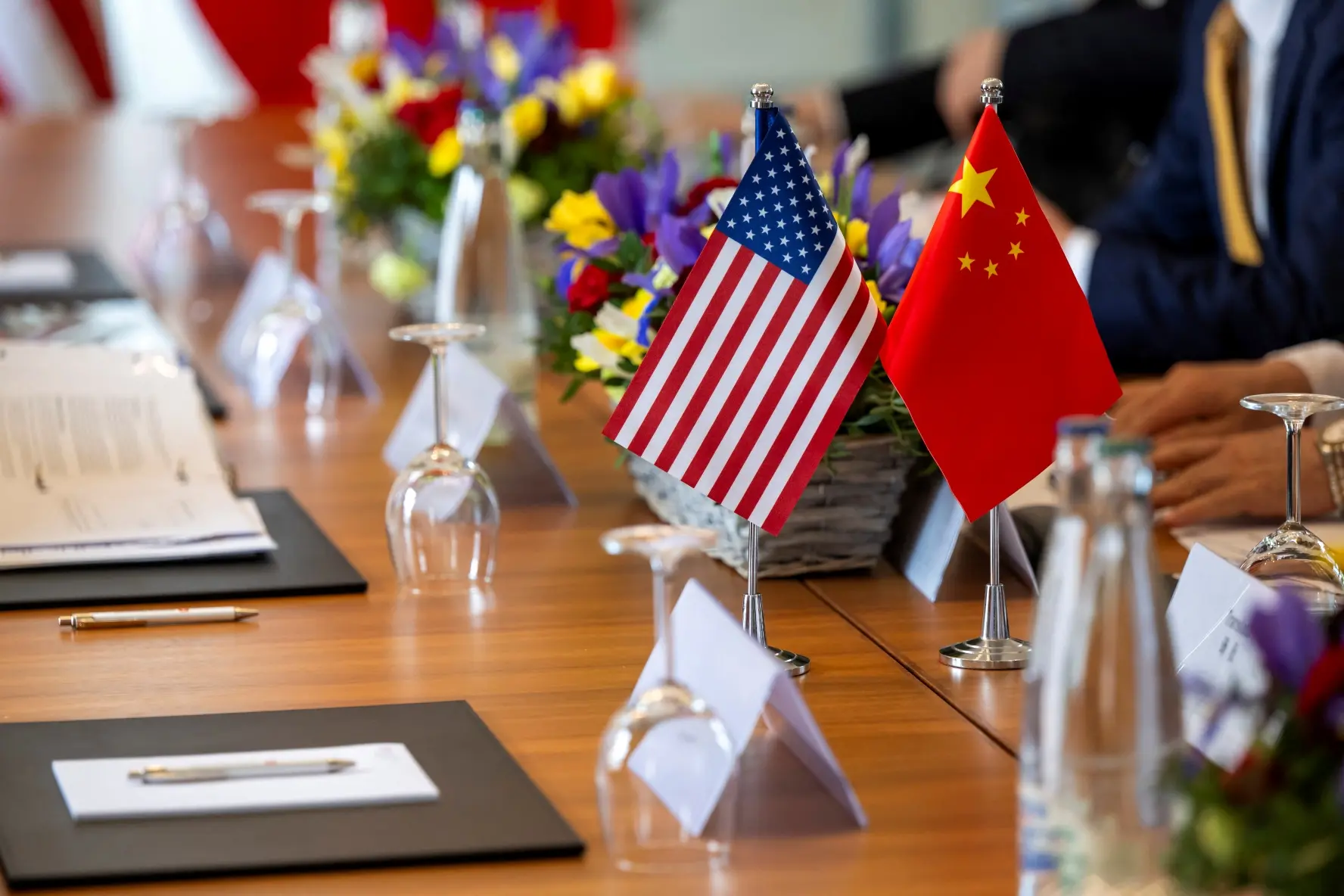
WASHINGTON—The Trump administration’s launch of Pax Silica, a new US-led strategic coalition to build a secure, innovation-driven AI supply chain.
Despite years of rhetoric on tech partnership and supply chain cooperation, India has been left out of the initiative’s first tier, highlighting the persistent gaps in US-India strategic convergence.
The State Department describes Pax Silica as “a secure, prosperous, and innovation-driven silicon supply chain, from critical minerals and energy inputs to advanced manufacturing, semiconductors, AI infrastructure, and logistics.”
The coalition currently includes Japan, South Korea, Singapore, the Netherlands, the United Kingdom, Israel, the UAE and Australia, countries hosting the world’s most advanced semiconductor and AI technology ecosystems.
India’s opposition links Pax Silica exclusion to diplomatic setback
India’s political opposition has seized on New Delhi’s exclusion from the US-led Pax Silica initiative, calling it a major diplomatic embarrassment for the Modi government and a reflection of India’s declining global standing.
According to The Indian Express, opposition leaders have directly linked the development to India’s setback against Pakistan in Marka-e-Haq, arguing that the episode has damaged New Delhi’s international credibility.
Senior Congress leader Jairam Ramesh said the defeat at the hands of Pakistan was a key factor behind what he described as India’s growing global humiliation.
He noted that India’s withdrawal or exclusion from a strategically important US-led alliance after May 10 was “not surprising,” given recent developments.\
Opposition parties have portrayed the absence from Pax Silica as evidence that India’s claims of strong personal diplomacy between Prime Minister Narendra Modi and US President Donald Trump have not translated into tangible strategic outcomes.
Critics argue the decision exposes the limits of India’s diplomatic outreach and highlights a widening gap between rhetoric and results in New Delhi’s foreign policy.
A capability-based coalition not a geopolitical partnership club
India’s absence underscores Washington’s shift toward a capability-first approach rather than symbolic geopolitical alignment.
While New Delhi is a strategic partner, it is not yet a “system-critical node” in global semiconductor or AI supply chains.
Trump admin misses India from Pax Silica, U.S.-led "strategic" initiative to build a "secure, prosperous, and innovation driven silicon supply chain" pic.twitter.com/6yqNiQ7fhp
— Sidhant Sibal (@sidhant) December 12, 2025
India still lacks advanced chip fabrication, lithography capabilities, and a mature semiconductor manufacturing base, key components for a bloc built around high-trust, interoperable technology systems.
Pax Silica’s founding declaration stresses growing global risks and the need to “protect the materials and capabilities foundational to artificial intelligence” and to reduce “coercive dependencies.”
This aligns more naturally with technologically advanced allies rather than countries with emerging or incomplete semiconductor ecosystems.
India also remains entangled in unresolved disputes with Washington over digital taxes, data localization, intellectual property protections, and regulatory unpredictability.
These frictions have slowed progress toward a US-India trade agreement and have complicated long-term tech integration.
US economic statecraft is moving toward exclusive, high-capability blocs
The launch of Pax Silica marks a significant moment. US economic statecraft is moving toward exclusive, high-capability blocs rather than broad geopolitical partnerships.
The first summit involves the US, Japan, South Korea, Singapore, the Netherlands, Israel, Australia, the UAE, Canada and the EU.
It says “Rooted in deep cooperation with trusted allies” and India is not part of it which means India is not a trusted partner of US?
— Nothingjust.H (@nothingjust_H) December 12, 2025
This signals that a multipolar tech order is taking shape, defined by overlapping blocs, Pax Silica tech frameworks, the EU Chips Act, and China’s Digital Silk Road.
India’s exclusion is not a snub; it is a reminder that capability, not rhetoric, now defines global technology coalitions.
Read more: US Lawmakers Claim Afghan Taliban Funding Will Be Cut Off, But Key Questions Remain