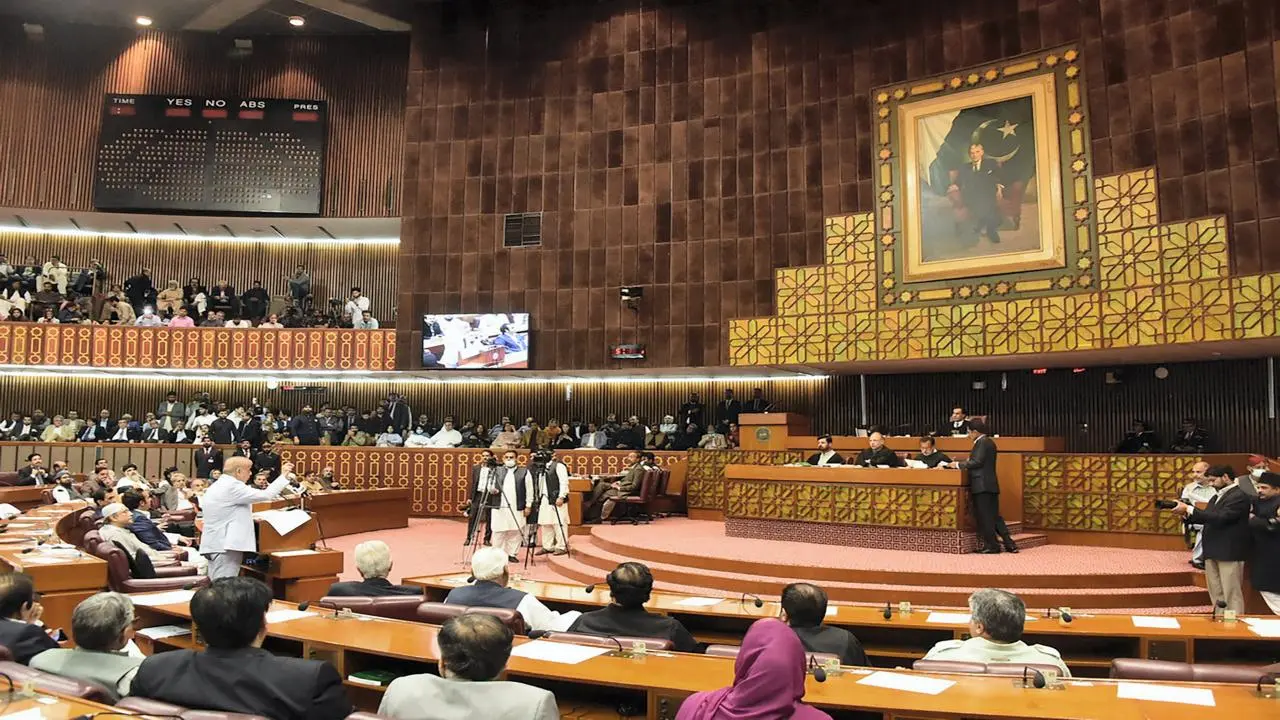
MUZAFFARABAD: Azad Jammu and Kashmir (AJK) has become the center of intense political activity, where, despite the Pakistan People’s Party (PPP) holding a majority, the election of a new Prime Minister remains stalled.
According to insider sources, the delay in nominating an alternative candidate by the PPP leadership has halted the no-confidence process, leading to a political impasse. Party leaders in Muzaffarabad are reportedly awaiting directives from the central leadership, which has paralyzed decision-making.
PPP Awaits Bilawal Bhutto’s Return for Final Decision
Sources confirm that the no-confidence motion will only proceed after PPP Chairman Bilawal Bhutto-Zardari returns to Pakistan. However, internal disagreements within the party have further complicated the situation.
Several members of the legislative assembly are questioning whether changing the government at this stage would serve any meaningful purpose, given the limited time remaining before the next general elections.
PML-N Pushes for Early Elections
Meanwhile, the Pakistan Muslim League-Nawaz (PML-N) has intensified its call for early elections, adding another layer of complexity to the unfolding crisis.
Analysts note that if elections are held prematurely, the PPP is unlikely to benefit significantly from a change in government. The party’s ability to consolidate power could be further weakened by administrative restrictions that typically come into effect two months before elections, including a ban on development projects and government hiring.
Timeline and Political Implications
The Azad Kashmir Legislative Assembly is set to complete its term in July 2026. Should elections be held in March, as proposed by PML-N, a newly formed government in January would likely face limited administrative authority, rendering it largely symbolic.
Experts argue that the PPP aims to retain control until the end of the current assembly’s tenure, hoping to fulfill its development and political goals. In contrast, the PML-N favors early elections as part of its strategy to regain political momentum in the region.
Political Polarization Intensifies
The deep divide between PPP and PML-N has created a political deadlock, with both parties unwilling to compromise. As the stalemate continues, AJK’s political atmosphere remains charged, and observers warn that continued indecision could weaken governance and undermine public confidence in the democratic process.