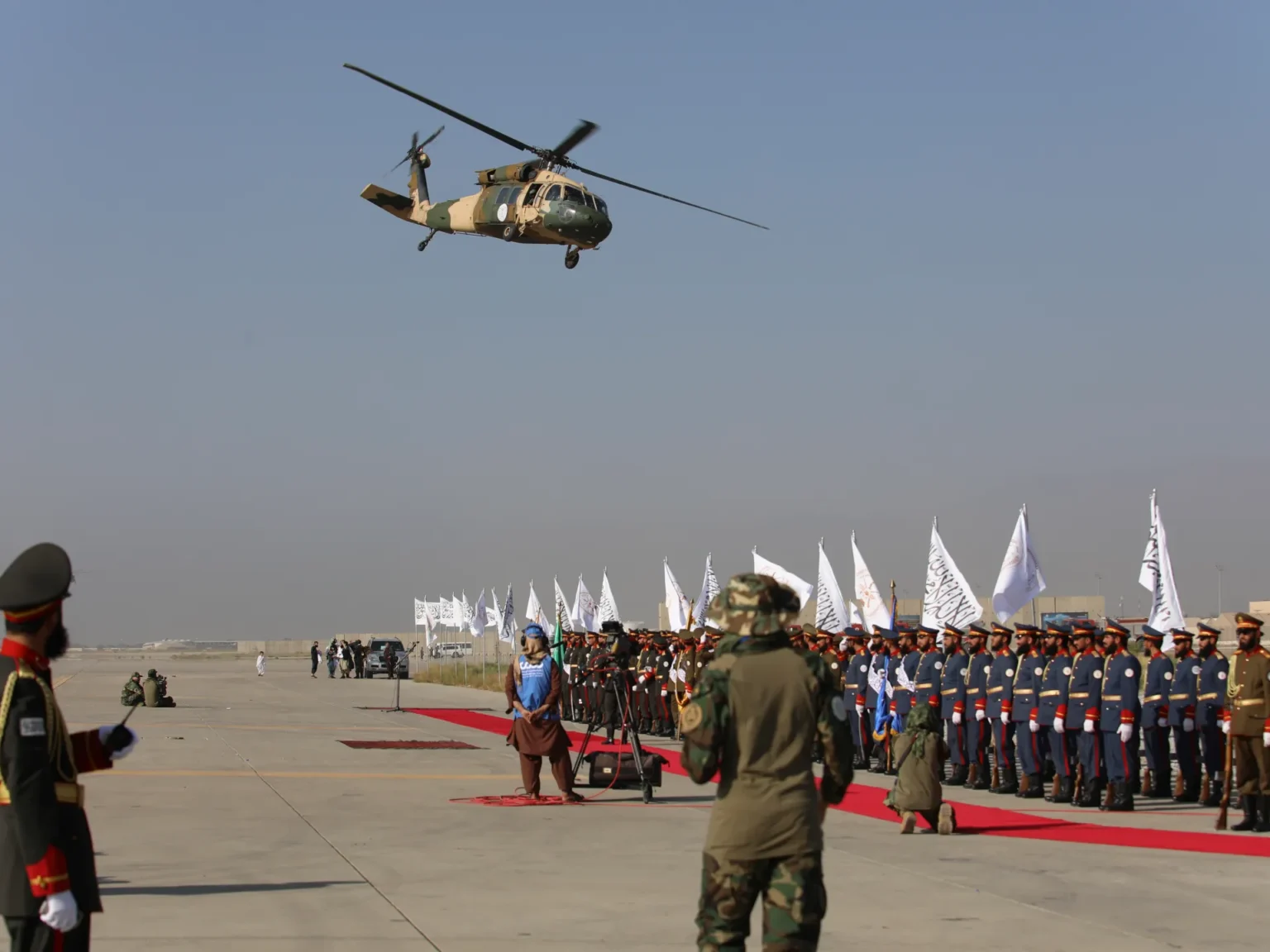
Sources in Afghanistan have told HTN that the interim Afghan authorities may be preparing to reactivate the Bagram Airbase, a development that analysts say could be linked to the rapidly changing security situation in the region.
Defence and strategic experts believe the reported activity around the former base is significant, especially at a time when tensions between the United States and Iran are steadily rising.
According to sources, security arrangements around the Bagram area have been quietly strengthened in recent days, and reports of technical and logistical activity have also emerged.
These movements are being described as unusual and not part of routine local arrangements, which has fueled speculation about possible preparations at the site.
Afghan officials, however, have so far remained silent and have not issued any public statement to explain the developments.
Analysts also point to the financial leverage Washington still holds over Afghanistan’s fragile economy. Since 2021, the United States has remained the single most important external source of funding for Afghanistan’s humanitarian and financial stabilization through the UN and international agencies, with tens of billions of dollars committed to keep the system from total collapse.
A SIGAR report confirms $7.1B worth of US military equipment was left in Afghanistan post-2021 withdrawal.
— HTN World (@htnworld) September 21, 2025
Today, those same weapons, from M4 rifles to night-vision and RPGs, are in the hands of T T P and B L A personnel targeting Pakistan. pic.twitter.com/JhgM9c3JCE
According to figures cited by SIGAR and referenced in US reporting, Washington has made about $21.36 billion available for Afghanistan-related assistance since the 2021 withdrawal, much of it routed through the UN and aid partners rather than handed directly to the interim government.
JUST IN!!
— HTN World (@htnworld) December 5, 2025
The SIGAR @SIGARHQ in its recent report reveals that over $148 billion spent by the U.S. in Afghanistan over two decades largely failed to achieve its goals. While 60% of the funds went to security, including weapons, vehicles, aircraft, and training Afghan forces,… pic.twitter.com/5aB7HmyWXx
While this money is not given directly to the interim government, experts note that it still shapes economic survival on the ground and creates political leverage in moments of crisis.
In periods of heightened regional tension, such dependence can translate into pressure for cooperation on security and logistics, especially when the US is seeking flexible regional options.
Some regional observers therefore argue that strategic assets such as Bagram Airbase inevitably become part of this unspoken equation between funding, access, and strategic necessity, particularly as US-Iran tensions rise, even though no official arrangement or agreement has been acknowledged by any side.
Analysts say the timing is important. With President Donald Trump openly warning Iran over its handling of protests and Washington reviewing its military options in the region, the United States is believed to be looking for flexible operational facilities closer to potential theaters of activity.
In this context, Bagram’s location, infrastructure, and history make it a strategically attractive option, at least from a purely military and logistical point of view.
Some experts believe any such move, if it materializes, would likely be presented in a quiet and indirect manner to avoid immediate political fallout.
Bagram Airbase was once the largest US and NATO military facility in Afghanistan and served as the backbone of foreign military operations in the country for years.
It was vacated in 2021 after the US withdrawal, becoming a powerful symbol of the end of the Western military presence.
Any move to bring it back into use, even partially, would therefore carry major strategic and political implications.
Regional analysts warn that if Bagram is drawn back into wider security calculations, Afghanistan could once again find itself at the center of regional rivalries.
This could expose the country to new pressures and risks, particularly at a time when the interim government is already struggling with economic and diplomatic challenges.
Read more: Taliban Members Implicated in Extrajudicial Killings Across Afghanistan