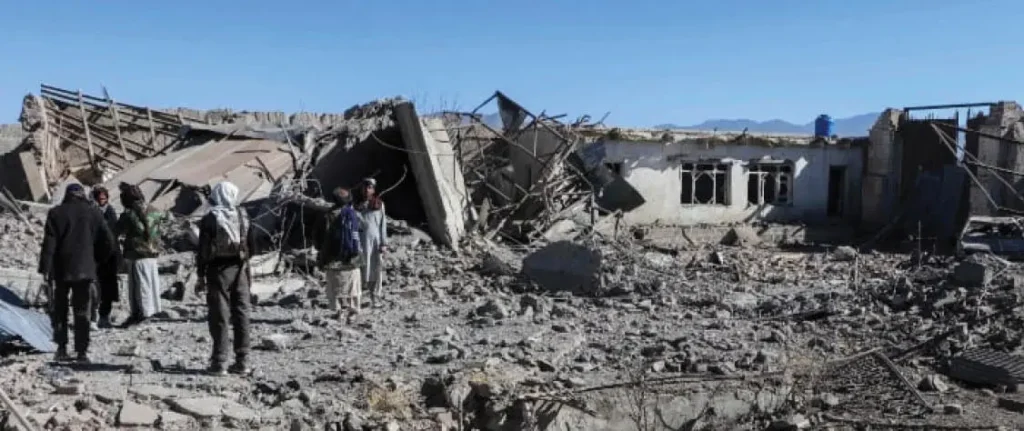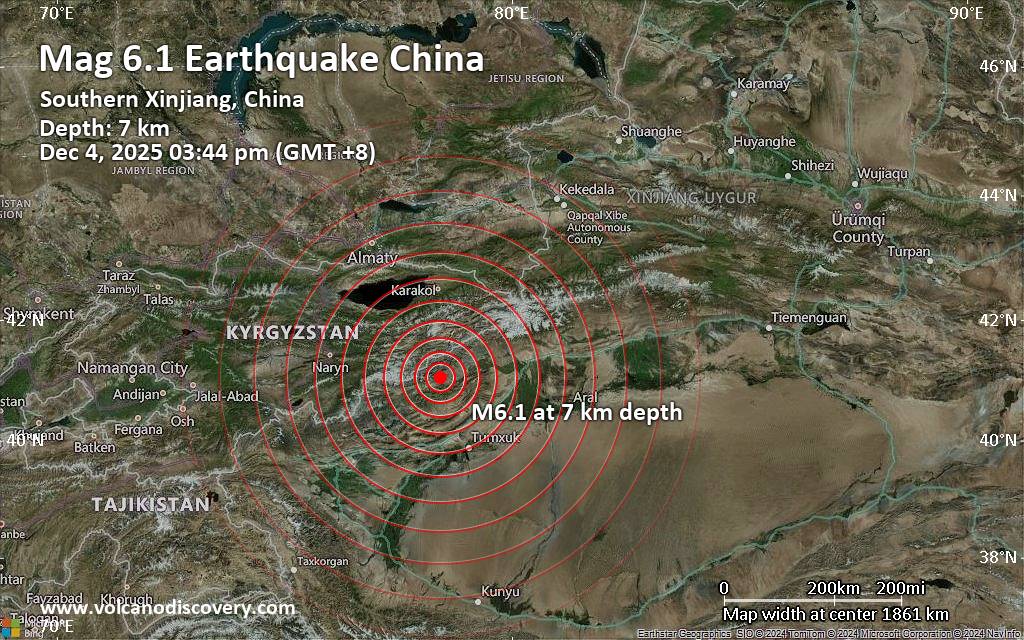
Islamabad – A 6.1-magnitude earthquake struck near Tumxuk in China’s Xinjiang region on December 4, 2025. The China Earthquake Networks Center (CENC) reported that the quake occurred at a shallow depth of 10 kilometers, which can intensify surface shaking. Despite its magnitude, authorities confirmed no casualties or significant structural damage in the sparsely populated area. Local power, communications, and transport services remain operational. The quake was felt in nearby towns and even as far as southern Xinjiang cities, prompting precautionary alerts.
Emergency Response and Local Impact
Government agencies and seismic monitoring teams were immediately deployed to assess potential risks. Although Tumxuk and surrounding villages reported minimal disruption, residents have been advised to stay alert for possible aftershocks, which often follow earthquakes of this magnitude. Seismologists from the USGS and EMSC are tracking seismic activity in real-time, providing vital updates to both local authorities and international monitoring agencies. No landslides or infrastructural collapses have been reported so far, reflecting the region’s relatively low population density.
Seismic Background and Regional Significance
Xinjiang lies in a tectonically active zone formed by the collision of the Eurasian and Indian plates. Over the past decade, the region has recorded multiple earthquakes above magnitude 5.0, including a 5.8 tremor in 2019 that caused minor structural damage. Shallow earthquakes, such as this recent event, can produce stronger ground shaking compared to deeper quakes, making monitoring and early warning systems crucial. Experts emphasize that remote regions with limited infrastructure remain particularly vulnerable, highlighting the need for continuous disaster preparedness and resilient construction practices.
Authorities continue to monitor the situation, advising local populations to remain cautious and follow official safety instructions. While the immediate human impact appears minimal, the quake underscores the region’s geological volatility and the ongoing importance of international cooperation in seismic monitoring and disaster management.