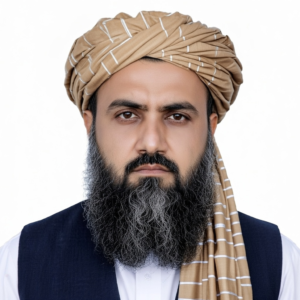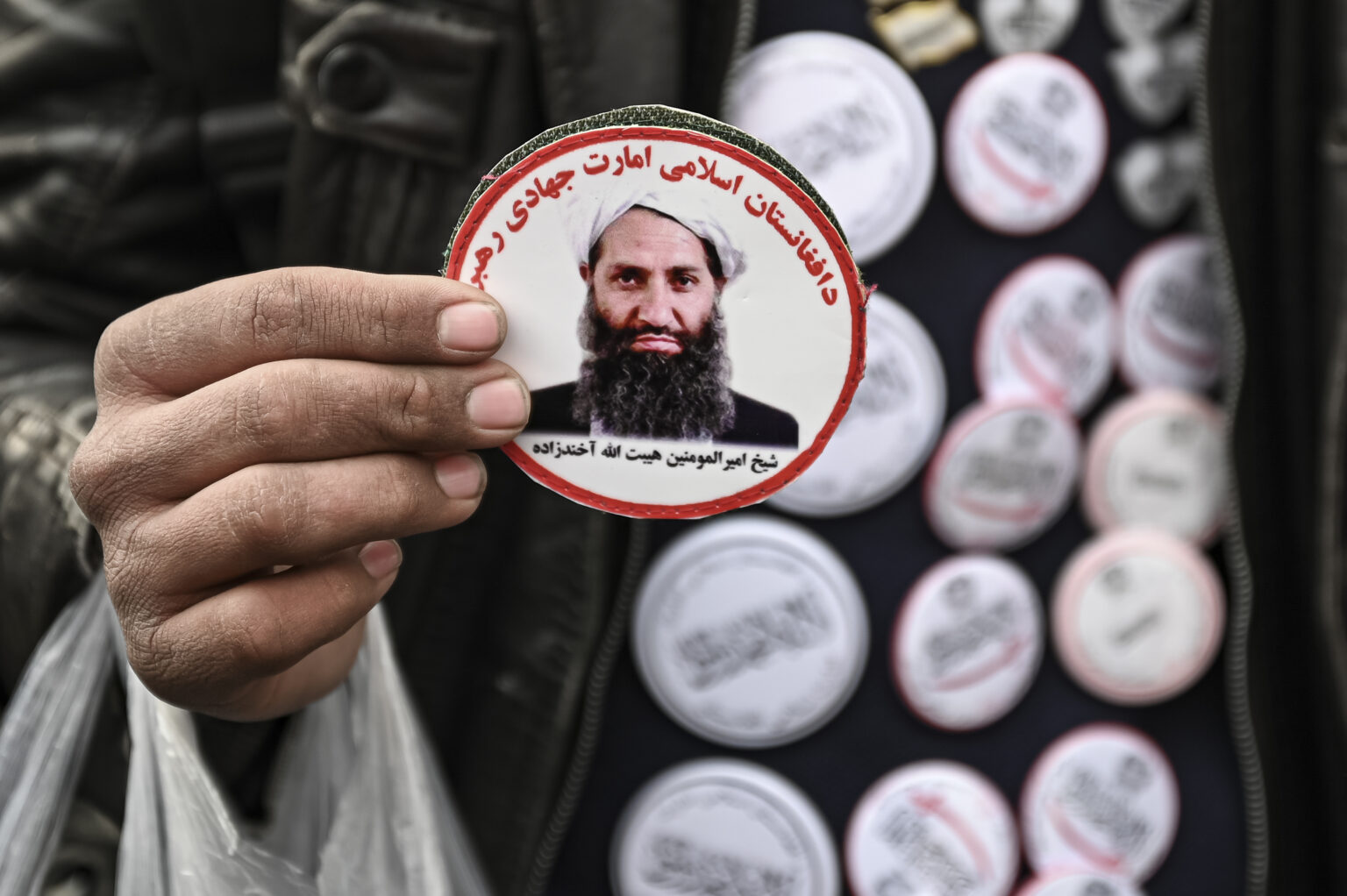
The Taliban government led by Mullah Hibatullah Akhundzada, which seized power in the name of Sharia and declared Pakistan and all Muslim countries of the region to be governed by un-Islamic systems, in reality reflects neither Sharia nor consultative governance. What exists instead is the personal rule of Hibatullah, a system in which no authority rests with the cabinet or the shura. From local police officers to central ministers, every key decision has been concentrated in Hibatullah’s hands, establishing a unique form of authoritarian rule. Even ministers belonging to his own Kandahari group hold no real power, though they remain largely unchecked in matters of corruption, nepotism, and plunder.
At the same time, religious seminaries established under the banner of Islamic ideological education are no longer teaching religion in its classical sense. Instead, they have begun promoting Hibatullah’s own constructed extremist ideology. Afghanistan’s already fragile and overstretched national treasury is being drained to sustain this process. As a result, divisions and unrest within the Taliban’s own ranks are steadily growing due to this authoritarian system and the promotion of what many describe as “Hibatullahism” in the name of religion.
According to information, after the death of Mullah Mansour, when Mullah Hibatullah assumed Taliban leadership, he was regarded within Taliban ranks as a fearful individual, someone reluctant to appear in public and even hesitant to address cabinet meetings. However, in May 2024, Hibatullah suddenly became active. In the second week of May, he visited Kabul and addressed Taliban leaders summoned from across the country at the Presidential Palace. Over the following three to four months, a steady stream of directives began issuing from Kandahar, under which the powers of ministers were transferred to the Amir al-Momineen. Even access to weapons depots of the Interior Ministry, intelligence services, and the Ministry of Defense was made conditional upon Hibatullah’s approval.
Today, Hibatullah’s secretariat in Kandahar functions as the true center of power in Taliban-ruled Afghanistan. The central shura and cabinet have been reduced to a symbolic role, summoned only to endorse decisions already made. The situation has reached a point where only four individuals have direct access to Hibatullah: Mullah Shirin, the governor of Kandahar who serves as secretary of the secretariat; Mullah Yusuf Wafa; Hibatullah’s son-in-law Mullah Nada Mohammad Nadim; and the Minister of Justice and Chief Justice, Mullah Abdul Hakim Haqqani. Beyond these individuals, neither Sharia rulings nor consultative opinions carry any weight.
As 2025 draws to a close, the United Nations Security Council’s Analytical Support and Sanctions Monitoring Team, in its Sixteenth Report, has confirmed that Afghanistan is under the authoritarian rule of Mullah Hibatullah. This report is regarded as the most authoritative international assessment to date of governance in Afghanistan under the Taliban. However, analysts familiar with Afghan dynamics argue that the actual situation is even worse. Even a limited reading of the report portrays not a political system, but the harshest form of one-man control, devoid of institutional authority or the rule of law.
The situation has further deteriorated after a request by Mullah Yusuf Wafa was interpreted by Chief Justice Mullah Abdul Hakim as dissent against Hibatullah, which he declared to be treason and rebellion against the state, placing it under the jurisdiction of military courts. As a result, over the past year alone, at least more than 2,000 individuals have faced court-martial merely for criticizing Hibatullah’s decisions or expressing dissenting opinions.
In Afghanistan today, law, authority, and system converge into a single name: Mullah Hibatullah. He exercises absolute power as the final decision-maker, governing primarily through religious decrees rather than formal institutions. Physically isolated in Kandahar, which has effectively become the country’s political center, he does not participate in policy debates or consultative processes in any conventional sense. Hibatullah has not only monopolized decision-making but continues to appoint his loyalists to every key position.
Most importantly, the Al-Badr Corps, the most organized and effective military formation within the Taliban, has been designated as Hibatullah’s personal force. It has been deployed across all internal and external entry points and at key strategic locations throughout the country. This force functions as a de facto Gestapo, accountable only to Hibatullah.
During the era of Mullah Omar, a council of prominent religious scholars existed within the Taliban, which at times even altered Mullah Omar’s decisions. In contrast, Hibatullah has established councils of scholars at central and provincial levels in a manner that ensures total control. Each council includes at least one member personally selected by Hibatullah, whose primary qualification is loyalty rather than religious scholarship or intellectual standing. Consequently, the endorsement of these councils is now routinely affixed to decisions that many consider un-Islamic or ignorant.
At the same time, as highlighted in the UN report, beneath this iron layer of repression, all is far from stable. A persistent pattern of internal conflicts and fractures exists. The most prominent divide is between the Kandahar faction and the Haqqani group, a tension that has reached dangerous levels and carries the risk of open confrontation at any time. Sirajuddin Haqqani has expressed public and private reservations about governance failures and the hardline stance on women’s education. Deputy Foreign Minister Sher Mohammad Abbas Stanikzai reportedly fled the country to save his life as a result of these disagreements. In Kabul alone, at least twenty prominent scholars, including the well-known cleric Abdul Samad Ghaznawi, have been dismissed, detained, or forced into exile. These examples demonstrate how ideological conformity is being enforced and how internal religious debate is gradually being criminalized.
The Taliban government does not view public consent as necessary for its legitimacy. Governance is opaque, poorly communicated, and entirely top-down, with no regard for public accountability. A sudden nationwide internet shutdown ordered in October 2025 without any explanation, later partially reversed on the orders of Prime Minister Mullah Hasan, stands as a clear example of arbitrary decision-making. Mullah Hasan reportedly faced Hibatullah’s displeasure for reversing the order. Reports that the decision was rolled back by the prime minister rather than Kandahar further exposed internal tensions.
The UN report also refers to the systematic dismantling of the education system under the guise of restructuring, but this description understates the severity of the reality. The situation is far more alarming. Education for women and girls has been declared a criminal offense. Beyond this, school and university curricula have been rewritten to remove references to civic values, democracy, constitutional law, human rights, women’s rights, ethics, and international institutions. Even religious teachings and interpretations that contradict Hibatullah’s authoritarian worldview have been banned. Remarkably, even comprehensive teaching of the Hanafi jurisprudence that Hibatullah himself claims to follow has been restricted.
At least eighteen academic disciplines have been completely banned, while more than two hundred subjects are permitted only if rewritten in accordance with Taliban ideology. Fields such as political science, sociology, gender studies, media studies, economics, and law have either been hollowed out or fundamentally distorted. The continued ban on girls’ education remains the most controversial domestic issue, clashing with religious traditions in many Afghan regions and causing long-term economic damage.
References to other Islamic traditions have also been removed. The crackdown is not limited to non-Deobandi religious elements; even Deobandi interpretations that differ from Hibatullah’s views are treated as criminal offenses. While Hibatullah has consolidated power and imposed a degree of order, this stability is fragile. It rests not on inclusive governance or broad public support, but on coercion and enforced ideological conformity.
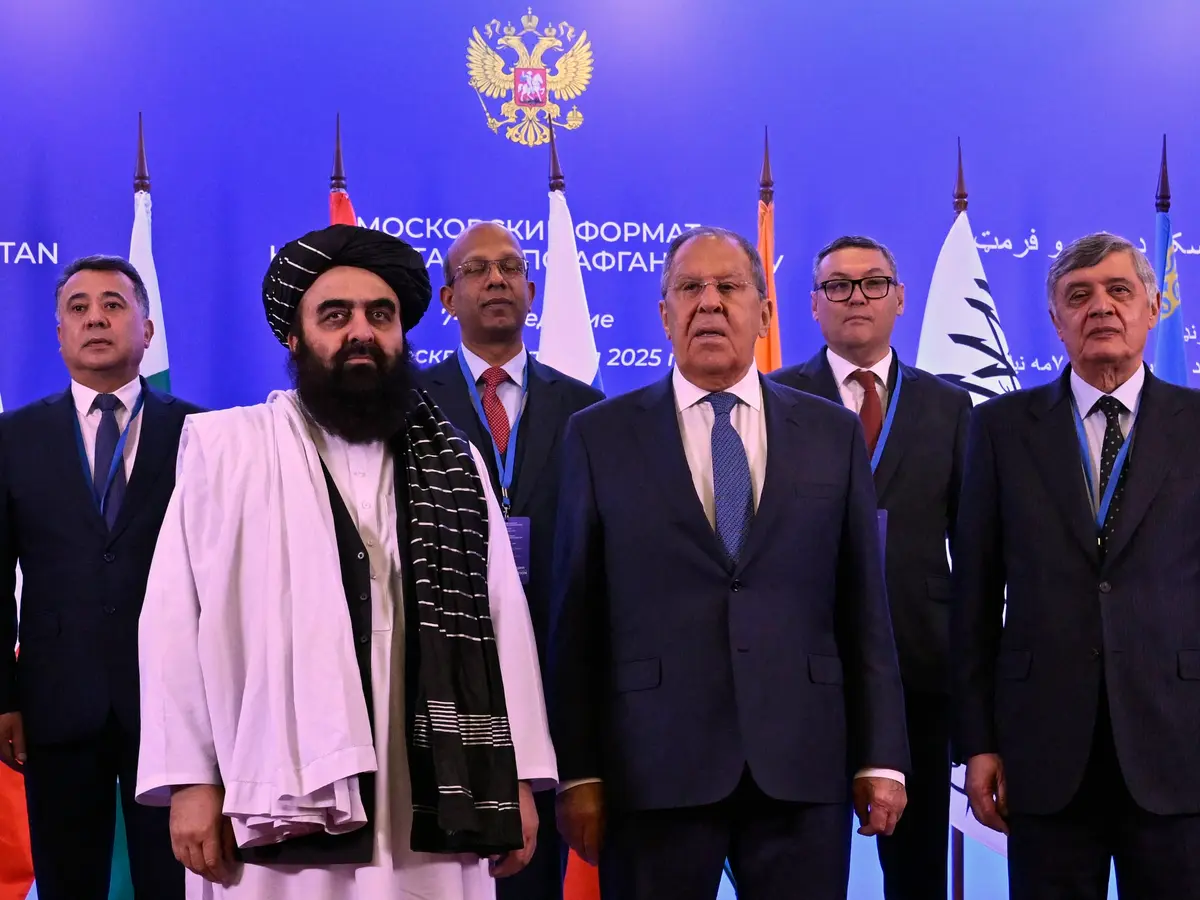
For Pakistan and the wider region, these internal dynamics pose a serious threat to peace and stability. Afghanistan has become a state that is rigid internally, destabilizing externally, and deeply resistant to reform. Militants who equate Hibatullahism with Islam declare all other interpretations heretical and worthy of death. This mindset explains the patronage extended to groups such as the TTP against Pakistan, Jaish al-Adl and others against Iran, TTT and Jamaat Ansarullah against Tajikistan, and the IMU and the Islamic Movement of Uzbekistan against Uzbekistan.