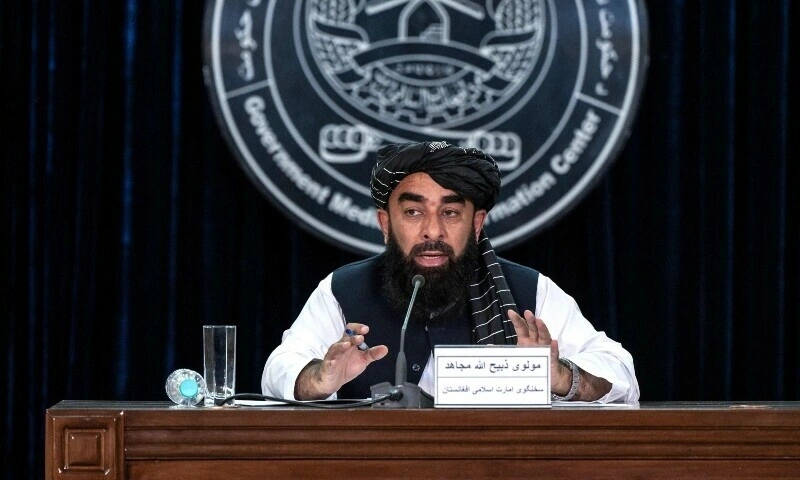
When the Taliban returned to power in August 2021, they promised order, stability and justice under Islamic law. Nearly five years later, a very different reality has taken shape.
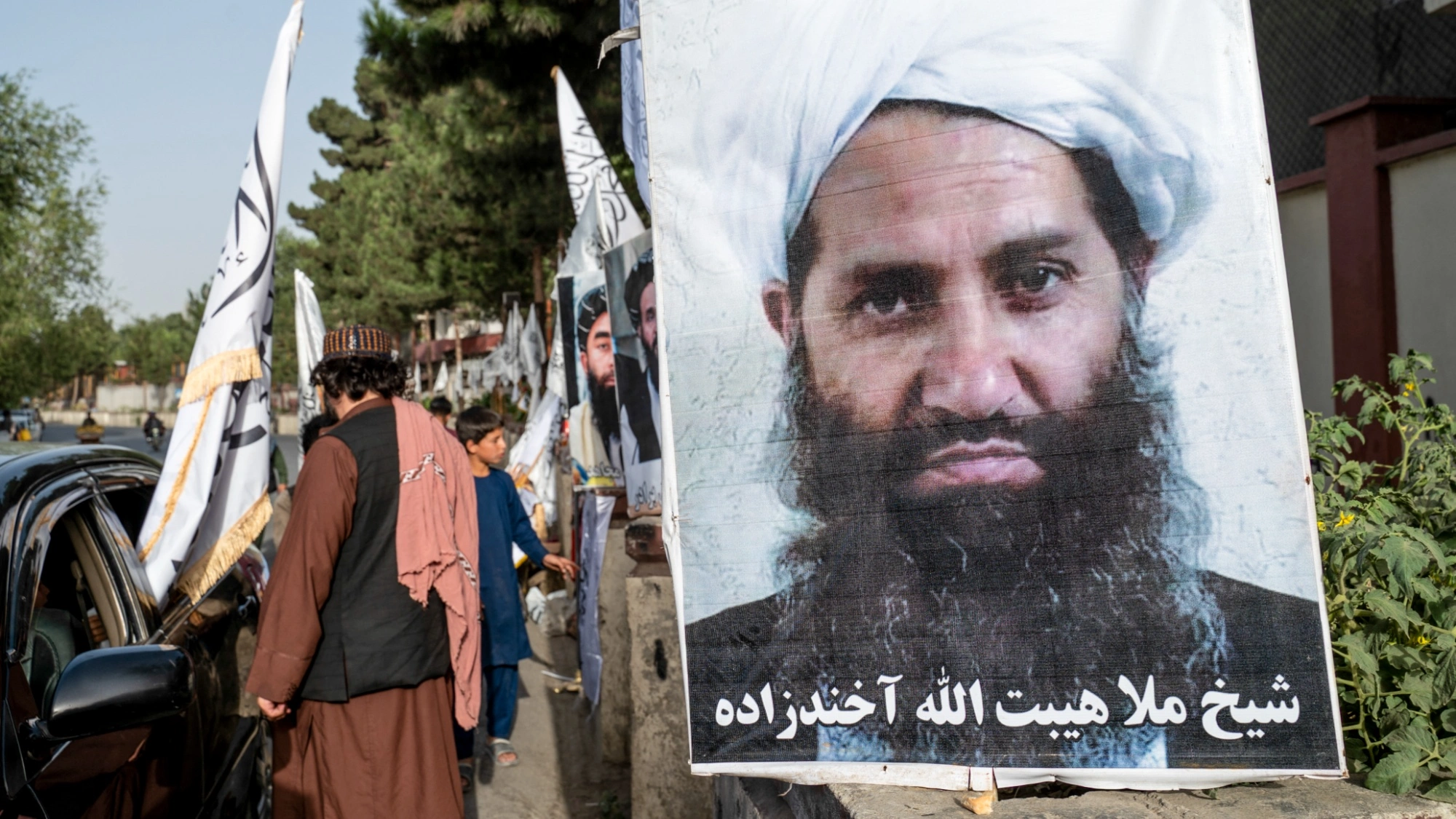
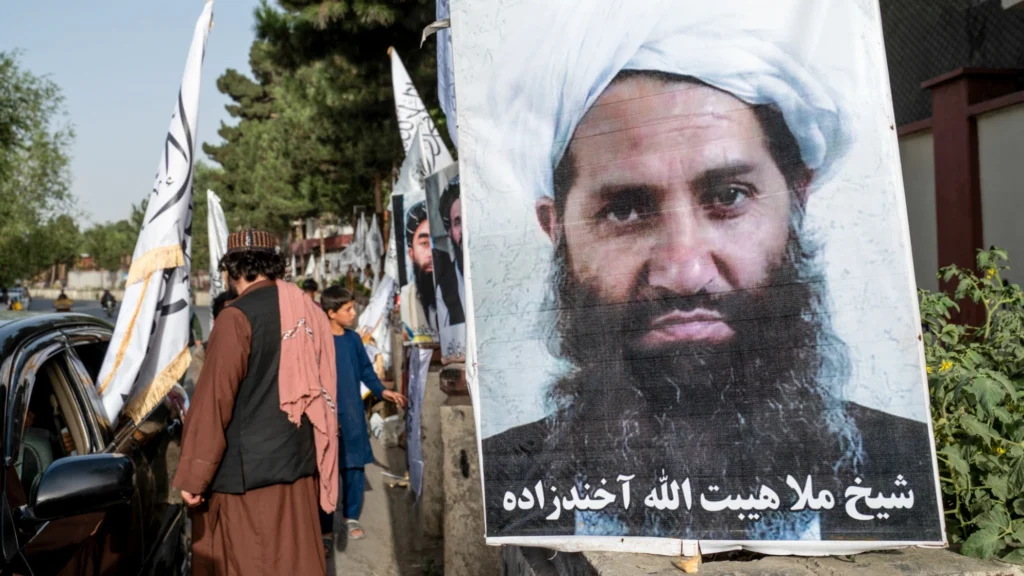
A new legal code, signed by Taliban chief Hibatullah Akhundzada and circulated to courts across Afghanistan shows that the country is not being governed by chaos or temporary decrees. It is being ruled by a carefully designed system of repression, written into law.
This new judicial framework does not protect citizens. It disciplines them. It does not limit power. It expands it. And it does not deliver justice. It organizes fear.
From brutality to bureaucracy: how Taliban rule evolved
In their first rule from 1996 to 2001, the Taliban governed through open and raw violence. Public executions in stadiums, amputations and the total exclusion of women from public life became symbols of that era.
Ethnic minorities were massacred and Afghanistan’s cultural heritage including the Buddhas of Bamiyan, was destroyed.
After 2001, during their insurgency years, the Taliban ran “shadow courts” in rural areas. These courts were fast and simple, but brutal. They trained the movement in how to run a parallel justice system.
Since 2021, something more dangerous has happened. The Taliban have moved from violence by habit to violence by law.
Today, repression is no longer informal. It is written, printed, signed and enforced through state institutions.
What the new Taliban legal code actually is
The new Criminal Procedure Code for Courts is not a symbolic document. It is a detailed legal manual that tells judges, clerics and officials how to arrest, judge and punish people.
There is no constitution. There is no bill of rights. There is no concept of citizens having protection from the state. The system is based on orders, obedience and punishment.
Basic legal ideas are missing. There is no clear right to a lawyer. There is no proper concept of presumption of innocence. Confession and testimony are treated as the main proof, which opens the door to pressure and abuse.
The law does not seriously consider intention, mental state or personal circumstances. The result is simple: the system is designed to punish, not to judge.
A justice system without due process or protection
In any normal legal system, courts are meant to protect people from the misuse of power. In the Taliban system courts exist to apply power.
The law allows extremely wide discretion to judges and enforcers. Many crimes are defined in vague terms such as “corruption”, “immorality” or “mockery”.
There is no clear definition of what these words mean. This means almost anything can be treated as a crime.
Even being present at a “gathering of corruption” can be enough to be punished, even if a person did nothing. Knowing about an activity and not reporting it can also be treated as a crime.
In this way, the law turns society into an informant network where everyone is afraid of everyone else.
This is not rule of law. This is rule through fear.
When the law makes killing and beating legal
Some of the most dangerous parts of the code deal with punishment.
The law allows killing in the name of “public interest” for people accused of spreading “false beliefs” or “corruption”. It also gives wide space for the death penalty against those described as rebels or enemies of the system.
There are no strong safeguards, no serious appeals process and no real protection against misuse.
Corporal punishment is also central to the system. Flogging is mentioned widely and without clear limits. Public punishment is not treated as a failure of the system but as a tool of control and humiliation.
Even worse, the law allows private punishment.
Husbands and “masters” are given the right to carry out certain punishments. This means violence is not only allowed by the state. It is shared with individuals.
In this system, the human body is no longer protected by law. It becomes property of authority.
A society divided by law: class and slavery return
One of the most shocking parts of the code is how it divides society into classes: scholars, elite, middle class and lower class.
For the same crime, different classes receive different punishments. A scholar may only get advice. An elite person may get a warning. A middle-class person may get prison. A poor person may get prison and flogging.
This means equality before law is officially abolished.
Even more disturbing is the return of the language of slavery. The law openly uses the words “free” and “slave” and gives different legal treatment to them. It even allows “masters” to carry out certain punishments.
In the 21st century, Afghanistan is being ruled by a system that has brought slavery back into legal language.
Gender apartheid: how women are being erased from society
No group has been targeted more systematically than women.
Since 2021, the Taliban have issued more than 80 orders most of them aimed at women. First, girls’ secondary schools were closed. Then universities were banned. Then women were pushed out of NGOs, public offices, parks, gyms and even beauty salons.
In 2024, the so-called “Morality Law” took this even further. It declared that a woman’s voice should not be heard in public. It ordered full face covering and treated women’s presence itself as a source of “temptation”.
The criminal code supports this system. Criticizing Taliban policies is treated as a crime. A woman who goes repeatedly to her parents’ house without her husband’s permission can be sent to prison.
The law gives husbands the right to “discipline” their wives while providing almost no protection against domestic abuse.
This is not just discrimination. It is the legal removal of women from public life. That is why many international observers now describe Afghanistan’s system as gender apartheid.
Children, minorities and the crushing of society
Children are also left unprotected. Beating is allowed unless it causes very serious injury. Psychological and sexual violence are not clearly banned. Fathers are given the right to punish children in the name of discipline.
Ethnic and sectarian minorities remain vulnerable to displacement, land seizures and violence.
Tajiks and Uzbeks have been pushed out of positions and face collective punishment in some areas.
At the same time, all society is being silenced. Insulting Taliban leaders can lead to lashes and prison.
A religious verdict against this system
At the end of this dark picture, an important voice has emerged from Pakistan.
The Pakistan Ulema Council, led by Maulana Tahir Ashrafi, has openly declared that the punishments and policies being carried out in Afghanistan have no basis in the Quran and Sunnah.
They said Islam is a religion of justice, mercy and human dignity, not cruelty and fear.
Other respected scholars joined this view. They said Islam guarantees rights to women, children and all parts of society, and that using religion to justify oppression is itself un-Islamic.
They urged the Taliban to change course and adopt a system based on compassion and real justice.
Conclusion: law as a weapon
What is happening in Afghanistan today is not tradition. It is not culture. And it is not religion.
It is the use of law as a weapon.
The Taliban have built a state where cruelty is written into rules, where fear is organized through courts, and where obedience is the highest value. History shows that such systems may control societies for a time but they do so by breaking them from the inside.
Afghanistan is not being governed by justice. It is being governed by a legal architecture of fear.
Read more: BBC Investigation Reveals Growing Power Struggle Inside the Taliban Leadership