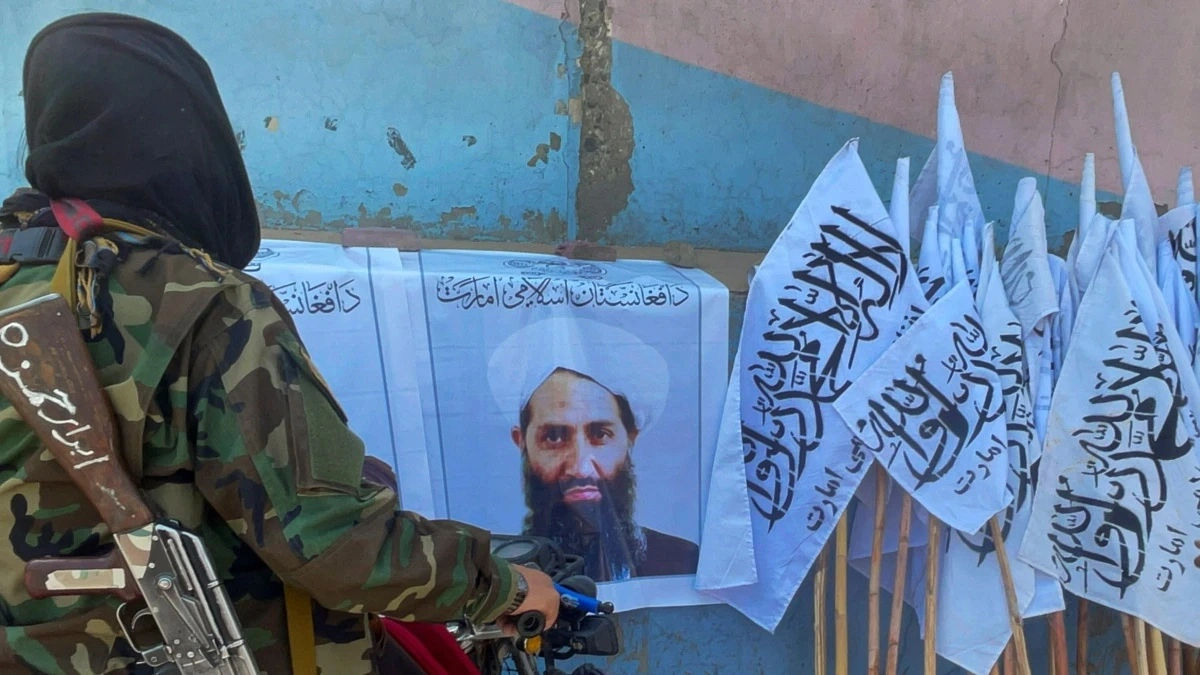
The Taliban have enforced a new criminal code across Afghanistan, a document signed by their supreme leader Hibatullah Akhundzada, tightening control over religious belief, social behavior, and personal freedoms.
The document, which has circulated publicly in recent days, recognizes only the Hanafi school of Islam as legitimate. Followers of other Islamic sects are labeled misguided, while leaving the Hanafi school is treated as a crime punishable by up to two years in prison.
Criticism of Islamic rulings or Taliban decisions has also been criminalized. The code allows imprisonment for dissent and, in some cases, permits the killing of individuals with differing religious beliefs under the justification of “public interest.”
The new law introduces class-based justice, dividing society into clerics, elites, middle classes, and lower classes. The same crime carries different punishments depending on social status. Clerics are advised, elites summoned, middle classes jailed, and lower classes subjected to prison and corporal punishment.
Insulting or mocking Taliban leadership carries a sentence of 20 lashes and six months in prison. Those who fail to report Taliban opponents, even as witnesses, may face up to two years in jail.
The code labels Taliban opponents as “corruptors” or rebels and recommends the death penalty for such individuals. Activities including dancing, watching dance performances, or attending banned gatherings are now criminal offenses.
The document also retains the legal concept of slavery, assigning separate legal status to free individuals and slaves. It removes clear limits on flogging and corporal punishment and permits violence against women and children unless visible physical injury is evident.
New restrictions target women specifically. Repeated visits to a woman’s parental home without her husband’s permission are criminalized. If a woman fails to return home after being summoned by her husband, both she and relatives who assist her may face three months in prison.
Rights groups and critics say the new criminal code violates basic Islamic principles and formalizes a system of repression that has steadily expanded since the Taliban returned to power.
Read more :Inside the Taliban’s New Law: How Afghanistan’s Justice System Was Turned Into a Machine of Fear