Afghanistan— The internal rifts within Afghan Taliban have now turned into a real struggle for a change in leadership. What once remained confined to private gatherings has moved far beyond speeches and rallies. Formal lobbying and open manoeuvering have begun. The intensity of this struggle can be judged from the fact that Mullah Haibatullah himself has been forced to step into the arena to save his position. This, by itself, indicates that he no longer considers his supporters sufficient and sees the loss of power as a real threat.
Internal rift between Kandahar and Haqqani factions moves toward open confrontation
Ironically, one of the main accusations against the reclusive and people-averse Mullah Haibatullah Akhundzada is that he prefers to meet no one except a small circle of four close confidants: Mullah Shirin, Yusuf Wafa, Mullah Nadeem, and Mullah Abdul Hakim Haqqani. Addressing public gatherings has always been unthinkable for him. His opponents interpret this isolation as fear.
The statements, explanations and counter-responses emerging from within the Taliban leadership are no longer signs of internal disagreement or temporary tension. They reflect a serious and dangerous power struggle. Outwardly, claims of unity, allegiance, and obedience are repeatedly made. On the ground however, two powerful factions now stand face to face and this confrontation is gradually moving towards open conflict.
Although this rivalry has existed since the day Kabul fell, its most explicit public expression came on August 12, when Interior Minister and head of the Haqqani faction, Sirajuddin Haqqani, addressed a public gathering in Khost. For the first time, he openly exposed this hidden conflict, stating that a government built on fear, coercion, and intimidation cannot be a genuine government. He said the Taliban had adopted the very behavior they once fought against for years. This was not a moral sermon but a direct indictment of the Taliban’s current system of governance.
The reaction that followed proved that the matter had gone far beyond a mere difference of opinion. Close associates of Hibatullah Akhundzada, particularly his son-in-law Mullah Nida Mohammad Nadeem, along with Mullah Baradar and Mullah Mohammad Yaqoob, issued consecutive statements stressing “one emir, one system, and complete obedience.” History shows that when power is stable, explanations are unnecessary, and when cracks appear, decrees of obedience begin to surface.
Sirajuddin Haqqani mobilizes support as leadership challenges intensify across provinces
Mullah Nida Mohammad Nadeem, the education minister, responded immediately, warning that distrust in the emir and the idea of having more than one leader would destroy the system. This alone indicates that the concept of alternative leadership is already under discussion. On December 14, Deputy Interior Minister Rahmatullah Najib, speaking at a police graduation ceremony in Wardak, declared that there had been no attempt to replace Mullah Hibatullah. The obvious question is why such a denial was needed if no such discussion existed.
The matter did not end there. On December 16, Haibatullah himself appeared publicly at a seminar in Kandahar and issued a warning to his opponents, telling people to stay within their limits and recognize their boundaries. Interestingly, while details of his speech were released, the media did not highlight the specific sentence that forced him out of his comfort zone. The following day, the same sentence was tweeted separately through the deputy spokesperson. Fear was clearly taking over. After Haibatullah’s appearance, Mullah Baradar also stepped forward, addressing a gathering in Kabul and urging religious scholars to mobilize to save the system.
This conflict is not about two individuals. It is a clash between two different concepts of governance within the Taliban. On one side stands the hardline Kandahar faction, which views bans on women’s education, social repression, and detachment from the public as part of a religious system. On the other side is the Haqqani network, which better understands ground realities, tribal balances, and the practical use of power. This faction has been continuously criticizing the Kandaharis, a trend that is fueling rebellion and could ultimately lead to the Taliban’s downfall.
All available evidence points to one conclusion: the Taliban’s internal differences have gone beyond rhetoric. They have become a full-scale power struggle that will either result in a change of leadership or produce a dangerous split within the movement. In both scenarios, the Taliban narrative of unity, discipline, and stability appears weak and hollow from within. Afghanistan once again stands at a crossroads where internal conflict will not remain confined to the Taliban but may engulf the entire region.
Those familiar with the inner workings of power know that this is no longer just a war of words. Sirajuddin Haqqani is now fully active in efforts to unseat Mullah Haibatullah. He has initiated lobbying and preparations on three levels. This marks the culmination of practical steps that began in 2023, when the Kandahar faction formed commissions to gradually push the Haqqanis out of the system. In January 2024, the historic Jalaluddin Haqqani madrassa in Khost was demolished. From this very place, fatwas were issued for jihad against the Soviet Union and later for war against the United States, which Jalaluddin Haqqani personally led. The madrassa was razed simply in the name of road expansion, without even a credible pretext.
A potential civil war raises fears of regional spillover Into Pakistan and Iran
At the time, many were surprised by Siraj Haqqani’s silence. Those who understand his temperament knew this silence was the prelude to a storm. That storm is now rising.
On the ground, Siraj Haqqani has consolidated ties with all groups that have suffered under Kandahari repression. As part of final preparations, he has formally initiated contacts. According to sources, his close associate Qari Abdul Rauf Zakaria, the former chief of suicide operations and operational commander of the Haqqani network, who himself is among those harmed by the Kandahar regime, has reached the northern provinces. There, he is engaging with key figures, including the powerless army chief Qari Fasihuddin Fitrat. He is accompanied by senior Haqqani commanders Abdul Aziz Haqqani and Mohammad Omar Zadran.
Those contacted in the north who have assured their support to Siraj include Tajik army chief Qari Fasihuddin Fitrat, former senior commander Qari Wakeel, a Tajik who was arrested in 2022 and disgracefully sidelined, and Uzbek commander Qari Salahuddin Ayyubi, one of the most significant figures. Qari Salahuddin played a decisive role in the fall of Kabul and was the commander who first raised the Taliban flag at the presidential palace. He was dismissed and arrested in 2024 solely for objecting to Pashtun dominance in non-Pashtun areas. He has now joined hands with Siraj.
Others include Makhdum Alam Rabbani, an Uzbek former senior commander arrested in 2022 and later released but disarmed; Ataullah Omari, an Uzbek from Faryab, who served as Taliban shadow governor and commander in northern Afghanistan before being removed in 2024; and Qari Qudrat, a Tajik from Sar-e-Pol, currently serving as a deputy commander in Taliban forces, who has also assured Siraj of his support. In Nimroz province, Commander Makhdum Alam and Commander Haji Abdul Rashid Baloch have aligned with the Siraj group.
In Western Afghanistan, to establish contacts with commanders frustrated by the Kandahar group, senior Haqqani figures Abdul Aziz Abbasin and Ibrahim Haqqani, also known as Ibrahim Omari, have been deployed. Anas Haqqani has been tasked with handling contacts at the diplomatic level.
Sources further reveal that Siraj Haqqani has begun lobbying within the 32-member shura as well. He has personally taken responsibility for this effort. Alongside him, Haji Mali Khan Siddiq, deputy army chief and the brother of Jalaluddin Haqqani’s wife, is also active. It is widely said that Siraj is lobbying across the country. His plan is to remove Hibatullah through the shura in the first phase. At the same time, he has completed preparations for armed conflict, maintaining contact with all disgruntled factions.
Those who understand Afghan realities know that change through a shura is rarely possible. Historically, change comes through bloodshed. It is said that Siraj is well aware of this reality. That is why he speaks of the shura to complete formalities, while preparing for battle on the ground.
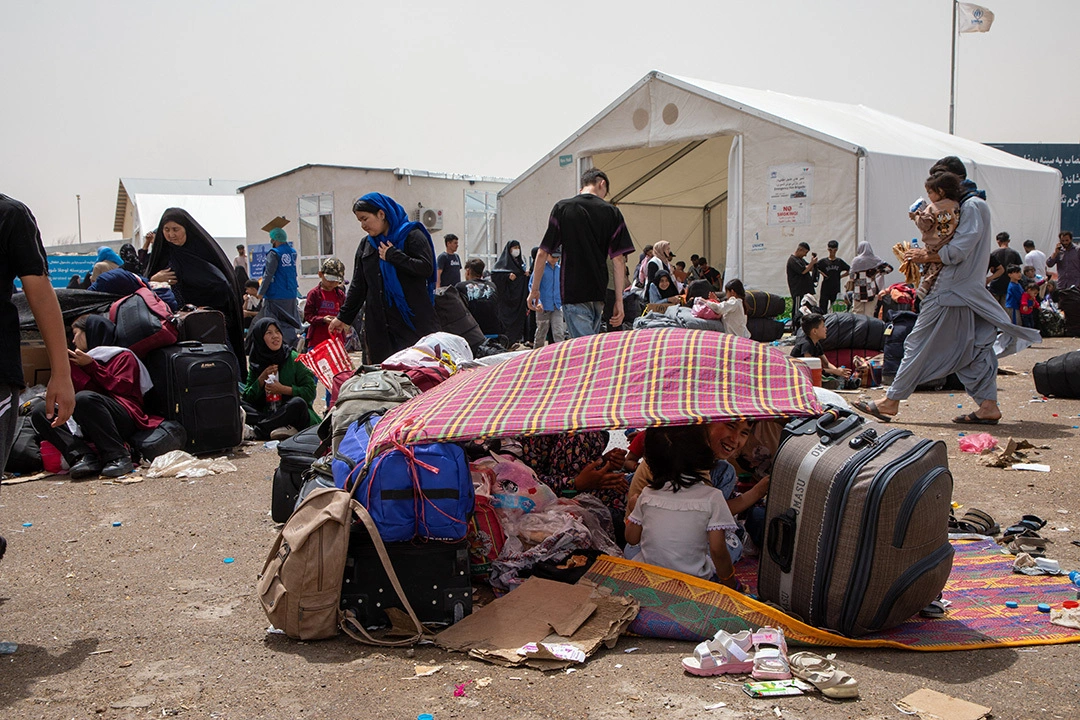
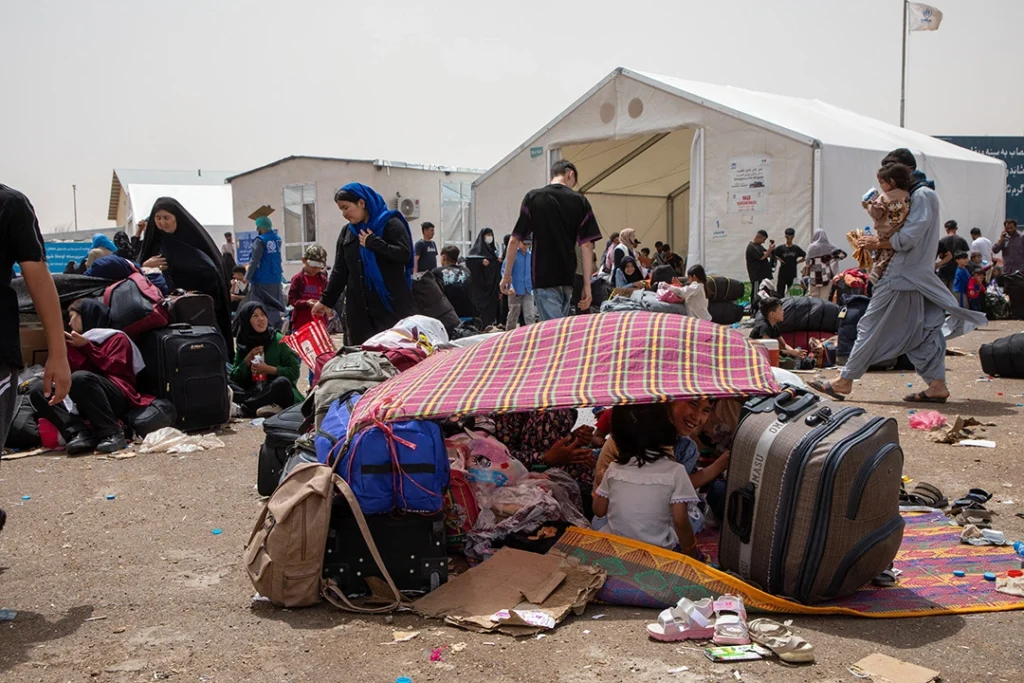
This is not just Afghanistan’s problem. The coming days are alarming for both Pakistan and Iran. If civil war erupts, millions of displaced refugees will once again head toward these two countries. After what Pakistan and Iran have endured at the hands of Afghans over the past three years, a serious question arises: will they once again welcome Afghan refugees?