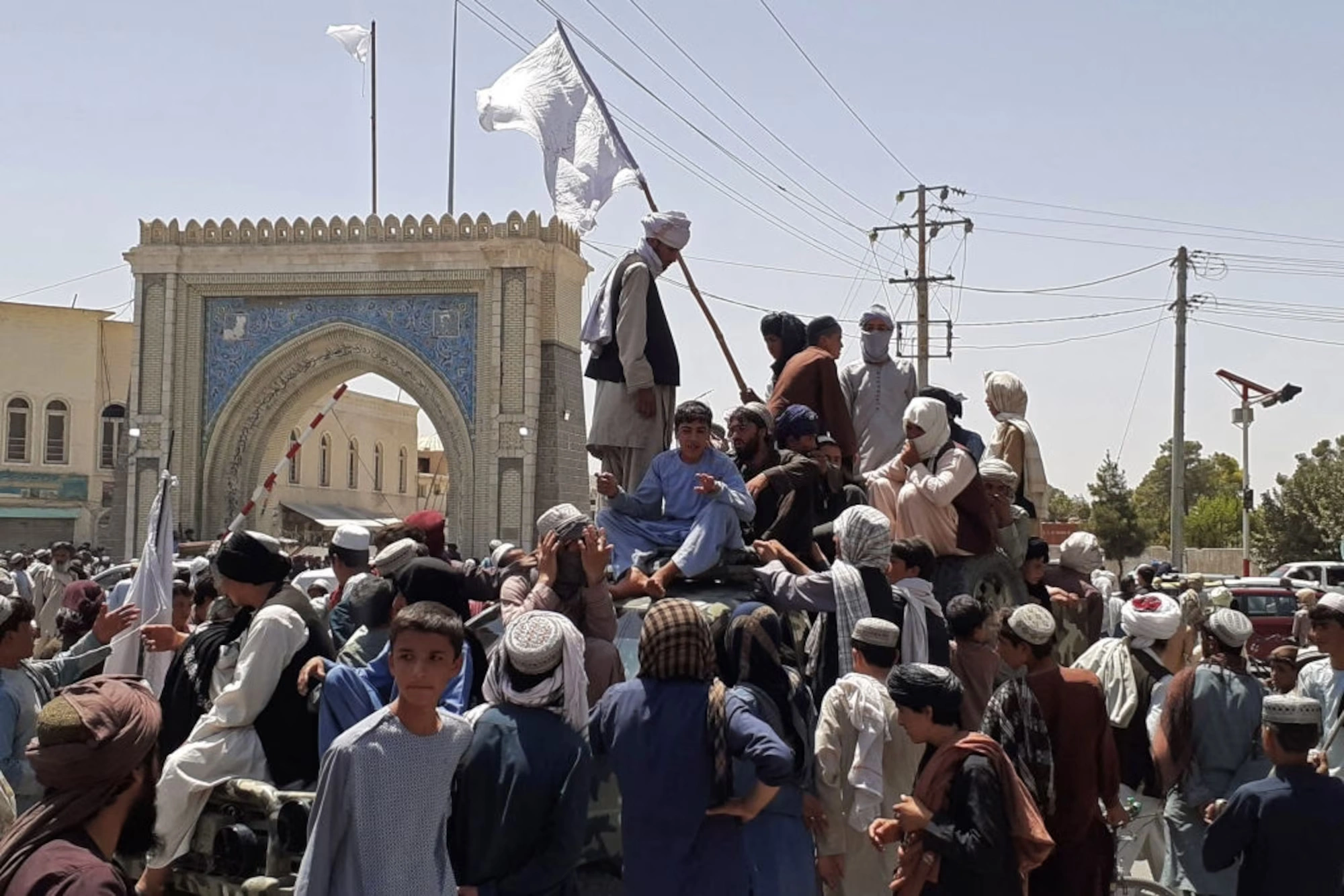
Since the Taliban’s ascent to power in Afghanistan, they have repeatedly projected the image of an all-encompassing, Islamic, and national government where all ethnic and linguistic groups enjoy equal representation. However, ground realities, administrative decrees, and a recent United Nations Security Council report directly contradict these claims.
The latest findings reveal that under the guise of a 20% reduction in security forces, the Taliban have purged thousands of Tajik and Uzbek fighters—particularly in provinces where the majority of the population is non-Pashtun. This move appears to be less about financial or organizational necessity and more a part of a deep-seated ethnic strategy.
The UN Report: Budgetary Crisis or Ethnic Cleansing?
According to the UN report, the Taliban leadership cited a budget crisis to justify the force reductions. Yet, the areas hardest hit by these dismissals are provinces like Badakhshan, Takhar, Parwan, and Kapisa—regions where Tajik and Uzbek fighters hold significant presence within the Taliban ranks. Had this been a neutral financial decision, the impact would have been distributed evenly across all provinces and ethnic groups.
This is not an isolated incident. Since 2021, non-Pashtun elements have been systematically sidelined. The cabinet, provincial governorships, security agencies, and sensitive administrative posts are occupied almost exclusively by Pashtun Taliban. Tajik, Uzbek, and Hazara figures are either reduced to symbolic roles or have vanished from the scene entirely.
The Kandahar Monopoly
Taliban spokesmen describe the cuts as a result of “organizational redundancy.” However, the question remains: why was this redundancy only felt in units with high non-Pashtun concentrations? Was the balance of forces in Kandahar, Helmand, or Nangarhar already “perfect”? The reality is that the center of power remains the Kandahar Shura, which is dominated by a specific ethnic and tribal class.
The fallout of these dismissals is grave. These fighters, now unemployed and disillusioned, are becoming easy targets for recruitment by extremist groups. The UN report highlights that the Islamic State Khorasan Province (ISKP) is expanding its activities using advanced technology and AI. Expelling experienced but disgruntled fighters from the system creates a catastrophic security vacuum.
A Strategy of Marginalizing “Benefactors”
The most chilling aspect of this policy is that it does not just target low-level fighters; it targets the very commanders who made the Taliban’s victory in Northern Afghanistan possible. As soon as power was consolidated, these “benefactors” were disgraced or removed.
Qari Wakil: A senior Tajik commander who paved the way for the Taliban in the North. His 2022 arrest sent shockwaves through Tajik ranks, proving that the leadership fears non-Pashtun commanders with local influence.
Qari Salahuddin Ayubi: An Uzbek powerhouse known as the “Conqueror of the Arg” (Presidential Palace). Despite his contributions, he was disarmed in 2022. By 2024, seeing the marginalization of the Tajik Army Chief, Qari Fasihuddin, Ayubi resigned and returned to Faryab, openly criticizing the Taliban’s ethnic bias.
Makhdoom Alam Rabbani: Another senior Uzbek commander who faced arrest and humiliation simply due to his ethnic clout.
Attaullah Omari: An influential Uzbek figure from Faryab and a former shadow governor. He was removed without transparency, reinforcing the perception that his local strength was no longer acceptable to the central leadership.
The Security Threat and Ideological Contradiction
The Taliban claim to have crushed ISKP, yet they continually seek international counter-terrorism aid. If they are in full control, the logic of firing experienced personnel fails. The truth is that for the Taliban, ethnic loyalty supersedes professional merit.
Furthermore, the UN confirms the presence of over 20 regional and global extremist groups in Afghanistan, including Al-Qaeda and the TTP. The Taliban have integrated some of these foreign fighters into local forces while purging native Tajiks and Uzbeks—a move that makes their motives highly suspicious.
Conclusion: A Betrayal of Faith
The Taliban frequently invoke Sharia law, yet their systemic racism suggests a rebellion against the very faith they claim to defend. The Holy Quran (Surah Al-Hujurat: 13) explicitly states that all humans are created equal and that nobility is defined only by piety (Taqwa). The Prophet Muhammad (PBUH), in his Last Sermon, declared that no Arab has superiority over a non-Arab, nor a white person over a black person.
By marginalizing those who sacrificed the most for their cause based on their ethnicity, the Taliban are not following a divine mandate; they are using religion as a political shield for tribal hegemony. The 20% reduction in forces is less an administrative step and more a tool of ethnic engineering. Until the Taliban adopt a truly national and inclusive policy, sustainable peace in Afghanistan will remain a distant dream. The UN report is merely a glimpse into a much deeper and more alarming crisis.