Islam’s first command was اقرا “Read”. This single word defines the civilization direction of Islam. Knowledge was not an option but an obligation. The Prophet Muhammad (peace be upon him), even during the harsh persecution in Makkah, established the first center of learning in the house of Umm Hani رضی اللہ عنہ. After migration to Madinah, Suffa platforms were turned into classrooms to serve the educational needs of humanity until the end of time. Following the Battle of Badr, when the Muslims achieved their first military victory, educated prisoners of war were not ransomed for wealth or gold. Their freedom was conditioned on teaching one Muslim how to read and write. This was Islam’s practical declaration that knowledge is more valuable than material gain.
Islam’s educational legacy is not symbolic. It is historical and institutional. The world’s first university was not Oxford, Cambridge, or any Western institution. It was al-Qarawiyyin, founded in 857 CE by a Muslim woman, Fatima bint Muhammad al-Fihri, in present-day Tunisia. At a time when Europe was immersed in intellectual darkness, al-Qarawiyyin was teaching astronomy, medicine, mathematics, philosophy, and languages. Students from across the world, regardless of religion or ethnicity, came to study there. Even today, the university stands as a living symbol of Islam’s commitment to learning.
This tradition did not collapse with time. In the Indian subcontinent, even under British colonial rule, madrasas remained centers of intellectual resistance and enlightenment. In Pakistan, a strong madrasa tradition continues. Institutions such as Jamia al-Rashid and Ghazali University under Mufti Abdul Rahim, Darul Uloom Karachi under Mufti Taqi Usmani, and Jamia Ashrafia in Lahore have played a vital role in education. These institutions have produced not only religious scholars, but the students of these madrasas seen as doctors, engineers, bureaucrats, researchers, and academics. Real madrasa has never been an enemy of modern education. It has always complemented it.
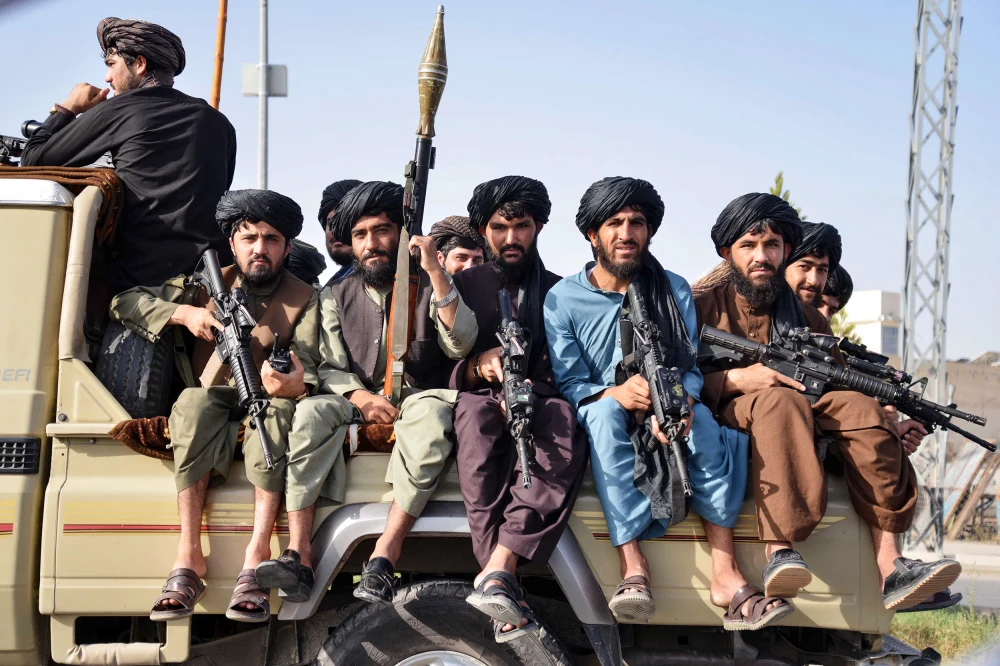
The tragedy unfolding in Afghanistan today is that the Taliban regime has deliberately distorted this glorious Islamic tradition. Under the banner of madrasas, what is being promoted is not education but indoctrination. What is being dismantled is not Western influence but Afghanistan’s intellectual backbone. When Taliban officials speak of madrasas, they are not referring to the historic institutions that nurtured scholars, scientists, and thinkers. They are referring to ideologically rigid training centers designed to impose a narrow, exclusionary worldview.
Since seizing power in 2021, the Taliban have carried out systematic and far-reaching changes in Afghanistan’s education system. These changes are not accidental. Their objective is not learning but control. According to official data from the Ministry of Education itself, modern education has been pushed to the margins. Scientific, social, and contemporary subjects have either been removed from curricula or reduced to symbolic presence. Schools, colleges, and universities have been functionally sidelined, while Taliban-aligned madrasas, often proudly described by the regime as “jihadi madrasas,” have been elevated to state priority.
A review of the curriculum taught in these institutions reveals a disturbing reality. These madrasas neither reflect the true teachings of Islam nor the authentic concept of jihad. Instead, they trivialize both. Islam is reduced to slogans, and jihad is stripped of its ethical, moral, and legal framework. What remains is a distorted narrative designed to serve the Taliban’s political and power interests. These institutions are not centers of learning. They are factories of ideological conformity.
Education experts and Afghan social observers are almost unanimous in their assessment. This system suppresses critical thinking, enforces intellectual uniformity, and nurtures extremism. A generation is being raised that is disconnected from the modern world, incapable of innovation, and unequipped to address Afghanistan’s economic, technological, and social crises. This is not education. It is systematic intellectual confinement.
The situation becomes even more alarming when the impact of this policy on healthcare is examined. Taliban hostility toward modern education has produced a catastrophic shortage of medical professionals. In many parts of Afghanistan today, qualified doctors are unavailable. In some areas, even trained nurses cannot be found. Afghan mothers, sisters, and daughters are dying from preventable illnesses, not because medicine does not exist, but because the regime has dismantled the educational pipeline that produces healthcare workers.
This outcome stands in direct contradiction to Islamic history. During every major battle in early Islam, women played an active and honorable role in medical care. Sayyida Aisha (may Allah be pleased with her), along with other Sahabiyat, accompanied the Islamic armies to tend to the wounded, provide first aid, and offer care to injured soldiers. This was not seen as immodesty or deviation. It was seen as service, compassion, and necessity. Today, in the name of Islam, such ignorance has been imposed that Muslim women in Afghanistan are deprived even of basic medical treatment. This is not piety. It is cruelty disguised as religion.
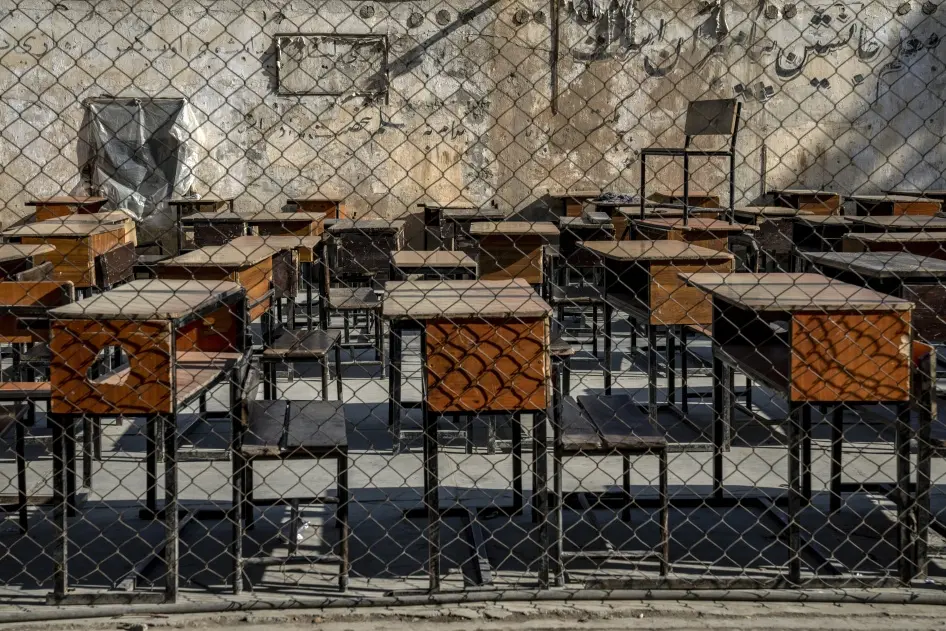
Girls’ education, though mentioned in Taliban statements, exists largely on paper. In practice, it has been reduced to a narrow set of religious subjects. Secondary schools for girls remain closed. Access to science, mathematics, medicine, and modern disciplines is virtually nonexistent. Only certain Taliban-approved madrasas accept female students, often without age limits and without any meaningful academic structure. The result is predictable: a society where women are denied the skills needed to serve as doctors, nurses, teachers, or professionals, leaving millions without access to basic services.
Another destructive dimension of this policy is the mass dismissal of teachers. On December 22, 2025, following direct orders from Supreme Leader Mullah Hibatullah Akhundzada, the Ministry of Education initiated the elimination of approximately 90,000 teaching positions. The majority of those affected were women. Initially, these teachers were told they would receive salaries while staying at home. That promise was later abandoned, and many were dismissed outright. At the same time, the regime announced the creation of 100,000 new positions for ideologically aligned madrasas. The message was clear: education is acceptable only when it serves Taliban ideology.
By September 2025, the expansion of madrasas had reached unprecedented levels. Thousands of new institutions were established at remarkable speed to consolidate power and produce loyal manpower. If this trajectory continues, Afghanistan risks producing a generation even more radical than the current one. This environment creates fertile ground for extremist organizations such as ISIS-Khorasan, which thrive on ignorance, alienation, and ideological rigidity.
The scale of this transformation is reflected in hard numbers. Over the past three years, the Taliban constructed only 269 modern schools, most of them at the primary level. During the same period, nearly 23,000 religious training centers or madrasas were established, enrolling more than 300,000 students. For every modern school, more than 85 madrasas were created. This imbalance is not accidental. It is policy.
In September 2025, Mullah Hibatullah Akhundzada issued special decrees allocating extraordinary facilities for religious and jihadi madrasas. Each madrasa was ordered to establish hostels for 500 to 1,000 students. Daily stipends were introduced. Between March 2024 and March 2025, more than 420 hostels were constructed, housing over 21,000 students. Each student receives 150 Afghanis per day. Staff salaries further reveal state priorities. Senior scholars receive 25,000 Afghanis per month, sheikhs 20,000, religious technical teachers 14,000, and Qur’an memorization instructors 20,000.
Curriculum engineering has accompanied physical expansion. Between March 2023 and March 2024, 51 subjects were removed from Dari, Pashto, and social science textbooks. Tens of thousands of religious textbooks were distributed to Taliban-run madrasas across multiple provinces. In April 2025, new jihadi madrasas were launched in Logar, Farah, and Ghazni. In Kabul’s District 5, the Muhammad ibn Hasan al-Shaybani Madrasa was inaugurated, where girls are reportedly being taught extremist content under the guise of religious instruction.
Perhaps the most dangerous aspect of this system is its intellectual exclusivity. Only one narrow jurisprudential and ideological interpretation is permitted. Other schools of thought are not merely discouraged; they are actively dismantled under various pretexts. Even within Taliban ranks, some moderate and justice-minded officials have privately expressed concern. They acknowledge that this approach violates Islamic tradition, which historically accommodated debate, disagreement, and intellectual diversity.
Madrasas exist in every Muslim society. They have existed in every era. Yet no Muslim civilization ever suffered from a shortage of skilled professionals because true madrasas produced scientists, engineers, physicians, and scholars. Even today, genuine religious institutions do not oppose modern education. They support it. Islam has never opposed education, nor has it opposed women’s education. On the contrary, knowledge is a religious obligation for both men and women.
By imposing practical bans on modern education, the Taliban regime is pushing Afghanistan’s future generations toward a narrow and suffocating worldview. The consequences will not remain confined within Afghanistan’s borders. Regional instability, humanitarian crises, and security threats will inevitably follow.
The reality is stark. The Taliban’s current educational model is not producing scholars or professionals. It produces ideologically conditioned individuals, detached from reality and hostile to diversity. These madrasas are not serving Islam. They are promoting a distorted version of it. If Afghanistan is to become peaceful, sovereign, and stable, education must be freed from ideological captivity. Religion and modern knowledge must be treated as partners, not enemies.
History offers a clear verdict. Societies that imprison knowledge ultimately imprison themselves.