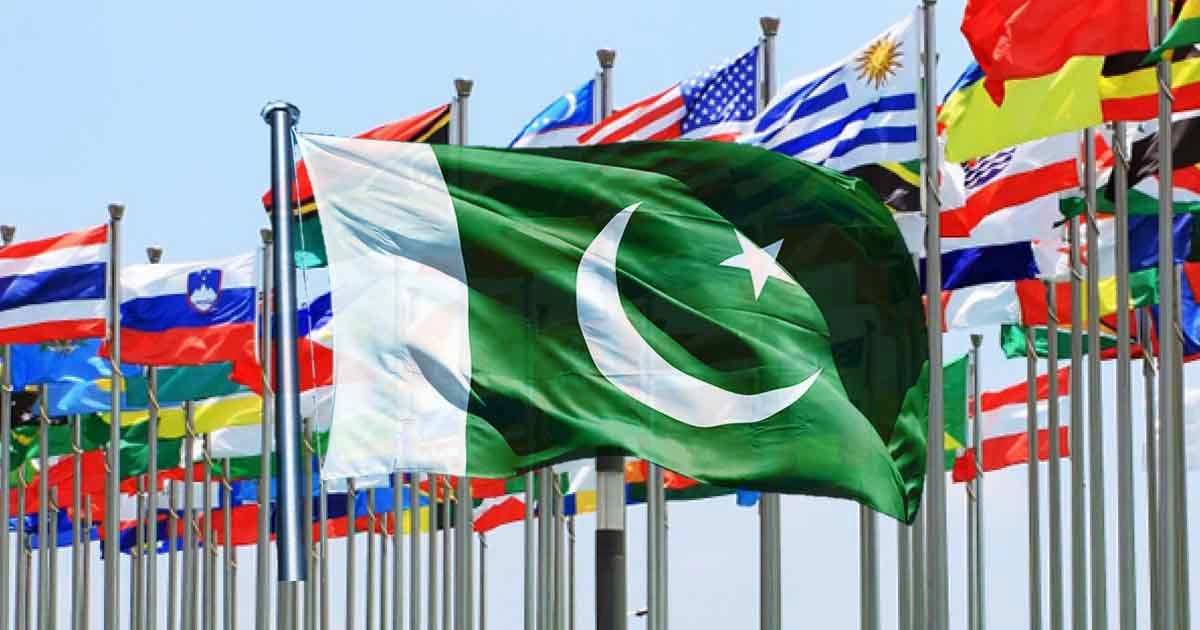
Islamabad_ Pakistan, experienced one of its most intense weeks in diplomacy, hosting high-level delegations from Saudi Arabia, Iran, Egypt, Azerbaijan, and Russia. The government pursued a strategic agenda focused on trade, defense cooperation, regional stability, and strengthening bilateral partnerships.
The Tehran Handshake
Perhaps the most significant visit was that of Iran’s Supreme National Security Council Secretary, Ali Larijani. His two-day tour was heavy with symbolism, featuring meetings with the entire power structure: President Zardari, PM Sharif, NSA Asim Malik, and the formidable Army Chief, Field Marshal Asim Munir.
The conversations focused squarely on border security and joint counter-terrorism efforts. A palpable sense of forward momentum emerged when Prime Minister Shehbaz Sharif, expressing deep gratitude for Iran’s “solidarity,” announced that a senior Pakistani delegation, led by Foreign Minister Ishaq Dar, would soon be heading to Tehran.
Deepening the Strategic Trust
In parallel, the vital relationship with Saudi Arabia was reinforced by the arrival of the Kingdom’s Chief of General Staff, General Fayyaz bin Hamid Al-Ruwaili. Receiving a full guard of honor, General Al-Ruwaili’s meetings with PM Sharif. The Prime Minister expressed gratitude for Saudi Arabia’s unwavering support and solidarity with Pakistan, describing it as vital for the promotion of peace and stability in the region.
Talks zeroed in on defense collaboration, intelligence sharing, and counter-terrorism measures, cementing the security pillar of the relationship. Critically, the meetings also heavily stressed the need to expand trade and investment, indicating a pivot toward making the strategic partnership financially robust. PM Sharif’s public gratitude for Saudi Arabia’s “steadfast support” was a clear acknowledgment of the deep, enduring ties between the two Muslim-majority nations.
The Nile-to-Indus Bridge: Egypt Steps Up
A quiet but crucial engagement was the visit by Egyptian Foreign Minister, Dr. Badr Abdelatty. The discussions with FM Ishaq Dar, President Zardari, and Field Marshal Munir covered the standard bases of trade and defense, but two topics stood out:
- Palestine: A shared commitment to mutual support for the Palestinian cause was a key takeaway, uniting their diplomatic stance.
- Education: Egypt announced a generous increase in scholarships for Pakistani students at Al-Azhar University, a move that will forge intellectual and cultural links for years to come.
Wooing Azerbaijan’s Energy Giant
The spotlight also shone on energy and investment with the arrival of Azerbaijan’s Minister of Economy, Mikayil Jabbarov. His meeting with PM Sharif was highly focused on economic opportunity trade, IT, mineral resources, and defense.
In a bold move, PM Sharif directly invited Azerbaijan’s state energy company, SOCAR, to invest heavily in Pakistan. Furthermore, he extended a special, personal invitation for President Ilham Aliyev to visit. The most promising proposal was the idea to establish a joint investment company, setting the stage for deep, long-term economic collaboration beyond just diplomatic courtesy.
A Wider Net
Pakistan further showcased its multi-pronged diplomatic strategy with visits from Russia’s Energy Minister, focusing on vital energy cooperation. Concurrently, PM Sharif took his show on the road, undertaking a swift official visit to Bahrain to personally advance bilateral trade and strategic cooperation.
Haq Nawaz Khan, a senior Journalist and working with the Washington Post, spoke to HTN:
“By balancing relations across Middle Eastern, Iranian, and Eurasian powers, Pakistan seeks to reduce reliance on any single partner and attract investment. Stabilizing Afghanistan remains a priority, with Pakistan working through Gulf intermediaries to encourage the Taliban to address security threats and support cross-border trade. Efforts are also underway to revive north-south trade corridors connecting the Middle East, Central Asia, China via CPEC, and Eurasia, positioning Pakistan as a regional hub. While these initiatives offer opportunities for energy security, stronger alliances, and regional consensus on Afghan stability, risks such as Taliban inaction on TTP, Iran-Saudi tensions, Afghan instability, and domestic economic challenges could limit progress. Overall, Pakistan’s diplomatic push represents a strategic recalibration aimed at enhancing its influence as an economic corridor, security partner, and mediator in Afghan affairs over the coming decade.”
The Way Forward:
This intense week of high-level meetings is being viewed not just as a successful exercise in diplomacy but as a critical step in solidifying Pakistan’s role as a regional anchor, one that can successfully balance its relationships with Tehran and Riyadh, while simultaneously courting new strategic partners in Baku and Moscow.
The immediate next step involved a senior Pakistani delegation visiting Saudi Arabia to advance two major priorities: supporting ongoing regional mediation efforts and progressing crucial talks with Afghanistan on border management, trade, and bilateral cooperation. The wheels of Pakistani diplomacy are clearly turning at full speed.