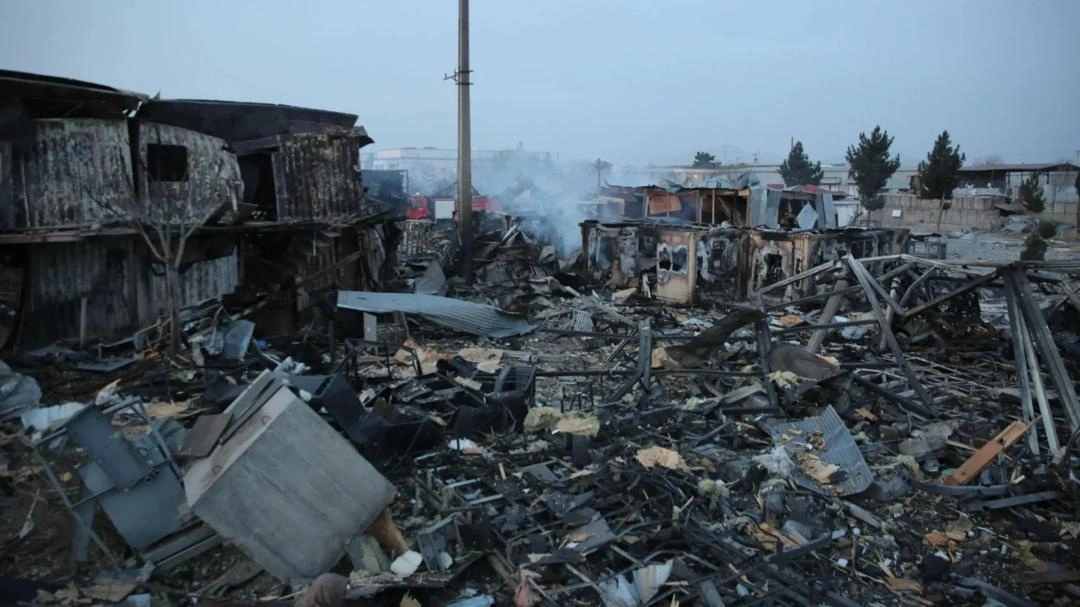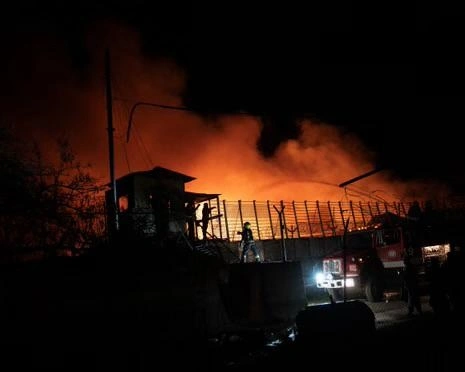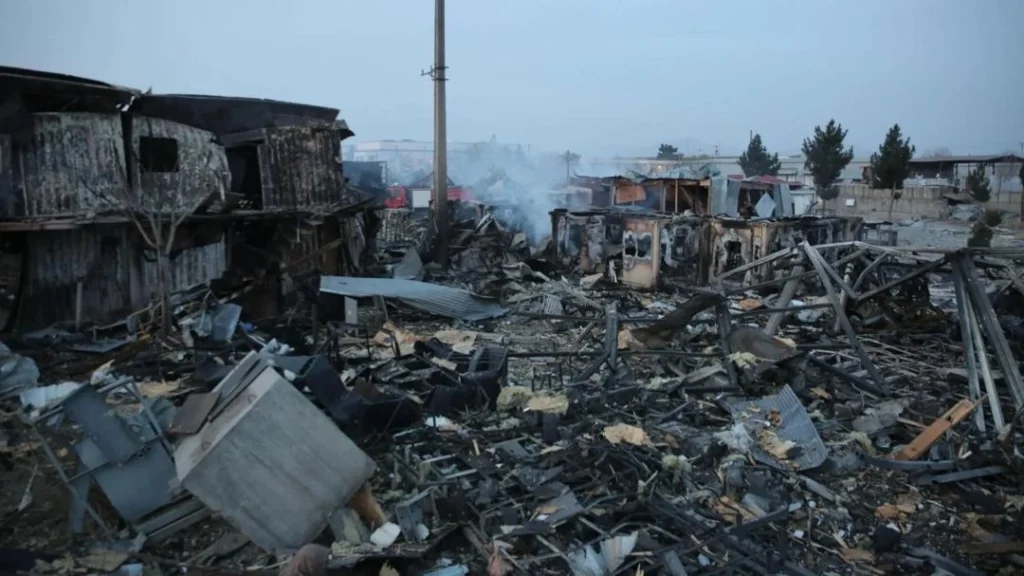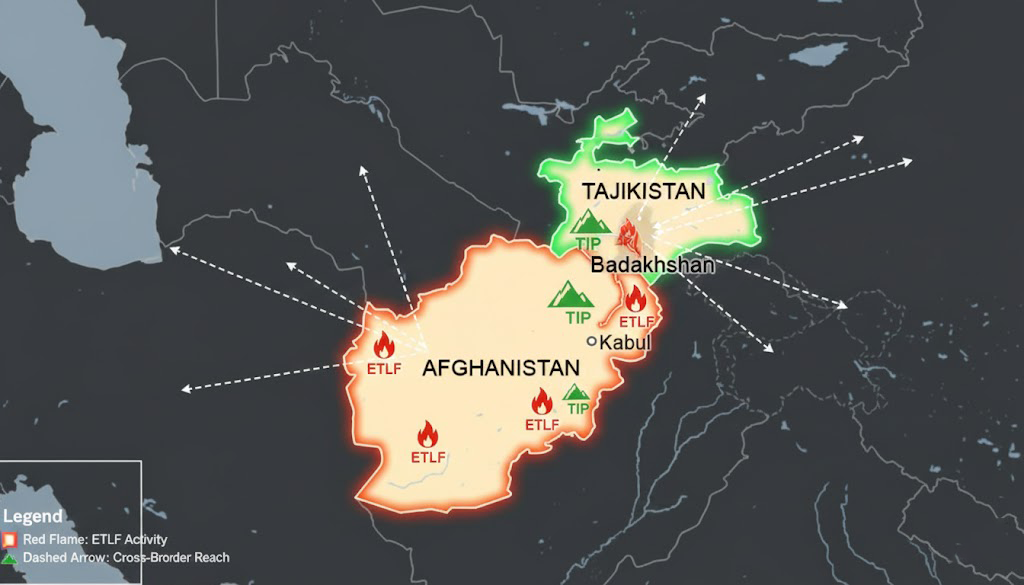
Islamabad– The East Turkestan Liberation Front (ETLF), a Uyghur terrorist organization linked to Al-Qaeda, has claimed responsibility for a drone attack on Chinese workers in Tajikistan, highlighting the growing operational reach of Afghanistan-based Uyghur militants and signaling escalating regional security risks.
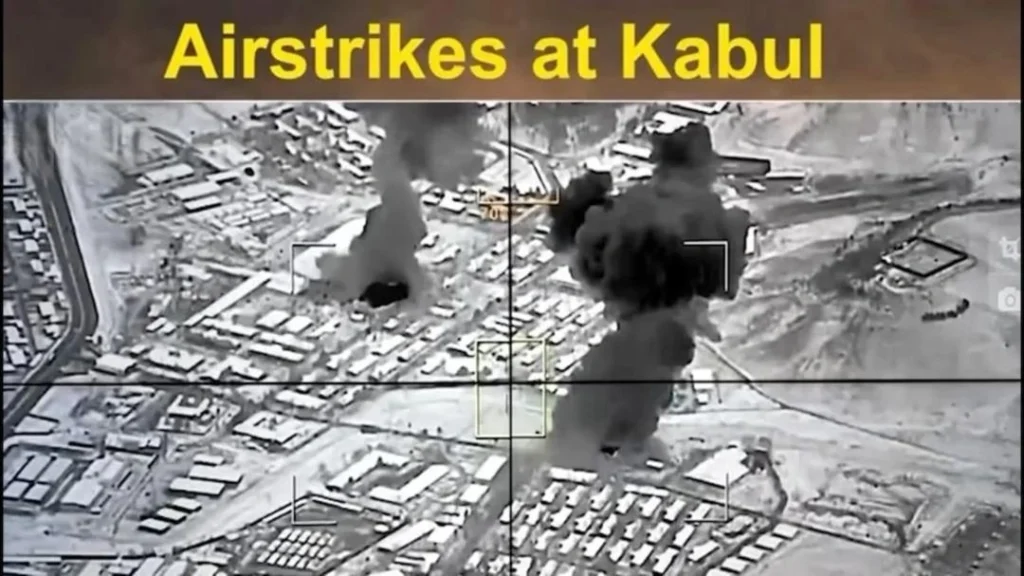
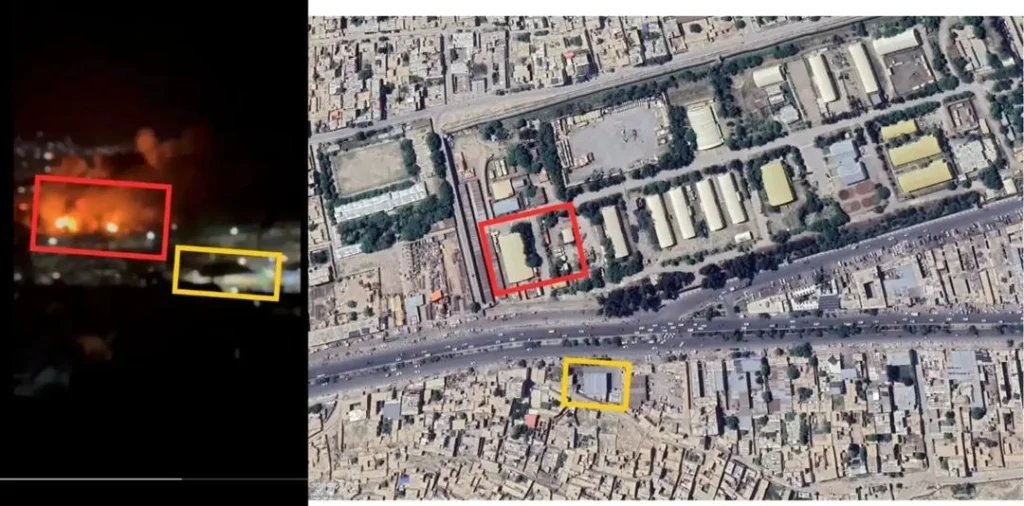
According to field sources, ETLF is an extension of the East Turkestan Islamic Movement (ETIM) and was “established by Al-Qaeda as a cover organization.” Sources confirmed that Uyghur militants have been provided camps in Afghanistan’s northern provinces Balkh, Badakhshan, Baghlan, and Kabul initially under the cover of TTP and other terrorist groups. After April 2025, “these camps have been fully activated in the name of Uyghur terrorists.”
ETLF and ETLO: Military and Political Wings
The ETLF, which claimed responsibility for the Tajikistan strike, had gone underground after a few operations following its establishment. Analysts say the group’s resurgence reflects a deliberate strategy: “Now that China is extremely sensitive about the ETIM name, on Al-Qaeda’s advice, ETIM and the Turkistan Islamic Party have decided to bring the ETLF name to the forefront while staying in the background.”
ETLF and the East Turkestan Liberation Organization (ETLO) are two names of the same entity “ETLF claims a military role, while ETLO claims a political role.” The network traces its roots back to 1997, when Uyghur politician Muhammad Amin Hazrat, also known as Abdul Hazrat, founded it in Turkey after becoming disillusioned with politics. Hazrat later reached Al-Qaeda in Waziristan, where “Al-Qaeda forged unity among Uyghur terrorist organizations and adopted the strategy of maintaining them all while using different names simultaneously as needed.”
After Hazrat was killed in a 2003 operation in Pakistan’s Waziristan region, leadership passed to Egyptian citizen Hamid bin Muhammad al-Masri, also known as Hamid Khan or Hamid Muhammad Jan. Hamid was an expert in chemical attacks and urban warfare, and Al-Qaeda had linked him to ETLF and ETLO.
Northern Afghanistan as a Hub for Uyghur Militants
By 2023, Uyghur terrorist groups had largely settled in Afghanistan. In October 2024, a delegation of Uyghur organizations met with Taliban leaders Mullah Hebatullah and Abdul Haq Wasiq under the leadership of TIP chief Abdul Haq. According to sources, it was “decided to organize Uyghur terrorists in northern Afghanistan.” The senior leadership includes China’s most wanted terrorist Usman Khan, performing the role of military chief in Badakhshan, while Abdul Haq resides in Baghlan.
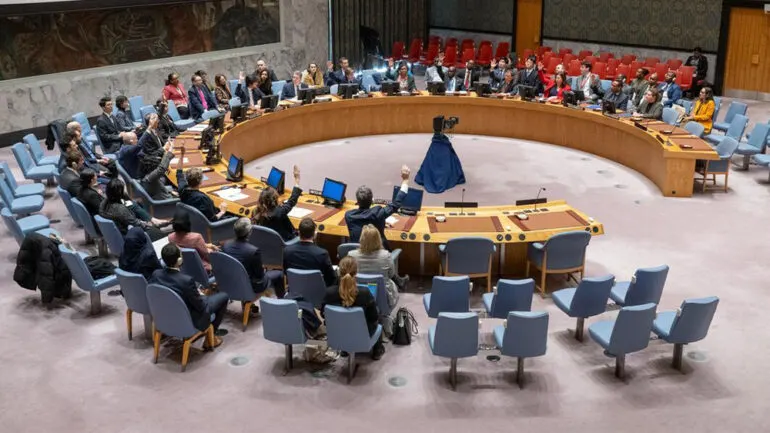
Experts warn that the concentration of ETIM/TIP figures in northern Afghanistan now creates unregulated militant enclaves that pose direct threats to Pakistan, China, and Central Asian republics. UN monitoring reports and SAT studies have highlighted this consolidation, noting that “the threat landscape has expanded far beyond TTP, with international terrorist organizations now entrenched across the north.”
Cross-Border Links and International Influence
Sources also indicate a surprising connection between Afghanistan-based Uyghur militants and the Washington-based East Turkestan Government in Exile (ETGE), established in 2004 under CIA influence. The exiled government, which claims to represent the Uyghurs politically, has its leadership elected every four years. As of 2025, its president is Mamtimin Ala, Prime Minister Abdul Hadi Noor, Foreign Minister Saleh Hudaib, and Vice President Siragul Sauytbay, all residing in the United States.
The November visit of Uyghur terrorist commander Abdul Aziz Dawood Khudaberdi, also known as Abu Muhammad Turkistani or Khalid, to Afghanistan is “also being seen as part of this series,” signaling ongoing coordination between militant networks inside Afghanistan and external political entities.
Operational Strategy and Regional Implications
Analysts note that ETLF’s revival under Al-Qaeda guidance follows a pattern of “militant groups cyclically rebranding as China increases pressure on ETIM activity in Badakhshan, Balkh, and Baghlan.” Small cells have also been established in Turkey, Kazakhstan, Kyrgyzstan, Pakistan, and Central Asian cities, serving recruitment, liaison, and arms smuggling functions.
Pakistani assessments and UN reports confirm that the ETLF strike in Tajikistan aligns with broader patterns of internal militant restructuring in Afghanistan. By using new front names while maintaining operational capacity, Uyghur terrorist organizations remain highly flexible and difficult to track.
Experts warn that unless the Afghan authorities take credible counterterrorism measures, these northern provinces may become permanent hubs for recruitment, training, and cross-border attacks, further destabilizing the region.