Skip to content
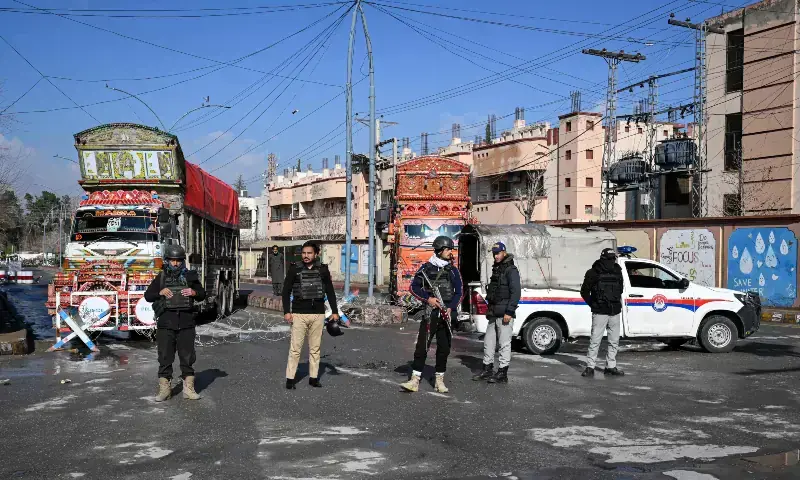
The recent wave of coordinated terrorist attacks in Balochistan has once again triggered a familiar narrative of “deprivation” and “liberation.” However, hard data, demographic realities and operational facts present a very different picture.
One that exposes the violence as a criminal-terrorist enterprise not a political movement.
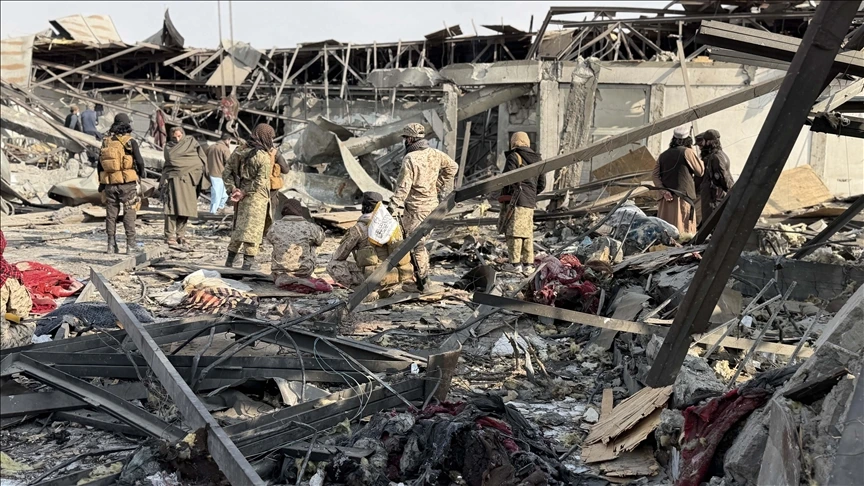
In the latest operations, 177 terrorists were killed while 17 security personnel and 33 civilians mostly in Gwadar and the Makran belt were martyred.
Balochistan covers 44 percent of Pakistan’s total landmass yet has just 6.1 percent of the population, and receives a provincial budget of over Rs1 trillion directly contradicting claims of systematic neglect.
Terrorism rooted in criminal economy not deprivation
The real drivers of instability in Balochistan trace back decades. Since the 1950s, certain tribal elites have fostered unrest to protect personal economic interests not public welfare.
These interests revolve around narcotics trafficking, illegal Iranian fuel smuggling and abuse of the Afghan transit trade, often exploiting the Rahdari system in place since the 1960s.
Terrorist groups such as the Balochistan Liberation Army (BLA) function as armed wings of these criminal networks not representatives of the Baloch people.
Any genuine socio-economic development which includes schools, hospitals, jobs or infrastructure directly threatens this control. This explains why investment and reform are violently opposed.
Recent enforcement has dealt a major blow to these networks. For instance Iranian diesel smuggling has dropped from nearly 20 million litres per day to about 1 million sufficient only for local use.
As funding lines shrink, attacks intensify revealing terrorism as a reaction to state enforcement not marginalization.
Demographics and ground reality expose the false ‘liberation’ claim
Balochistan is a heterogeneous province where Baloch communities coexist with Pakhtuns (30 percent), Brahvis (17 percent) and other groups (13 percent) including Hazaras and settlers.
Notably, more Baloch live in southern Punjab and northern Sindh than in Balochistan itself making claims of a unified liberation struggle mathematically and socially untenable.
On the ground, terrorists failed to capture a single town or piece of territory during the recent violence.
Their strategy relies on sporadic attacks to project dominance paired with a parallel information campaign targeting youth, intellectual circles and overseas audiences often with backing from India and Afghanistan.
Balochistan’s challenge is terrorism driven by criminal economics and external manipulation not a denial of rights. Repeating the deprivation narrative only masks the reality and undermines the voices of ordinary Baloch citizens who suffer most from this violence.
Read more: Al Jazeera’s ‘Separatist’ Label for BLA Draws Sharp Criticism