
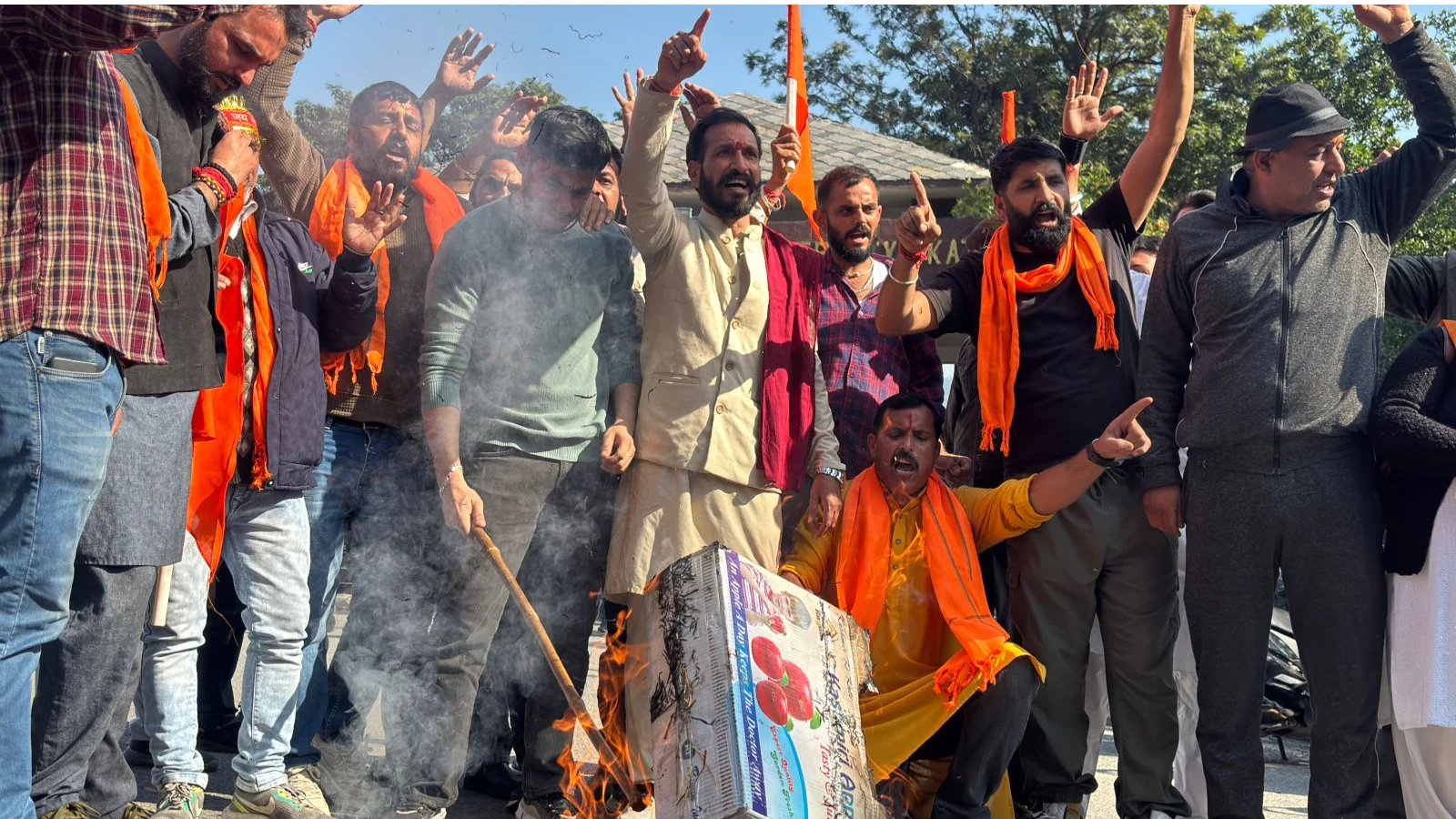
Indian-held Kashmir — Tensions escalated in Indian-held Jammu & Kashmir as the Bharatiya Janata Party (BJP) and Sangh Parivar-affiliated groups protested the admission of Muslim students at the Shri Mata Vaishno Devi Institute of Medical Excellence (SMVDIME) in Kakryal near Katra. The medical college, allotted 50 MBBS seats for the 2025–26 academic year, saw 42 seats secured by Muslim students, largely from the Kashmir Valley.
The Shiv Sena Dogra Front led a demonstration on Thursday, with scores of members raising slogans against the admission process. Ashok Gupta, president of the group, criticized the college’s selection procedure, arguing that shrine-funded institutions should reflect the religious ethos of the community.
The Vaishno Devi Sangarsh Samiti (VDSS), a coalition of nearly 60 right-wing organisations, threatened statewide protests unless the selection list was withdrawn. VDSS convenor Col. (Retd.) Sukhbir Singh Mankotia alleged procedural lapses by the Shrine Board, claiming the admissions process was “kept secret” and suggesting irregularities in the selection. Leaders from the BJP, Vishwa Hindu Parishad (VHP), and Bajrang Dal have joined calls for a review of the list and potential amendments to the Shrine Board Act to ensure what they term “community representation.”
Religion and Merit Under Debate
Critics argue that objections raised by Hindu nationalist groups challenge the merit-based admissions of Kashmiri Muslim students at the SMVDIME, raising concerns that a public medical college could be influenced by faith-based considerations. Analysts note that framing the issue as one of “spiritual ethos” prioritizes religious affiliation over merit, sparking debate over access to elite educational opportunities for Muslims in Indian-held Jammu and Kashmir.
Observers highlight a broader ideological trend in which shrine-funded or community-managed institutions are increasingly positioned as exclusive spaces, reinforcing narratives that Muslim students are less “deserving” despite qualifying through the National Eligibility Entrance Test (NEET).
The Shrine Board has clarified that admissions to SMVDIME are based solely on merit, as the institute is not a minority institution and cannot implement religion-based reservations. Official sources stated that while no admissions can be cancelled, if the college were granted minority status in the future, reservations for Hindu candidates could be applied in subsequent batches. The Union Territory administration also maintains that the selection process adhered to national guidelines and merit criteria.
The standoff raises questions about the autonomy of public institutions, the role of religious sentiment in academic admissions, and the political landscape in Indian-held Jammu and Kashmir. Experts note that whether the admission list will withstand political and communal pressure remains uncertain.











