
Kabul – Afghanistan is currently experiencing a silent yet expanding crisis in healthcare due to the start of political changes in the medical supply chains.
Since decades, the cross-border movement of drugs has given Afghan healthcare stability, which has given millions of people cheap and accessible therapeutic treatments. But latest geopolitical developments in new allies have caused the abrupt marginalization of old supply lines.
This shift seems to be more of a diplomatic signalling than of any open third-party checks on the quality of the products, placing lots of vulnerable patients in a dangerous situation.
A recent video going around on pro-administration social media platforms has further fuelled this conflagration when a military health commander claimed that some of the Pakistani medicines are fake.
But these allegations do not meet the fundamental conditions of medical science; a batch number, a laboratory report, or an inspection-data were not given to prove about the defects.
When these accusations are made by military personnel other than a certified pharmacologist, it jeopardizes the future of the Afghan healthcare stability by substituting the regulatory due process with unconfirmed popular rhetoric.
Also See: Unverified Taliban Claims on Pakistani Medicines Raise Questions Over Timing and Motives
The Economic Cost of Political Shifts
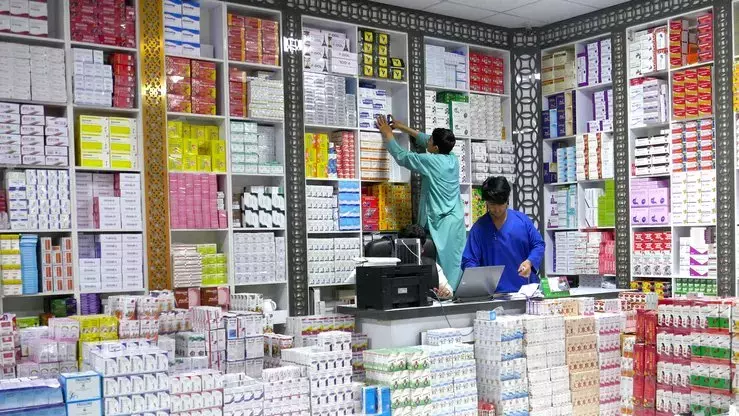
The effects of these decisions are already being felt in the local pharmacies around the country. The abrupt discontinuation of common drugs has caused severe inflation of prices and extensive shortages.
This has brought a huge disparity between high-end diplomatic help packages and the daily lives of individuals attempting to purchase simple medicine. Rising costs are now compromising the Afghan healthcare stability of many families; unable to afford essential treatments.
These assertions are synchronized with a sudden shift in diplomacy. On December 16, the Minister of Public Health of Afghanistan, Mawlawi Noor Jalal Jalali, paid an official visit to New Delhi.
This is the third senior visit to India in three months, which is to organize the importation of Indian medicines and medical equipment.
Although diversification of sources is an acceptable aim, it is being achieved by a narrative of unvalidated so-called counterfeit claims, which may lead to the complete breakdown of the Afghan healthcare stability in case of a lack of sufficient clinical transparency in carrying out the transition.
Moving Toward Evidence-Based Care
According to healthcare experts, medical standards should be taken by the scientists and regulators, not by diplomats or military commanders.
The claim regarding certain products must be scientifically proven by thorough testing instead of serving as an excuse to swing in geopolitics.
The idea is always to enhance the quality of care but to reach Afghan healthcare stability, a clear-cut method is required.
Terminating trade with a long-term partner suddenly without any clear, publicly visible evidence of failure is just a way to create instability in an already unstable medical system.
Also See: Taliban’s Push for India Ties Fuels Political Campaign Against Pakistani Medicines











