
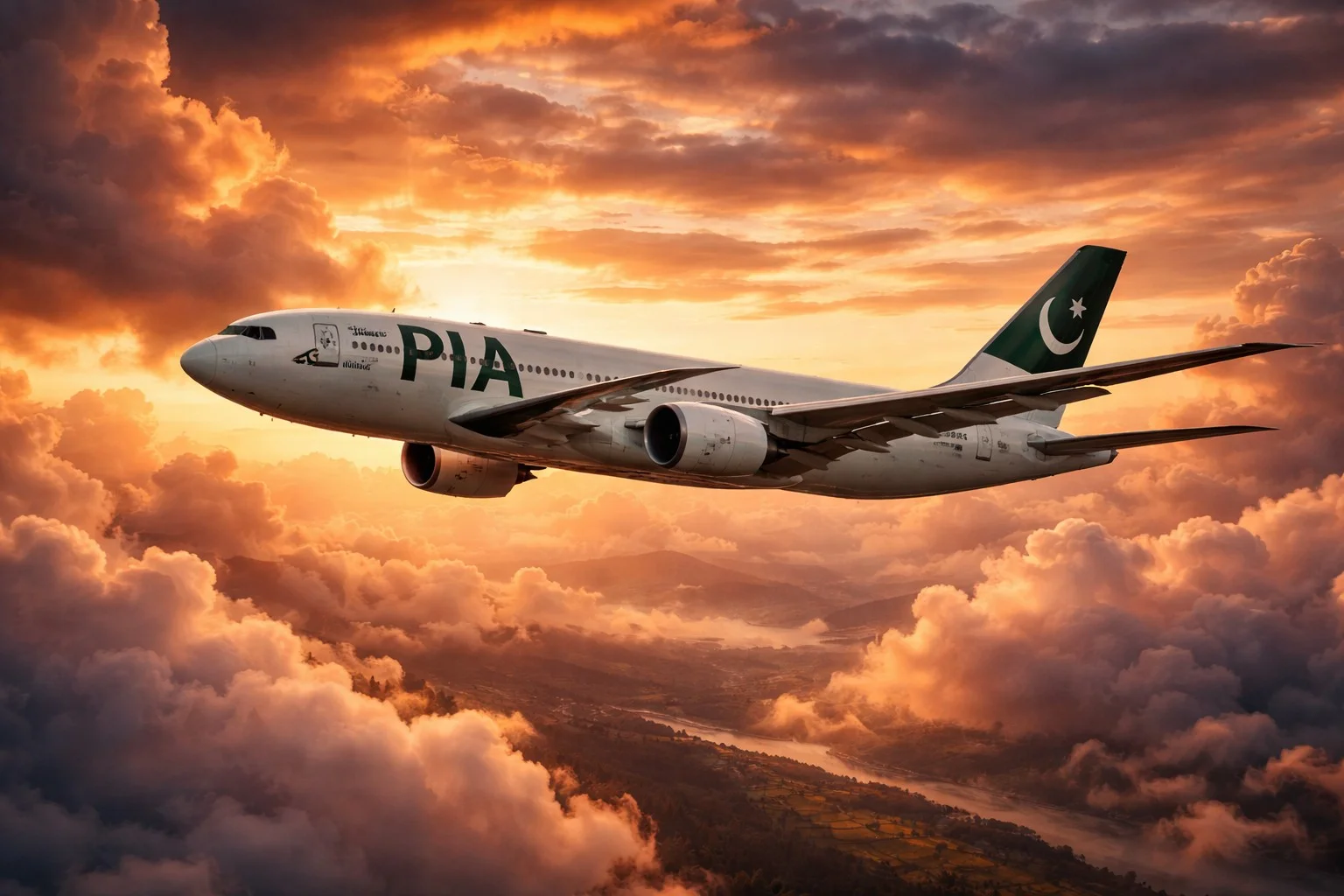
Pakistan— For decades, Pakistan International Airlines was more than just an airline. It was a symbol of confidence, ambition, and a country finding its place in the world. Today, however, the debate over selling Pakistan International Airlines is no longer about emotion or nostalgia. It is about whether Pakistan can continue to afford the cost of sentiment.
PIA’s decline has been slow, visible, and expensive. Once a model for regional carriers, it has gradually turned into one of the country’s most financially distressed state-owned enterprises. Years of political interference, weak governance, and operational mismanagement have left the airline dependent on repeated government bailouts.
Even when marginal improvements appear on paper, they are often driven by accounting adjustments rather than real operational recovery.
The financial burden is no longer abstract. Over the past decade and a half, cumulative losses have crossed hundreds of billions of rupees. Liabilities continue to mount, fleet utilization remains well below regional standards, and the airline survives largely because the public exchequer absorbs the shock.
Every year PIA continues under state ownership, public money is diverted away from health, education, and infrastructure to keep the airline airborne.
Defenders of the status quo often argue that the per-person cost is small and therefore manageable. But this framing misses the point. National finances are not judged by individual arithmetic; they are judged by opportunity cost. Modest annual losses, when sustained over time, translate into long-term fiscal leakage.
They also reinforce a culture where inefficiency carries no consequences and reform is endlessly postponed.
Privatization, therefore, has emerged not as an ideological preference but as an economic inevitability. A structured sale, with the government retaining a regulatory role, offers clear fiscal relief. It removes recurring losses from the budget, reduces debt exposure, and ends the cycle of bailouts.
More importantly, it separates governance from political patronage, allowing professional management to make commercial decisions based on performance rather than pressure.
Critics raise valid concerns. Job security, access to unprofitable domestic routes, and strategic control over aviation cannot be dismissed lightly. But these are regulatory challenges, not ownership imperatives. Many countries have demonstrated that governments can protect national interests through policy, oversight, and route obligations without directly running airlines.
Ownership is not the same as control.
International experience reinforces this point. Formerly state-run carriers in Europe and Asia have shown that privatization, when done transparently, does not erase national identity or compromise sovereignty. Instead, it often improves service quality, financial discipline, and safety standards while freeing governments to focus on regulation rather than rescue.
The question, then, is not whether selling PIA is painful. It is. The real question is whether continuing to fund losses in the name of pride is responsible governance. National symbols lose meaning when they become instruments of waste rather than service.
True economic patriotism is not about preserving institutions at all costs. It is about protecting public resources, rewarding efficiency, and making difficult decisions when evidence demands it. If handled with transparency, worker protections, and strong regulation, selling PIA would not represent a national loss. It would mark a long-delayed course correction.
The flag does not fall when an airline is sold. It falls when a nation chooses denial over reform, and sentiment over sustainability.
Read more: State-Owned Struggles: Why Pakistan’s Public Enterprises Keep Bleeding











