
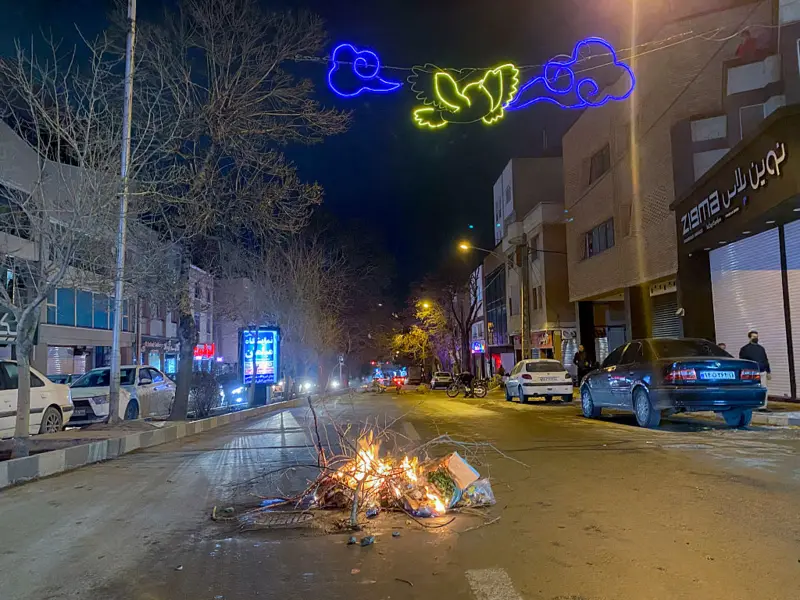
Iran is facing its most intense wave of protests in three years as soaring inflation and a sharp collapse of the national currency trigger violent unrest across several provinces.
Clashes between protesters and security forces have resulted in multiple deaths, underscoring growing public anger over worsening economic conditions.
According to multiple media outlets, confrontations erupted in several western and central cities, with reports of protesters and security personnel being killed during protests.
Rights groups say the scale of unrest is expanding, with demonstrations spreading from local marketplaces to universities.
The protests began earlier this week after the Iranian rial suffered another sharp fall, pushing prices of basic goods further out of reach for many households.
Deadly clashes and government response
In the western city of Lordegan, confrontations between police and armed protesters led to multiple fatalities, according to local reports and rights monitors.
Separate incidents were also reported in Kuhdasht, where the Islamic Revolutionary Guard Corps said one of its volunteer members was killed and several others injured.
Independent sources estimate that at least eight protesters have died nationwide so far, including one reported fatality in Isfahan.
Authorities have responded with a mix of security measures and outreach. Government spokesperson Fatemeh Mahjerani said officials would engage directly with traders and trade unions, though no clear roadmap for talks has been announced.
President Masoud Pezeshkian has instructed the interior minister to listen to what he described as the “legitimate demands” of protesters.
For several days, shopkeepers, traders and students have staged protests. Which caused closure of major bazaars and university campuses.
Amid the unrest and severe winter conditions, the government declared a public holiday across large parts of the country, officially citing extreme cold.
Economic pressure and international reactions
Iran’s economy has been under sustained strain due to US and Western sanctions linked to its nuclear program since the US pulled out of the JCPOA deal under the first Trump administration.
In 2025 the rial lost nearly half of its value against the US dollar, while inflation surged to more than 42 percent in December.
The United Nations has raised concerns over the escalating violence. Mai Satou, the UN Human Rights Council’s special rapporteur on Iran, said nationwide protests have entered their sixth day and warned against the excessive use of force.
She urged authorities to respect freedom of expression and peaceful assembly.
Tensions have also flared diplomatically.
Iran’s UN envoy, Amir Saeed Irani, accused Donald Trump of interference after the US president said Washington would support peaceful protesters if force was used. Iranian officials rejected the remarks as a violation of sovereignty.
As protests continue into their sixth day, analysts warn that without economic relief or credible dialogue, unrest could intensify further and could spiral over the region.
Read more: Yemen’s Crisis Highlights the Urgent Need for Coordinated Stabilization











