
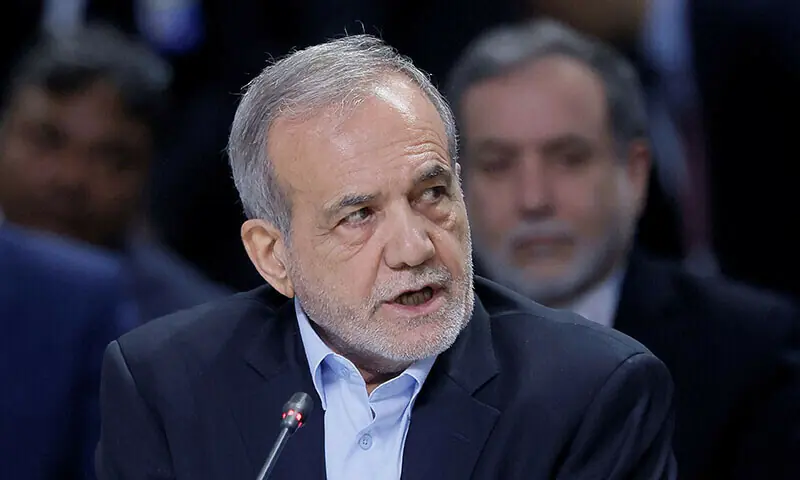
Iranian President Masoud Pezeshkian has ordered security forces not to crack down on economic protests, urging authorities to clearly distinguish between peaceful demonstrators and armed rioters as unrest continues across several cities.
The protests, triggered by soaring prices and a sharp collapse of the national currency, began with a shopkeepers’ strike in Tehran on December 28 and have since spread to major urban centers.
Norway-based group Iran Human Rights said at least 27 protesters have been killed so far.
Iranian state media citing official sources, has reported 13 deaths including members of the security forces.
In a video released after a cabinet meeting, Vice President Mohammad Jafar Ghaempanah said the president had ordered that no security measures be taken against demonstrators.
He said those carrying firearms or attacking police stations and military sites should be treated as rioters, not protesters.
The demonstrations have drawn sharp international attention. US President Donald Trump warned that Washington was watching events closely and threatened action if protesters were killed.
Israeli Prime Minister Benjamin Netanyahu also voiced support for the Iranian public, saying Israel stands with their demands for freedom and justice.
Meanwhile, Iran’s army chief General Amir Hatami warned that Tehran would not tolerate outside threats.
He said any foreign mistake would meet a stronger response than during last June’s 12-day war with Israel, which included strikes on Iranian military and nuclear facilities.
The unrest reached Tehran’s Grand Bazaar this week, a symbolic and economic heart of the capital.
Police used tear gas to disperse crowds after clashes erupted, with gas drifting into an area near Sina Hospital. Authorities denied that the hospital was deliberately targeted.
By Wednesday, calm appeared to have returned to some parts of Tehran, with shops reopening along Vali Asr Avenue.
However, the protests continue to underline growing public anger over economic hardship and uncertainty about the country’s future.
Read more: Taliban Turn Afghanistan’s Mines into War Economy Powering Terror and Repression











