
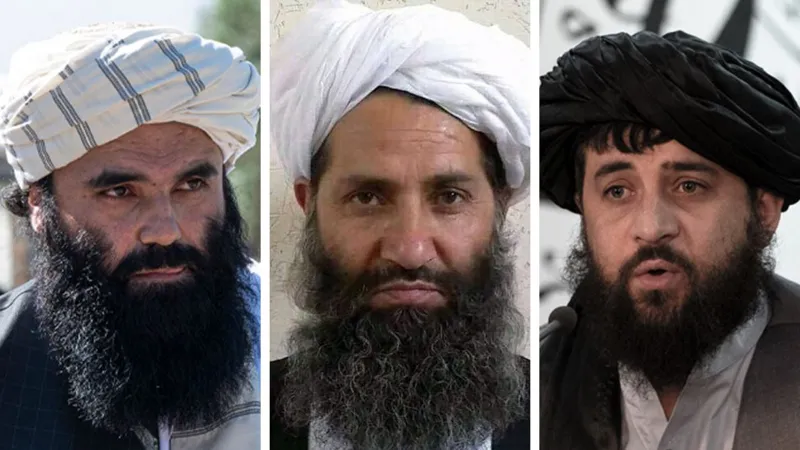
A year-long investigation by the BBC has lifted the lid on what it describes as a deep and growing rift at the very top of the Taliban leadership. Based on more than 100 interviews with current and former Taliban members, insiders, experts and diplomats, and supported by a leaked audio recording, the BBC reports that the group is no longer as unified as it appears.
Instead, two rival camps with different visions for Afghanistan are quietly pulling in opposite directions, creating tensions that even the Taliban’s own supreme leader now fears could bring the system down from within.
BBC: leaked audio shows Akhundzada fears collapse from within
At the heart of the BBC’s reporting is a leaked audio recording of Taliban supreme leader Hibatullah Akhundzada, made during a speech at a madrassa in Kandahar in January 2025.
In the clip obtained by the BBC, Akhundzada does not warn of foreign threats. Instead, he speaks of “insiders in the government” and internal disagreements, cautioning that “as a result of these divisions, the emirate will collapse and end.”
According to the BBC, the speech added fuel to rumors that had circulated for months about serious differences within the Taliban leadership. While Taliban officials have repeatedly denied any split when questioned by the BBC, the broadcaster says its investigation shows that two distinct power centers now exist.
One is based in Kandahar around Akhundzada, and the other in Kabul around senior ministers who are trying to run the day-to-day affairs of the state.
BBC maps two rival camps: Kandahar’s hardliners vs Kabul’s pragmatists
The BBC reports that the Kandahar camp, loyal to Akhundzada, is driving Afghanistan toward a highly centralized and rigid system.
From Kandahar, the supreme leader has surrounded himself with clerics and hardliners and is pushing a vision of an isolated Islamic Emirate in which religious figures control almost every aspect of life.
Over time, he has shifted key departments, including parts of the security apparatus and weapons distribution away from Kabul and under his direct influence.
On the other side, the Kabul camp includes powerful figures such as Deputy Prime Minister Abdul Ghani Baradar, Interior Minister Sirajuddin Haqqani and Defence Minister Mohammad Yaqoob Mujahid.
The BBC describes them not as moderates, but as “pragmatists” who believe the current system cannot survive without engagement with the outside world, a functioning economy and basic tools of modern governance.
They are also said to be more open, at least in principle, to restoring some form of education for girls and women, a ban that remains one of the main sources of tension between the two sides.
BBC: internet shutdown became an unprecedented act of defiance
The BBC identifies one moment as a turning point in this quiet power struggle. In late September, Akhundzada ordered a nationwide shutdown of the internet and phone networks, reflecting his deep distrust of the online world.
According to the BBC, this order was seen by Kabul-based ministers as a direct threat to governance, commerce and their own ability to function.
What happened next was unprecedented in Taliban history. Senior figures from the Kabul camp came together and persuaded the prime minister to reverse the order.
Within days, the internet was switched back on, effectively in defiance of the supreme leader’s command. One insider told the BBC this was “nothing short of a rebellion,” because obedience to the leader has always been a core principle of the movement.
The BBC notes that Taliban leaders have previously tolerated harsh edicts, including those affecting women’s education but this time their own power and privileges were directly at risk.
An expert quoted by the BBC said the internet mattered to their ability to govern and to make money in a way that other issues had not.
BBC: absolute power, rising tension and an uncertain 2026
Despite this rare act of defiance, the BBC reports that Akhundzada remains the ultimate authority. His spokesman told the BBC that from a religious perspective, the supreme leader has “absolute power” and that his decisions are final to avoid division.
Yet the investigation shows growing unease. Some critics inside the system have been arrested or forced to flee after questioning key policies, especially the ban on girls’ education.
Publicly, Taliban leaders continue to insist there is no split. But the BBC points to recent speeches by figures from both camps that suggest the tension is still there, just below the surface.
One side warns that only one leader should be obeyed. The other hints that a government that forgets the people loses its legitimacy.
The BBC concludes that while the Taliban have so far managed to contain these divisions, the struggle between Kandahar and Kabul is real and unresolved.
Whether 2026 will see words turn into real change or further consolidation of power in Kandahar remains an open question. For now, as the BBC’s investigation makes clear, the greatest challenge to Taliban rule may no longer be external pressure, but the fractures growing quietly within their own system.











