
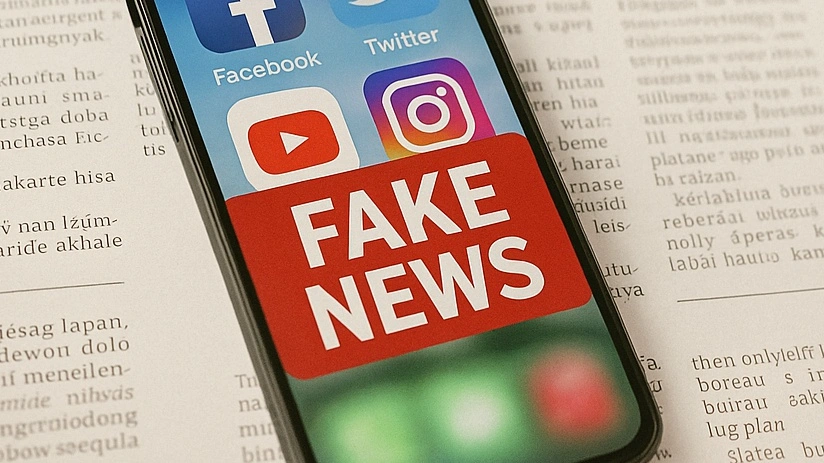
In the contemporary digital era, disinformation and coordinated influence campaigns have emerged as potent tools for generating political instability and undermining constitutional governance. Social media platforms, initially conceived as spaces for democratic dialogue are increasingly exploited to spread disinformation, manipulate public perception and weaken trust in state institutions. The absence of robust regulatory mechanisms, coupled with algorithm-driven amplification, has allowed false narratives to metastasize into real-world disorder. Within this ecosystem, anarchic political agendas thrive: the objective is not reform or accountability, but the deliberate removal of government authority through sustained instability. Free speech is reframed as an absolute shield, while its misuse as a weapon of victimhood enables actors to portray legal accountability as political persecution.
The UK Riots as a Case Study in Digital Disinformation
This dynamic was starkly illustrated in the United Kingdom during the July–August 2024 riots that followed the fatal stabbing of three girls in Southport. Within hours, false claims circulated online alleging that the attacker was an asylum seeker and Islamist extremist. Although these allegations were demonstrably untrue, their rapid dissemination across social media platforms incited attacks on mosques, police, migrant housing and businesses across several British cities. Subsequent investigations confirmed that the suspect was UK-born. Crucially, British authorities did not treat those who spread these narratives as journalists exercising free expression; they were investigated as contributors to public disorder. The episode became a global case study in how digital disinformation, when amplified by influential online actors, can translate directly into violence.
Pakistan’s Digital Media Landscape Since 2022
Pakistan has been navigating a structurally similar but politically charged digital media environment since 2022, though this reality is often misrepresented in international discourse. A loosely coordinated network of politically aligned social media accounts, overseas-based YouTubers and self-styled activists has evolved into an influence machine designed to manufacture outrage and delegitimize institutions. The pattern is consistent: an allegation is first released through an official or semi-official account on X (formerly Twitter), after which it is rapidly amplified by YouTube commentators who add sensational framing, claims of secret conspiracies, accusations of military betrayal or assertions that dissidents are being eliminated. These narratives are then recycled by hundreds of affiliated accounts, creating the illusion of verified breaking news despite the absence of evidence.
Politicisation of Legal Proceedings and Judicial Authority
At the core of this ecosystem is the systematic politicisation of legal proceedings. Court actions, arrests and indictments are reframed as acts of authoritarian repression, while judges, investigators and security officials are portrayed as conspirators rather than constitutional actors. This strategy aligns with a broader anarchic agenda in which the legitimacy of the state itself is contested. The aim is to erode public confidence in the judiciary and law enforcement, thereby paralyzing governance through constant agitation. Over time, this feedback loop has produced a parallel reality in which the rule of law is replaced by online narratives driven by outrage, suspicion and manufactured victimhood.
Legal Thresholds and Accountability Under Pakistani Law
What ultimately brought this network under legal scrutiny was not criticism of the government, but the repeated dissemination of false and inflammatory allegations against named individuals, often accompanied by implicit or explicit calls for defiance. Pakistani courts documented numerous instances between 2022 and 2025 in which judges, military officers and investigators were accused of murder, torture, treason and secret executions without any supporting evidence. Anti-Terrorism Courts concluded that these actions crossed the legal threshold from protected speech into incitement and destabilization, leading to multiple indictments and prosecutions.
The Case of Adil Raja and Limits of Free Speech
The case of YouTuber and former military officer Adil Raja illustrates how digital platforms are leveraged for both political disruption and financial gain. Raja became a central figure in disinformation campaigns that contributed to mob violence in Pakistan. His conduct was not shielded by free speech even under British law. In October 2025, the London High Court ruled that he had falsely accused a retired Pakistani brigadier of corruption and criminal misconduct, ordering him to pay substantial damages and legal costs. The court determined that Raja’s claims were defamatory and intended to incite mutiny within Pakistan’s armed forces. This ruling underscored a critical point: free speech protections do not extend to knowingly false accusations presented as fact.
YouTube Monetization and the Economics of Disinformation
The role of YouTube within this ecosystem is particularly significant. Unlike traditional media, the platform’s monetization model rewards sensationalism, emotional outrage and rapid content production rather than verification. The lack of effective regulatory oversight allows content creators to profit directly from disinformation, transforming political instability into a revenue stream. Fake news, exaggerated claims and conspiracy-driven narratives generate views, donations and advertising income, creating strong financial incentives to perpetuate chaos. In this environment, political activism merges with digital entrepreneurship, and accountability becomes a threat not only to ideology but to income.
The Mirza Shahzad Akbar Case and Propaganda Narratives
The case of Mirza Shahzad Akbar further illustrates why these matters cannot be reduced to claims of political victimization. Akbar is not merely a commentator; he is a principal accused and an absconder in one of Pakistan’s largest corruption investigations involving the Al-Qadir Trust. As head of Assets Recovery Unit, he played a central role in decisions that Pakistani authorities allege resulted in the misappropriation of state funds, transferring them to former Prime Minister Imran Khan. After repeatedly refusing to appear before courts, he was declared a proclaimed offender, prompting formal extradition requests. Yet online narratives routinely present his legal status as evidence of political repression, exemplifying how judicial processes are weaponized for propaganda.
Framing of Imran Khan’s Legal Challenges
Khan’s legal challenges are similarly framed in absolutist terms abroad, often detached from the court record. While he has faced numerous cases since 2022, Pakistani courts have repeatedly granted bail, acquitted him where evidence was insufficient, or suspended proceedings. His convictions remain limited. However, selective amplification by digital influence networks portrays every legal action as proof of persecution, reinforcing the broader strategy of delegitimizing judicial authority.
The Moeed Pirzada Conviction and Judicial Process
Moeed Pirzada’s conviction in January 2026 further highlights the consequences of sustained non-compliance with legal processes. Despite years of summonses that he declined to honor, proceedings continued with court-appointed defense counsel. His online activity, which included incendiary content during the violent unrest of May 9, 2023, was ultimately judged to have crossed into criminal incitement. Again, this was not about suppressing dissent, but about enforcing legal boundaries.
Evaluating Claims by Overseas Media Outlets
It is within this broader context that allegations published by outlets such as Drop Site News must be critically assessed. Claims of a “massacre of dissidents” are presented without named victims, forensic evidence, independent verification or credible witnesses. Instead, the narrative relies almost entirely on the same overseas YouTubers and activists who are themselves defendants in criminal and defamation cases. This creates a closed information loop in which allegations are recycled until repetition substitutes for proof.
Conclusion: Rule of Law Versus Weaponized Disinformation
The deeper issue, therefore, is not the silencing of opposition but the global challenge of confronting weaponized disinformation in the digital age. As the United Kingdom experienced in 2024, false online narratives can ignite riots. Pakistan is confronting a parallel phenomenon in an explicitly political form. The boundary between free speech and criminal incitement is not ideological; it is legal. When that boundary is crossed through deliberate falsehoods, incitement and the monetization of instability, states are not suppressing democracy by responding to maintenance of law and order.











