
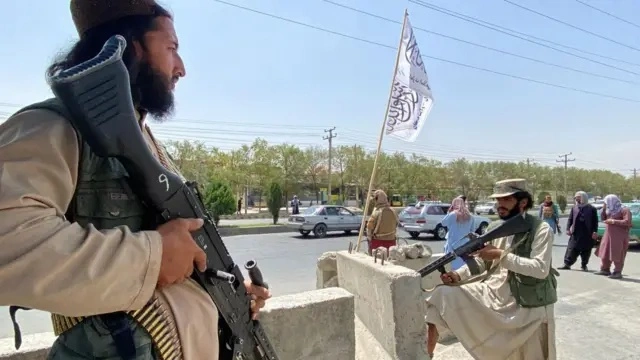
The United States Department of State has officially designated Afghanistan as a Level 4 “Do Not Travel” country, citing extreme security risks and the severely limited ability of authorities to provide assistance to foreign nationals. The advisory reflects an assessment that conditions in Afghanistan remain dangerous, unpredictable, and hostile for both visitors and residents.
International security assessments reinforce this designation. The United Nations Security Council’s 37th Monitoring Team Report confirms that the terrorist threat in Afghanistan remains deeply entrenched. An estimated 13,000 foreign terrorist fighters are believed to be active inside the country, sustaining cross-border militancy and transnational extremist networks. Earlier UN monitoring reports documented the presence of more than 20 terrorist groups operating freely across Afghan territory.
Groups including Al-Qaida, ISIL-K, AQIS, Tehrik-e-Taliban Pakistan (TTP), ETIM/TIP, and their affiliates continue to function with operational space under Taliban rule. These groups reportedly possess advanced weaponry, such as sniper systems, night-vision and thermal imaging devices, and drone platforms, significantly increasing the lethality of attacks within and beyond Afghanistan’s borders.
Beyond security concerns, Afghanistan’s internal governance has raised serious human rights alarms. The U.S. Commission on International Religious Freedom (USCIRF) has recommended Afghanistan be designated a Country of Particular Concern, citing systematic and egregious violations of religious freedom. Taliban governance is marked by a rigid and exclusionary interpretation of Sharia, characterized by public punishments, denial of due process, and institutional repression.
The Taliban’s penal framework reportedly denies recognition to Muslims who do not follow the Hanafi school of thought, creating enforced religious hierarchies and legal discrimination. Corporal punishments, public floggings, and executions are carried out without transparent judicial processes, replacing rule of law with coercive control. Daily life is heavily policed, with morality enforcement monitoring private behavior, speech, and social interaction.
Non-Sunni minorities, including followers of other Islamic schools of thought, as well as Hindus, Sikhs, and Christians, face systemic repression and pressure to conform. Ethnic minorities are subjected to surveillance, coercion, and discrimination under the prevailing governance structure. Public punishments are conducted as spectacles, embedding fear into the system of control.
Women and girls remain among the most affected, with widespread restrictions on education, employment, and public participation, creating what observers describe as state-imposed gender apartheid. At the same time, more than 23,000 madrassas operate across Afghanistan, many viewed as ideological centers rather than neutral educational institutions. Critics warn that state-backed expansion of such institutions risks long-term radical indoctrination and the export of extremist worldviews.
Taken together, these developments reinforce international assessments that Afghanistan under Taliban rule functions as a hub for terrorism, weapons proliferation, extremist indoctrination, and regional destabilization. The convergence of security threats, governance failures, and human rights abuses underscores why the country continues to be regarded as unsafe for both foreign nationals and its own population.
Read more :UN Report Highlights Afghanistan as Base for Terrorist Attacks Against Pakistan











