
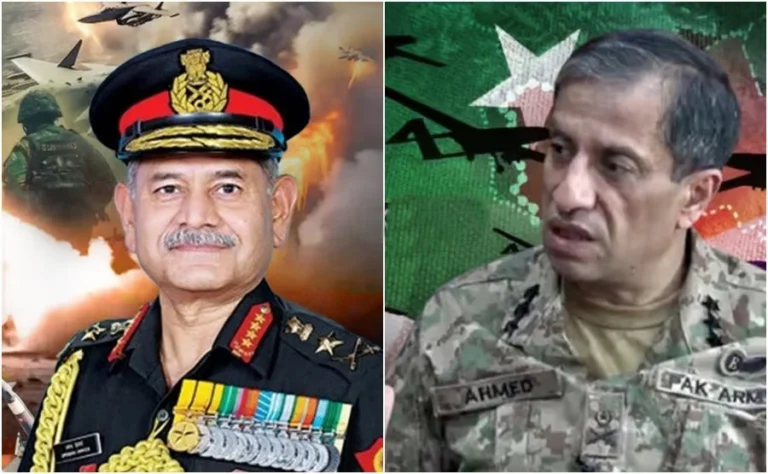
Rawalpindi: The Inter-Services Public Relations (ISPR) has issued a strongly worded response to recent provocative and irresponsible remarks made by Indian Army Chief General Upendra Dwivedi in an interview. According to ISPR, the Indian Army Chief’s statement that Pakistan must decide whether it wants to remain part of “geography and history” reflects clear mental bankruptcy and irrational thinking. The military spokesperson stated that such language between two nuclear-armed neighbours is entirely inappropriate for responsible military leadership.
ISPR issued a stern warning to New Delhi, stating that any attempt to advance such extremist thinking would have extremely grave consequences. The statement made it clear that any “geographical destruction” would not be one-sided but would be “complete and mutual,” highlighting the serious risks of conflict between two nuclear powers. The spokesperson also reminded that in the past, similar aggressive rhetoric and war-driven narratives from India have repeatedly pushed South Asia into crises and instability.
The military media wing reiterated that Pakistan is a nuclear power and an undeniable geopolitical reality in South Asia. It expressed regret that even after eight decades, certain elements in India’s leadership still have not fully accepted Pakistan’s existence as a sovereign state. According to ISPR, this mindset reflects a failure to move beyond historical tensions and remains a key source of ongoing regional instability.
The spokesperson criticized what it described as India’s “arrogant and war-mongering mindset,” warning that such hostile rhetoric could push the entire region toward a conflict whose consequences would not remain limited to South Asia but would have global repercussions. ISPR emphasized the need for restraint and responsible communication, given the nuclear capabilities of both countries, and stressed that lasting peace and stability in South Asia depend only on maturity, restraint, and acceptance of geopolitical realities.
Read more: Increase in Petroleum Prices in Pakistan Remained Lower than the International Crude Oil Rate











